As a complex and resource-intensive sector, gold mining requires efficient, eco-conscious solutions to handle waste, avoid pollution, and enhance recovery efficiency. One of the most vital elements in contemporary gold mining is the geomembrane, a high-performance synthetic liner designed for containment, seepage prevention, and environmental safeguarding. This article will examine the function of geomembranes in gold mining, covering: The suitability of geomembranes for gold mining, their advantages for gold mining operations, and the key traits of geomembranes used in gold mining projects.
1.What are Geomembranes for Gold Mining?
A geomembrane liner is a type of synthetic barrier designed primarily to prevent leaks and stop the leakage of hazardous chemicals. It is typically fabricated from high-density polyethylene (HDPE) or other similar corrosion-resistant polymers. In mining operations that require strict containment measures, geomembrane liners are widely adopted due to their excellent flexibility, chemical resistance, and tensile strength—properties that enable them to endure the various mechanical stresses commonly encountered at gold mining sites.
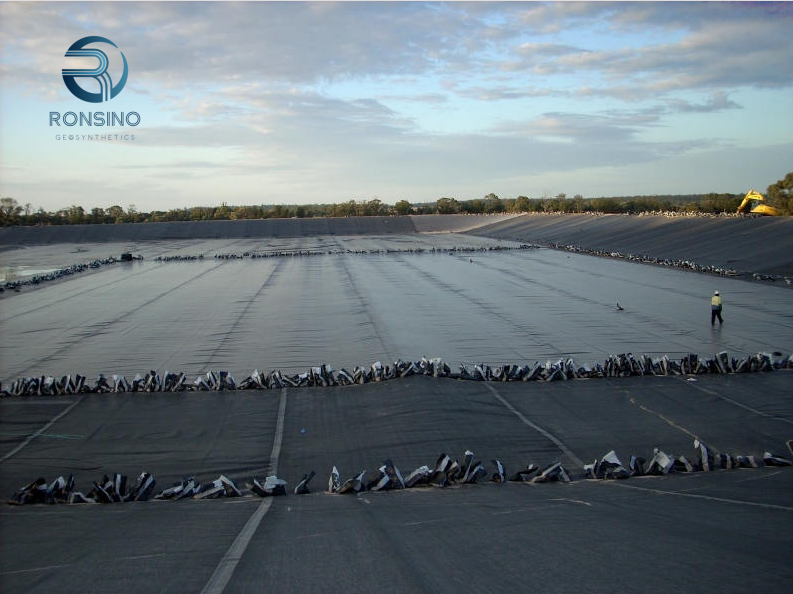
Geomembrane sheets essentially serve as pond liners for tailings ponds, evaporation ponds, heap leach pads, and chemical containment zones. Their core function is to block toxic or corrosive substances from seeping into the soil or groundwater, thereby protecting the surrounding environment. This environmental protection role is particularly critical in mining operations, where the proper containment of chemicals directly affects ecological safety and operational compliance.
Take gold mining as an example: heap leach pads equipped with impermeable geomembranes can effectively confine cyanide and other chemical agents used in the gold extraction process from ore. This not only avoids environmental contamination but also enhances the efficiency of the extraction process, as the chemicals remain concentrated on the pad rather than seeping into the surrounding soil. The application of HDPE membranes in mining operations, thanks to their reliability, durability, and ease of installation, has become a crucial factor for mining companies to comply with environmental regulations while improving operational efficiency.

2.Effects of Geo Membrane for Gold Mining
The practical value of geomembranes in contemporary gold mining has greatly promoted the industry’s efficiency, environmental responsibility, and economic feasibility. These engineered liners have become an essential part of safe and sustainable mining site operations. Below are the key impacts and advantages of applying geomembranes in gold mining:
2.1 Geo Membrane - Enhanced Gold Recovery (Heap Leaching Efficiency)
Heap leaching is the go-to method for extracting gold from low-grade ores, involving piles of crushed ore on pads that are irrigated with cyanide or acidic solutions to dissolve gold content.
Without a robust geomembrane liner, this method risks significant financial loss and environmental harm:
1.As much as 30% of the leach solution can seep underground, reducing the amount of gold that can be recovered.2.Leaked chemicals can contaminate soil and water sources, leading to expensive environmental cleanup.By installing HDPE or LLDPE geomembranes, mines can achieve a more efficient and secure operation:
3.Leach solutions are fully contained within the processing area.4.Gold recovery rates improve because more solution is available to react with the ore.5.Chemical costs are cut due to reduced wastage of expensive reagents.6.Leach pads become more structurally stable and have a longer operational lifespan.The end result for mining companies is higher output, lower running costs, and a much stronger return on their capital investment.
2.2. Geo Membrane - Safer Tailings Management
Tailings refer to the fine-grained waste materials generated after ore processing. They often contain toxic substances like arsenic, mercury, and residual cyanide, which pose significant environmental and health hazards if not effectively contained.
Tailings storage facilities (TSFs) without liners or with inadequate lining are susceptible to the following issues:
1.Contaminant seepage into nearby soil and aquifers
2.Structural instability, which increases the risk of dam collapse
3.Long-term liability, as tailings can remain hazardous for decades
Geomembranes play a vital role in tailings management by:
4.Establishing a watertight barrier between tailings and the natural ground
5.Lowering the risk of catastrophic failures, such as the 2019 Brumadinho dam disaster in Brazil
6.Ensuring adherence to global safety standards and environmental regulations
7.Facilitating the long-term monitoring and closure planning of TSFs
In summary, geomembranes enhance the safety, stability, and regulatory compliance of tailings impoundments.

2.3. Geo Membrane - Water Conservation & Recycling
Water is an essential resource in gold mining, utilized in ore processing, dust suppression, and tailings transportation. In numerous mining areas—particularly arid or remote regions—water shortage presents a critical operational challenge.
Geomembranes contribute to efficient water utilization by:
1.Collecting and confining process water, enabling on-site treatment and recycling
2.Stopping seepage and evaporation, which are the primary causes of water wastage
3.Reducing the demand for freshwater extraction, thus shrinking the environmental impact
4.Supporting zero-discharge operations, which are in line with modern sustainability objectives
Through water recycling and conservation, geomembranes not only cut down operational costs but also help enterprises meet the ESG (Environmental, Social, Governance) requirements set by regulators and investors.
2.4. Geo Membrane - Reduced Remediation Costs
Mining operations that neglect proper containment measures often incur substantial environmental cleanup expenses years—even decades—after the mine site is closed. These unforeseen costs can severely damage a company’s finances and public reputation.
Geomembranes help avoid such long-term liabilities by:
1.Extending the service life of critical containment structures, such as leach pads, ponds, and tailings dams
2.Minimizing the risk of contamination, which would otherwise demand extensive remediation efforts
3.Reducing post-closure rehabilitation costs, including soil replacement, groundwater treatment, and site regrading
4.Safeguarding the company’s image by demonstrating proactive environmental management and lowering the likelihood of accidents or public criticism
By making upfront investments in geomembranes, mining companies can effectively manage environmental risks, optimize long-term costs, and maintain a positive brand reputation throughout the entire mine lifecycle.
3.Why are Suitable Geo membrane for Gold Mining?
Gold mining is a resource-intensive industry that produces massive amounts of liquid and solid waste, much of which is harmful to the environment. The three key waste management challenges in gold mining are as follows:
- Heap Leaching – This is a process where cyanide or acidic solutions are sprayed or dripped onto piled ore to extract gold. Strict containment measures are required for this process to prevent chemical seepage.
- Tailings Storage – Large quantities of residual ore slurry must be stored safely, often for decades, without leaking into the surrounding environment.
- Process Water Containment – Mining operations rely on substantial volumes of water, which may become contaminated and thus need to be isolated from soil and groundwater.
To reduce environmental risks and improve operational efficiency, geomembranes act as a crucial impermeable barrier in all these applications. They help contain hazardous fluids, prevent subsurface infiltration, and support compliance with relevant regulations.
3.1 Geo Membrane Chemical Resistance
Gold extraction processes often involve highly corrosive and toxic chemical substances, including:
- Cyanide – employed in heap leaching to dissolve gold from ore.
- Sulfuric Acid – utilized in the processing of oxidized ore or copper-gold mixtures.
- Heavy Metals and Reagents – substances that can present long-term environmental dangers.
HDPE (High-Density Polyethylene) and LLDPE (Linear Low-Density Polyethylene) geomembranes exhibit high resistance to these chemicals. Their molecular structure offers the following advantages:
- Outstanding chemical stability, even when exposed to these substances continuously.
- No risk of softening, swelling, or cracking caused by acids or solvents.
- A long service life without material degradation or the risk of leakage.
This makes them ideal for lining leach pads, solution ponds, and chemical storage areas—locations where chemical resistance is an absolute necessity.
Mining operations that neglect proper containment measures often incur substantial environmental cleanup expenses years—even decades—after the mine site is closed. These unforeseen costs can severely damage a company’s finances and public reputation.
3.2 Geo Membrane Durability and Longevity
Mining settings are characterized by extreme harshness, presenting a host of physical and climatic adversities:
1.Mechanical abrasion and impact: Caused by rugged terrain, jagged rock fragments and bulky machinery in operation.2.UV ray erosion: Especially pronounced in high-altitude locations or open-pit mines, where unshielded materials are prone to rapid degradation.3.Extreme temperature fluctuations: Intense heat prevails during daytime hours, while frigid conditions set in at night or throughout the winter months.Geomembranes are specifically engineered to withstand these harsh operating conditions, boasting the following core advantages:
4.Superior puncture and tensile performance: Effectively preventing tearing or rupture caused by sharp ore debris or uneven base layers.5.Exceptional UV stability: This is particularly true of HDPE geomembranes incorporated with carbon black additives, which are tailored for prolonged exposure to direct sunlight.6.Flexibility at low temperatures: Ensuring that the liner retains its elasticity and structural integrity even when subjected to sub-zero environments.Thanks to these properties, high-quality, properly installed geomembranes can deliver stable and reliable performance for 20 to 30 years, or even longer, even in fully exposed mining scenarios.
3.3 Geo Membrane Environmental Compliance
Against the backdrop of potential long-term environmental harm posed by mine waste, governments and regulatory authorities worldwide have enacted stringent standards for mine waste management. Typical regulatory frameworks cover the following aspects:
1.ISO 14001 environmental management systems2.EPA regulations pertaining to waste containment and groundwater protection3.Regional mining codes and hazardous waste control protocolsGeomembranes serve as a critical technical solution to support mining enterprises in addressing these regulatory requirements, with their core functions including:
4.Preventing the seepage of toxic chemical substances into groundwater and adjacent ecological systems5.Regulating surface runoff from leach pads and tailings dams6.Providing solid evidence for compliance verification during environmental inspections and auditsThe application of geomembranes not only helps mining companies meet statutory compliance obligations, but also mitigates relevant risk exposure, thereby safeguarding their social operation permits and corporate reputations.
3.4 Cost-Effectiveness
While geomembranes entail upfront expenses for materials and installation, they yield substantial long-term cost advantages when compared with conventional lining systems like compacted clay or concrete liners.
The core economic benefits are as follows:
1.Streamlined installation process: Geomembrane sheets can be laid, welded and inspected far more quickly than multi-layer clay liners, which cuts down on overall construction time.2.Minimal maintenance requirements: Unlike clay liners that are susceptible to cracking and erosion over time, geomembranes demand little to no upkeep after being properly installed.3.Enhanced operational efficiency: Geomembranes effectively prevent water loss during heap leaching operations, maintaining optimal solution flow and in turn boosting gold recovery rates.4.Lower environmental remediation expenditure: By eliminating the risks of seepage and contamination incidents, mining projects can steer clear of costly environmental cleanup work and potential legal penalties.When assessed across the entire lifecycle of a mining project, geomembranes consistently deliver superior performance at a lower total cost of ownership.
4. Characteristics of Geo Membrane for Gold Mining
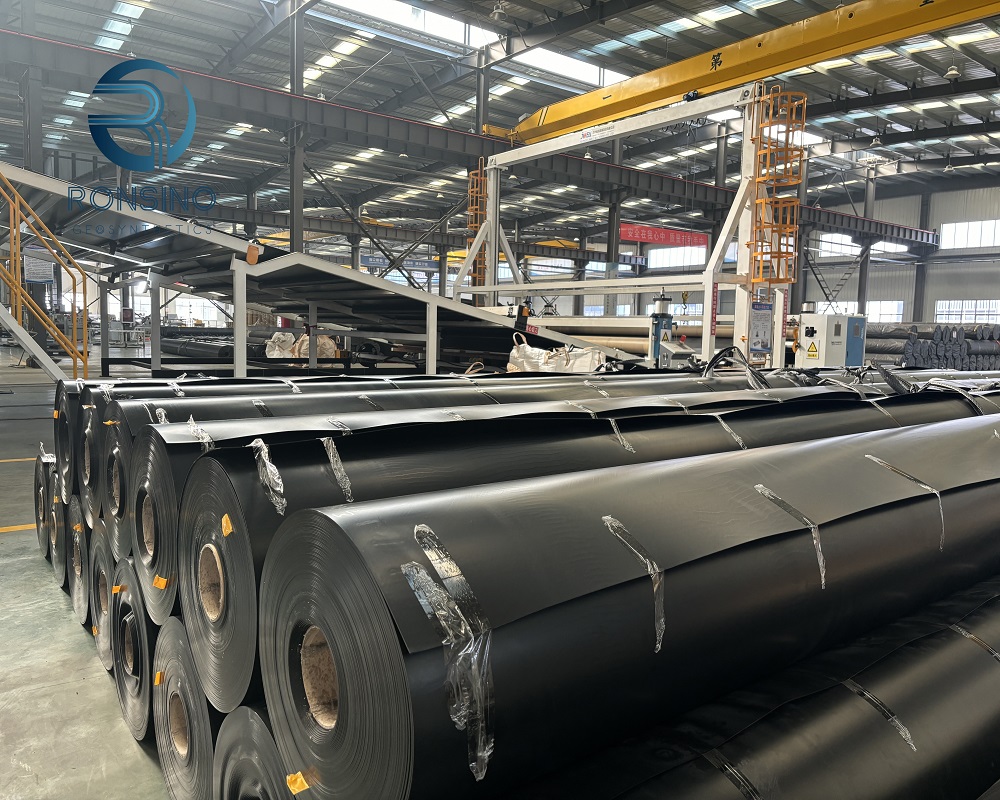
Not all geomembranes are equal—gold mining requires specific material properties for optimal performance.
4.1 Geo Membrane for Gold Mining Material Types
Type | Best For | Advantages |
HDPE | Heap leach pads, tailings dams | High chemical resistance, durable, cost-effective |
LLDPE | Flexible liners, exposed areas | More puncture-resistant, better elongation |
PVC | Temporary liners, secondary containment | Easier installation, good flexibility |
4.2. Geo Membrane Thickness & Strength
In mining applications, geomembranes must be capable of withstanding a diverse array of mechanical stresses and geological forces. Selecting products with appropriate thickness and mechanical strength properties is therefore crucial to ensuring operational performance and safety.
1.Typical Thickness Range: 1.5 mm to 3 mmThis thickness bracket is widely adopted for leach pads, tailings dams, and solution ponds. Thicker geomembrane liners offer enhanced mechanical robustness and puncture resistance, better adapting to the harsh operating conditions of mining sites.
2.High Tensile StrengthMining-grade geomembranes need to endure stresses induced by subgrade settlement, seismic activity, and stacked ore loads. High-density polyethylene (HDPE) liners stand out for their outstanding tensile performance, which guarantees long-term dimensional stability without deformation or rupture.
3.Superior Puncture and Tear ResistanceMining sites are often covered with sharp rock fragments, gravel, and crushed ore. A durable geomembrane must be able to resist punctures both during installation and in subsequent service. This prevents liner breaches that could trigger severe environmental contamination incidents.
In summary, choosing geomembranes with suitable thickness and mechanical strength is key to maintaining the structural integrity and long-term service performance of containment facilities, even under the most demanding mining conditions.
4.3. Geo Membrane Seaming & Installation
Proper installation is just as critical as material quality itself. Even the highest-grade geomembranes can end up failing if their seams are not securely fused, or if the tension of the liner is not precisely controlled during placement.
1.Thermal Fusion WeldingSuperior seam integrity is achieved via hot wedge welding or extrusion welding techniques, which fuse two adjacent liner sheets into a single, homogeneous and impermeable bond. This method is preferred over adhesive bonding or mechanical fastening, thanks to its far greater structural strength and long-term durability.
2.Stringent Quality Control TestingTo guarantee flawless seam performance, testing methods including spark testing, air pressure testing and vacuum testing are implemented both during and after the installation process. These procedures detect any weak points or potential leaks before the containment system is put into operational use.
3.Optimized Slope Design and Subgrade PreparationLeach pads and tailings ponds must be engineered with carefully calibrated slopes to minimize hydrostatic pressure and prevent liner slippage. A smooth, fully compacted subgrade serves to shield the geomembrane from unnecessary stress and deformation.
By adhering to professional installation practices and strict quality assurance protocols, mining operators can significantly reduce the risks of liner failure and avoid the need for costly post-installation repairs.
4.4 Geo Membrane UV & Oxidation Resistance
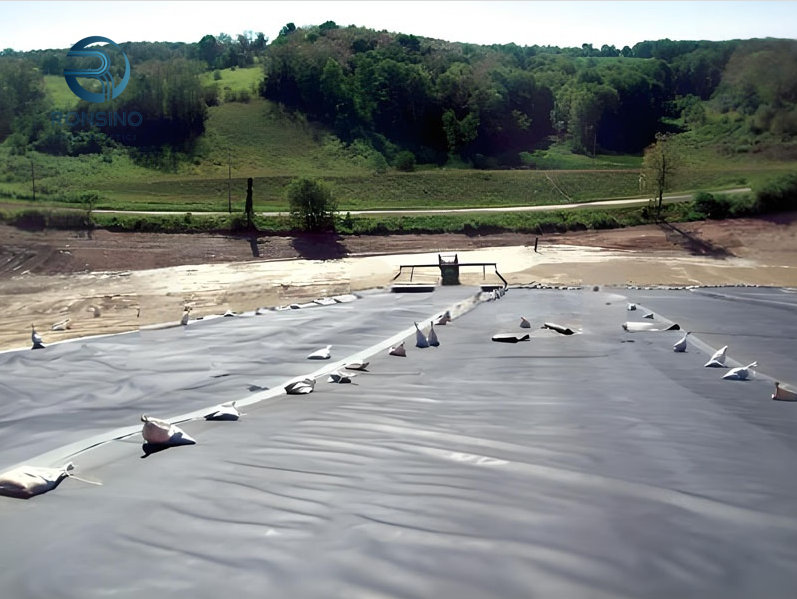
Continuous exposure to sunlight and oxygen can accelerate the degradation of polymer materials, leading to material embrittlement and cracking over time. For open-pit gold mining operations, where liners are frequently exposed to harsh outdoor conditions, resistance to UV radiation and oxidation is of paramount importance.
1.Carbon Black StabilizationPremium HDPE geomembranes are incorporated with carbon black, a highly effective UV stabilizer that forms a protective barrier against the damaging effects of solar radiation. This additive enables exposed liners to maintain reliable performance for 20 years or longer.
2.Antioxidant AdditivesGeomembranes are formulated with specialized antioxidants and heat stabilizers that slow down the rate of oxidative degradation. These additives effectively extend the service life of the liners, especially in high-temperature or chemically aggressive mining environments.
3.Resistance to Environmental Stress Cracking (ESC)Environmental Stress Cracking is a primary cause of premature geomembrane failure. This issue is mitigated through optimized material formulation and strict manufacturing process controls, ensuring the liners retain long-term durability even under sustained mechanical stress.
The combined effect of these features enables geomembranes to perform effectively in outdoor mining applications, withstanding UV exposure, chemical corrosion, and mechanical abrasion for decades on end. 4.5 The Service Life of HDPE Geo membrane in Gold Mining
Geomembranes represent a long-term investment in both environmental protection and operational efficiency. When properly designed and installed, HDPE liners can deliver a service life spanning 20 to 50 years, with the actual longevity hinging on the following key factors:
1.Exposure conditions (differentiating between covered and fully exposed installation scenarios)2.Chemical and thermal stress levels3.Quality standards of raw materials and welded seams4.Regimen of post-installation maintenance and monitoring 5. Conclusion: Geo Membrane is Essential for Gold Mining
Geomembranes occupy a pivotal position in modern gold mining operations, delivering reliable containment performance, safeguarding water resources, and boosting gold recovery efficiency. As environmental regulatory requirements continue to tighten, advanced supporting solutions – such as reinforced liners and leak detection systems – have become indispensable components for safe and sustainable mining activities.
RONSINO Geosynthetics provides premium-grade geomembrane products specifically engineered to address the rigorous demands of mining applications. Backed by a proven track record and robust technical expertise, RONSINO empowers mining enterprises to mitigate operational risks, cut down on costs, and meet all relevant environmental compliance standards.
Choose RONSINO Geosynthetics — your dependable companion for accountable gold mining.