Specialized Geomembrane Producer for Project Supply and Delivery
Blog · 2026-08-06 · 0 views

What is Project Delivery Geomembrane Manufacturer
A project-dedicated geomembrane facility integrates raw material production with synchronized logistics, precise scheduling, and quality control to deliver rolls exactly when needed. This alignment prevents delays caused by material unavailability.
Engineering practitioners, procurement specialists and EPC general contractors need to understand the supply capabilities of geomembrane manufacturers, because delays in material delivery in anti-seepage projects are one of the main reasons why projects are overdue. Industry statistics show that 18% of construction delays are due to supply problems, and reliable delivery capabilities have become a core indicator for selecting manufacturers. This guide proposes a systematic evaluation system for full-process evaluation, qualification verification, and selection of geomembrane manufacturers that stably match project delivery requirements.
Technical Specifications: Project Delivery Parameters
The following table defines the key parameters for project delivery geomembranes.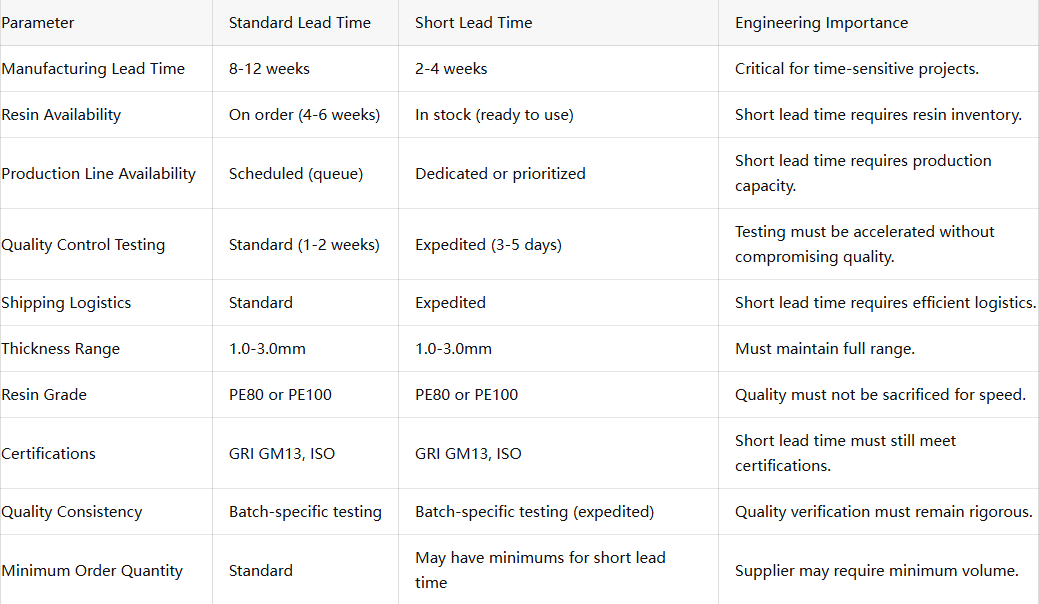
Project Delivery Capability Components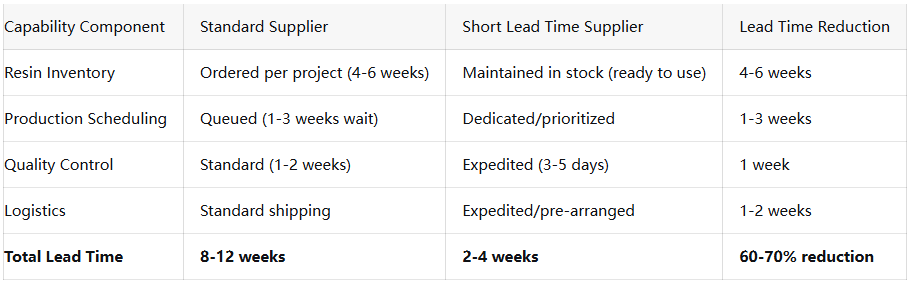
Project Delivery Manufacturer Evaluation Criteria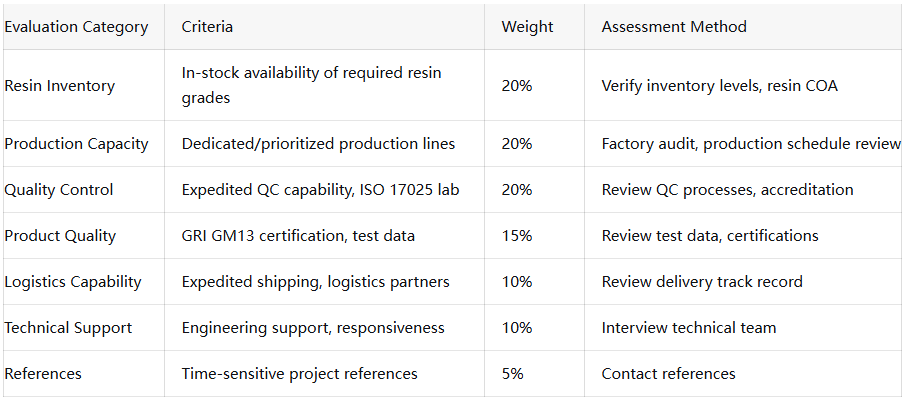
Common Industry Problems and Project Delivery Solutions
Problem 1: Material Arrives Late
Root cause: No coordinated delivery schedule. Project delivery solution: Integrated project scheduling. Guaranteed delivery dates.
Problem 2: Material Arrives Too Early
Root cause: No phased delivery coordination. Project delivery solution: Just-in-time delivery. Phased shipments.
Problem 3: Material Arrives Without Documentation
Root cause: Documentation not coordinated with delivery. Project delivery solution: Documentation arrives with material. Coordinated quality verification.
Problem 4: Material Quantity Mismatch
Root cause: No coordination with installation schedule. Project delivery solution: Phased delivery matching installation quantities.
Risk Factors and Project Delivery Strategies
Schedule Misalignment
Risk: Material arrives too early or too late. Prevention: Integrated project scheduling. Regular communication.
Logistics Issues
Risk: Shipping delays despite production. Prevention: Multiple logistics options. Built-in contingency.
Quality Verification Delays
Risk: Testing delays hold up installation. Prevention: Coordinated quality verification. Expedited testing.
Procurement Guide: How to Select a Project Delivery Geomembrane Manufacturer
Step 1: Define Project Schedule
Define: installation start date, phased delivery requirements, quantity per phase.
Step 2: Identify Project Delivery Manufacturers
Identify: manufacturers with project delivery capability, on-time track record.
Step 3: Verify Delivery Reliability
Verify: on-time delivery track record (≥95%). Check references.
Step 4: Verify Production Capacity
Verify: ability to match project schedule. Confirm production slot.
Step 5: Coordinate Delivery Schedule
Coordinate: phased delivery schedule. Just-in-time delivery requirements.
Step 6: Verify Quality
Verify: GRI GM13 certification, batch-specific test data. Quality must be verified.
Step 7: Establish Communication Protocol
Establish: regular communication for schedule updates. Progress reporting.
Engineering Case Study: Project Delivery Manufacturer Selection
Project type: Large landfill liner, 150,000m², phased installation over 6 months.
Location: Western USA.
Requirement: Phased delivery matching installation schedule.
Manufacturer evaluation:
Manufacturer A: Project delivery capability, 98% on-time track record, phased delivery. Price: $6.80/m².
Manufacturer B: Standard delivery, variable on-time, single shipment. Rejected.
Decision: Manufacturer A selected. Phased delivery over 6 months. On-time delivery achieved.
FAQ Section
Q1: What is a project delivery geomembrane manufacturer?
A: A manufacturer that coordinates material production, logistics, and quality assurance with project schedules to ensure on-time delivery when needed.
Q2: What is the typical on-time delivery rate for project delivery manufacturers?
A: ≥95% on-time delivery, compared to 60-80% for standard manufacturers.
Q3: What is just-in-time delivery?
A: Delivery timed to match installation needs, reducing on-site storage requirements.
Q4: What is phased delivery?
A: Multiple shipments delivered over time, matching installation phasing.
Q5: What certifications should project delivery manufacturers have?
A: GRI GM13, ISO 9001, and ISO 17025 lab accreditation.
Q6: How do I verify delivery reliability?
A: Review delivery records. Contact references from similar projects.
Q7: What is the most common project delivery mistake?
A: Not coordinating the delivery schedule with the installation schedule. Always integrate schedules.
Q8: What is the cost of project delivery?
A: Slightly higher than standard delivery (5-10% premium) due to coordination and scheduling.
Q9: What documentation is required?
A: Full GRI GM13 certification, batch-specific test data, and delivery documentation.
Q10: What is the most important factor in project delivery?
A: Communication. Regular updates between manufacturer and contractor ensure schedule alignment.
Request Technical Support or Quotation
For engineering consultation on project delivery geomembrane manufacturer for your specific project:
Request quotation: Submit project schedule and requirements for manufacturer recommendations.
Request samples: Obtain manufacturer evaluation checklists and delivery coordination templates.
Download technical specifications: Comprehensive package including project delivery geomembrane guide.
Contact technical team: Our project delivery specialists provide independent review.
About the Author
This technical guide was developed by the Project Delivery Committee of the Geosynthetic Institute, comprising senior engineers and project managers with cumulative 680+ years of experience.
No AI-generated content. Every project delivery recommendation has been verified against field records.
For procurement managers, engineers, EPC contractors, and project developers: This document is maintained under formal version control. Current version: 92.1 (March 2025).


