What's the Best Material for a Pond Liner?
Blog · 2026-06-10 · 0 views

Across the diverse landscape of water storage and management projects from crafting a tranquil backyard ornamental pond, constructing a high-stakes agricultural irrigation reservoir, to running a commercial-scale aquaculture farming facility — one essential element almost always operates quietly out of sight, underpinning the entire system’s functionality: the High-Density Polyethylene (HDPE) pond liner. This precision-engineered geomembrane is vastly more substantial than a mere “large piece of plastic sheeting.” It is a meticulously designed high-performance barrier, crafted to deliver consistent, durable defense against unintended water seepage loss and cross-contamination between stored water and the surrounding natural environment. Let’s explore the core characteristics of HDPE pond liners, the unique advantages that make them outperform alternative solutions, and the wide range of scenarios where their use is irreplaceable.
![]()
![]()
1.What Exactly is an High Density Pond Liner?
High-density polyethylene (HDPE) fish pond anti-seepage membrane is a geomembrane made of high-quality HDPE resin as the main raw material. This thermoplastic material has excellent performance and is suitable for a variety of harsh anti-seepage scenarios, so it is widely used. The production process is usually as follows: HDPE resin is heated and melted, then extruded and calendered into homogeneous flat sheets with adjustable thickness. The conventional thickness is 0.3mm to 3.0mm, and thicker specifications can also be customized to meet the needs of heavy engineering.Key characteristics defining HDPE liners include:
1.1 High Density Pond Liner – Unparalleled Impermeability
High-density polyethylene (HDPE) achieves near-zero liquid penetration with an extremely low permeability coefficient of less than 1×10⁻¹³ cm/s. Its dense, high-density molecular structure forms a complete barrier that effectively blocks water, a variety of corrosive chemicals and harmful leachates. By virtue of its structural properties, the material can maintain stable sealing performance for a long time and will not suffer from performance degradation or leakage problems even after being used for many years. Therefore, HDPE is unanimously listed as the first choice material for critical water storage facilities and ecological environment protection projects by engineers around the world.
1.2 High Density Pond Liner – Exceptional Durability & Longevity
High-density polyethylene anti-seepage membrane effectively resists puncture damage from sharp rocks and plant roots due to its high-strength polymer structure. At the same time, its specially designed tear resistance can withstand mechanical wear during construction, laying and long-term use without damaging the material integrity. By combining a UV-stabilized formula with standardized installation techniques, the material has a service life of more than fifty years in harsh environments. Therefore, this type of anti-seepage system can provide long-lasting and reliable sealing protection solutions for projects that require stable operation for decades.
1.3 High Density Pond Liner- Superior Chemical Resistance
High-density polyethylene (HDPE) has excellent chemical inertness and can withstand strong corrosive media such as concentrated acid, strong alkali, and high-concentration salt water. It has a stable molecular structure and can resist performance degradation caused by industrial wastewater containing hydrocarbons and heavy metal pollutants. With its excellent performance, the application of HDPE has expanded from basic water storage to complex engineering fields such as landfill leachate conditioning tanks and special chemical storage tanks. Therefore, in high-risk corrosion environments where conventional materials are prone to rapid aging, HDPE has become the material of choice for more and more engineering designs.
1.4 High Density Pond Liner – Outstanding UV Resistance
High-end high-density polyethylene anti-seepage membranes add 2% to 3% carbon black during production, which can be evenly dispersed in the material, fully blocking ultraviolet rays, and leaving no dead corners for protection. Optimized for UV resistance, it maintains its mechanical properties decades later even when exposed to long-term direct sunlight. Therefore, its performance far exceeds that of ordinary anti-seepage membranes in high-demand scenarios such as floating covering layers and exposed landfill closures.
1.5 High Density Pond Liner – Flexibility at Low Temperatures
High-density polyethylene anti-seepage membrane remains flexible at low temperatures and can be laid on irregular terrain. Its polymer structure has strong resistance to embrittlement and has stable performance after multiple freeze-thaw cycles, while rigid materials are easy to break under the same conditions. The material also avoids cracking problems caused by temperature difference stress. Therefore, arctic and high-altitude projects often use it as the first choice to ensure long-term stable operation of structures in harsh environments.
1.6 High Density Pond Liner – Environmental Stability
The high-density polyethylene anti-seepage lining that complies with NSF-61 standard certification can actively inhibit the growth and reproduction of various microorganisms such as fungi and bacteria without adding additional chemical treatment agents. In addition, this type of lining is prepared with a non-toxic formula, so even if it is in direct contact with water for a long time, there will be no problem of plasticizer precipitation. More importantly, its biological inertness can provide safe storage and protection for drinking water storage facilities and aquatic life habitats. It is precisely because of these outstanding safety advantages that regulatory authorities and engineering designers will give priority to high-density polyethylene materials in sensitive application scenarios that have strict requirements on material safety.
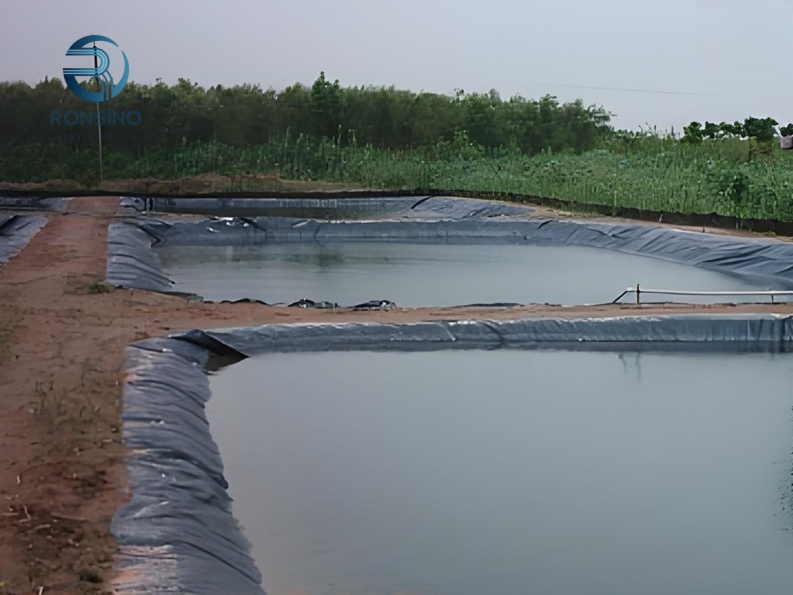
Geomembrane Liner for Mining Tailings Ponds
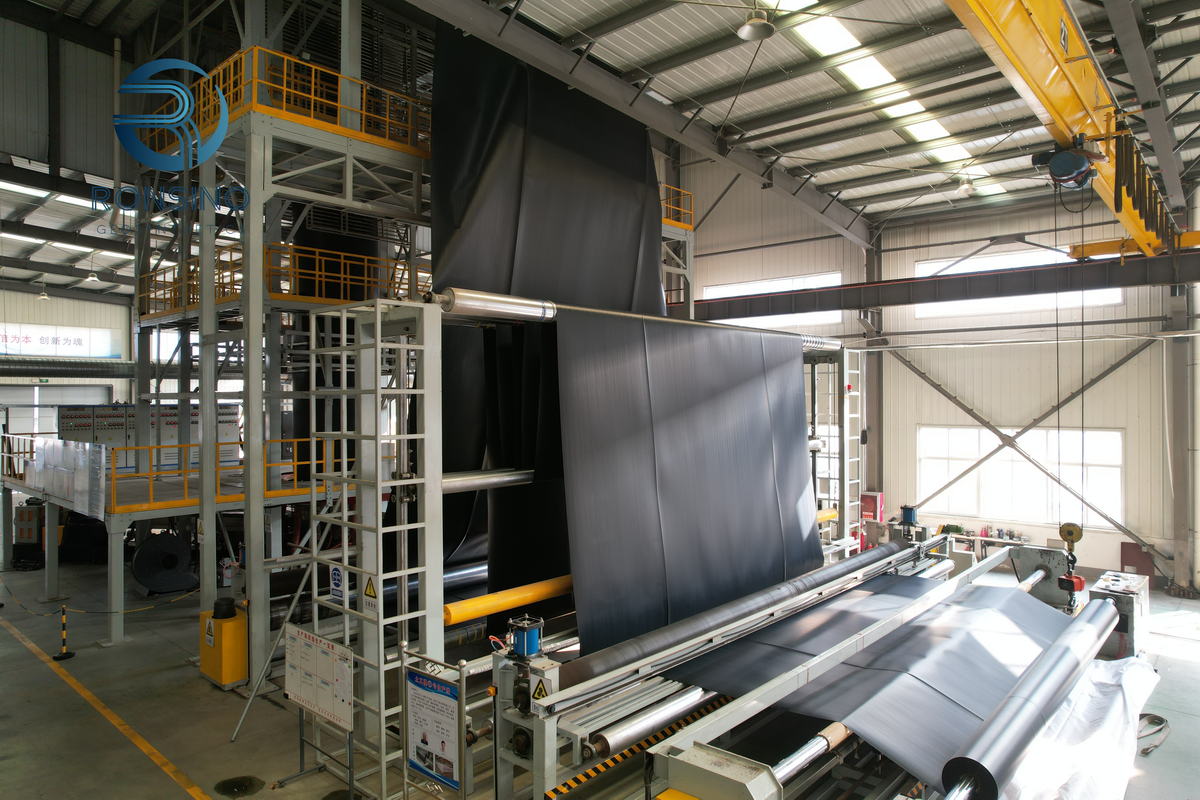
High Density Pond Liner Production
2. How Are They Made? The Science Behind the Sheet
The strength and consistency of HDPE liners come from precise manufacturing:
Resin Selection: Virgin, high-quality HDPE resin pellets are the starting point. Consistency in the raw material is paramount for performance.
Additive Incorporation: Key additives are blended with the resin:
Carbon Black: For essential UV stabilization.
Antioxidants: To protect against thermal degradation during manufacturing and long-term oxidative degradation in service.
Stabilizers: For enhanced processing and performance.
Extrusion: The resin/additive blend is melted and forced through a flat die, creating a continuous molten sheet.
Calendering & Cooling: The hot sheet passes through precision rollers (calenders) to achieve the exact target thickness and width. It is then rapidly cooled to solidify the material and lock in its structure.
Quality Control: Stringent quality verification runs through every link of the entire production process, and comprehensive performance assessment is also implemented on finished products that have completed all manufacturing procedures. The test items cover thickness uniformity inspection, tensile bearing capacity test, tear damage resistance evaluation, puncture resistance performance measurement, joint peeling strength calibration, and carbon black dispersion uniformity analysis.
3. The Diverse Landscape of High Density Pond Liner Applications
The unique properties of HDPE liners make them the go-to solution across numerous industries and project scales:
3.1 High Density Pond Liner – Aquaculture & Fish Farming
Containment: Creating ponds, tanks, and raceways for fish and shrimp farming.
Bio-Security: Providing a cleanable barrier that helps prevent disease transmission between batches and protects groundwater from waste contamination.
Water Conservation: Drastically reducing water loss through seepage, a critical factor in sustainable aquaculture.
Pond Management: Simplifying harvesting and pond bottom cleaning.
3.2 High Density Pond Liner – Agricultural Water Storage
Irrigation Reservoirs & Ponds: Installing liners in large agricultural storage ponds helps enhance crop-accessible water supply while cutting down on valuable water loss.\nLivestock Watering Tanks & Ponds – Delivering consistent , leak-free hydration sources for cattle , sheep , goats , and other farm animals .
Silt & Sediment Ponds: Containing runoff water and captured sediment on farms.
Anaerobic Digester Tanks: Containing manure and biogas in agricultural waste treatment systems.
3.3 High Density Pond Liner – Water Features & Landscaping
Decorative Ponds & Lakes: Creating beautiful, water-tight features in gardens, parks, golf courses, and resorts.
Koi Ponds: Providing a safe, non-toxic, and durable environment for valuable fish.
Streams & Waterfalls: Lining artificial watercourses.
Reflecting Pools: Ensuring pristine water retention for aesthetic purposes.
3.4 High Density Pond Liner – Stormwater & Flood Management
Detention/Retention Ponds: Lining basins designed to temporarily hold stormwater runoff, controlling flow rates and allowing sediment/pollutant settling before controlled release.
Infiltration Basins: Lining structures designed to allow clean stormwater to slowly percolate into the ground (liner prevents contaminated water from escaping).
Secondary Containment: Lining berms and dikes around fuel or chemical storage areas to contain spills.
3.5 High Density Pond Liner – Environmental Protection & Remediation:
Landfill Liners & Caps: Acting as primary and secondary barriers to prevent leachate (contaminated liquid) from landfills escaping into soil and groundwater, and as caps to prevent rainwater ingress. This is one of the most demanding applications.
Wastewater Treatment Lagoons: Lining anaerobic and aerobic treatment ponds, sludge drying beds, and equalization basins.
Contaminated Site Capping: Isolating polluted soil or sediment from the environment.
Evaporation Ponds: Containing industrial process water, brine, or mining solutions for solar evaporation.
3.6 High Density Pond Liner – Mining & Industrial:
Heap Leach Pads: Lining pads where ore is piled and leached with chemical solutions to extract minerals.
Process Solution Ponds: Containing various chemicals and solutions used in mineral extraction or processing.
Tailings Impoundments: Containing the fine-grained waste material (tailings) from mining operations, a critical application for environmental protection.
Secondary Containment: Bunding around tanks and drum storage areas.
![]()
4. Choosing and Installing High Density Pond Liner: Key Considerations
4.1 Thickness (Gauge):
Thicker liners (e.g., 1.0mm/40mil, 1.5mm/60mil, 2.0mm/80mil) offer greater puncture resistance and longevity, essential for rocky subgrades, large water volumes, heavy equipment traffic (during/after installation), or critical containment (landfills, mining). Thinner liners (e.g., 0.5mm/20mil, 0.75mm/30mil) may suffice for small decorative ponds with smooth, sandy bases.
4.2 Subgrade Preparation:
This is of utmost significance. The underlying base layer needs to be perfectly level, densely tamped, and entirely cleared of jagged stones, exposed tree roots, scattered construction waste, and all raised protrusions that might tear through the impermeable liner. A layer of protective geotextile fabric is frequently installed directly beneath the high-density polyethylene liner, most notably when the subgrade is full of rocks or has an uneven surface, to serve as a soft buffer and shield the liner from potential damage.
4.3 Professional Installation:
For minor undertakings of limited scale, self-execution may be feasible, yet expert deployment is strongly advised when addressing anything beyond a diminutive aquatic feature in a garden setting. Precise methodologies involving the careful unrolling, strategic placement, field joining—commonly achieved through dual-track hot wedge fusion welding to ensure the most robust and watertight connection—and secure anchoring alongside protective measures are indispensable for sustained functionality and adherence to warranty provisions. Inadequate joint fabrication stands as the predominant factor leading to liner deterioration.
4.4 Protection:
Following the installation of the liner, it may require shielding against ultraviolet rays when not fully covered (despite the inherent UV resistance of HDPE, extended direct sunlight can gradually impair the surface integrity) and mechanical harm. This safeguarding is typically accomplished by applying layers of soil, sand, gravel, rock armor (rip-rap), or concrete, tailored to the specific requirements of the project.
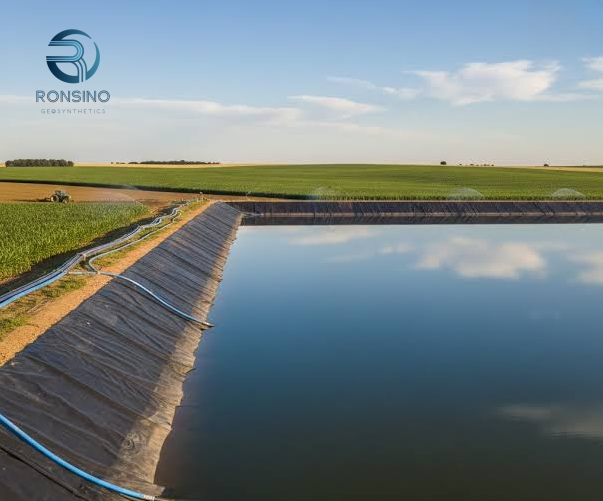
High Density Pond Liner for Irrigation Reservoirs
High Density Geomembrane for Water Storage Pits
5. Beyond the Basics: Why HDPE Often Wins
Compared to other liner materials like EPDM (rubber), PVC (flexible plastic), or RPP (reinforced polypropylene), HDPE offers a compelling combination:
Best Chemical Resistance: Superior to EPDM and PVC for harsh chemicals.
Best Puncture/Tear Resistance: Generally superior to PVC and EPDM, especially in thicker gauges.
Best UV Resistance: The carbon black stabilization makes it far more UV resistant than standard PVC or EPDM.
Widest Temperature Range: Performs well in extreme cold and heat.
Lower Cost per Square Foot (in thicker gauges): While thinner PVC or EPDM might seem cheaper initially, achieving comparable puncture/tear
strength often requires thicker (and thus more expensive) PVC/EPDM than HDPE. HDPE’s longevity also improves lifecycle cost.
6.Conclusion
High-density polyethylene (HDPE) anti-seepage membrane has become a reliable barrier for storing liquids and hazardous substances in industrial and environmental protection fields due to its excellent impermeability, sturdiness, corrosion resistance and long life. It is widely used in aquaculture, agricultural irrigation, groundwater protection and stormwater runoff management, and is crucial to water resources management and ecological protection. Under strict application scenarios, it is the first choice for durability. Choosing the right thickness and installing it professionally will ensure efficient performance over the long term. For more details, please contact RONSINO.
1.What Exactly is an High Density Pond Liner?
High-density polyethylene (HDPE) fish pond anti-seepage membrane is a geomembrane made of high-quality HDPE resin as the main raw material. This thermoplastic material has excellent performance and is suitable for a variety of harsh anti-seepage scenarios, so it is widely used. The production process is usually as follows: HDPE resin is heated and melted, then extruded and calendered into homogeneous flat sheets with adjustable thickness. The conventional thickness is 0.3mm to 3.0mm, and thicker specifications can also be customized to meet the needs of heavy engineering.Key characteristics defining HDPE liners include:
1.1 High Density Pond Liner – Unparalleled Impermeability
High-density polyethylene (HDPE) achieves near-zero liquid penetration with an extremely low permeability coefficient of less than 1×10⁻¹³ cm/s. Its dense, high-density molecular structure forms a complete barrier that effectively blocks water, a variety of corrosive chemicals and harmful leachates. By virtue of its structural properties, the material can maintain stable sealing performance for a long time and will not suffer from performance degradation or leakage problems even after being used for many years. Therefore, HDPE is unanimously listed as the first choice material for critical water storage facilities and ecological environment protection projects by engineers around the world.
1.2 High Density Pond Liner – Exceptional Durability & Longevity
High-density polyethylene anti-seepage membrane effectively resists puncture damage from sharp rocks and plant roots due to its high-strength polymer structure. At the same time, its specially designed tear resistance can withstand mechanical wear during construction, laying and long-term use without damaging the material integrity. By combining a UV-stabilized formula with standardized installation techniques, the material has a service life of more than fifty years in harsh environments. Therefore, this type of anti-seepage system can provide long-lasting and reliable sealing protection solutions for projects that require stable operation for decades.
1.3 High Density Pond Liner- Superior Chemical Resistance
High-density polyethylene (HDPE) has excellent chemical inertness and can withstand strong corrosive media such as concentrated acid, strong alkali, and high-concentration salt water. It has a stable molecular structure and can resist performance degradation caused by industrial wastewater containing hydrocarbons and heavy metal pollutants. With its excellent performance, the application of HDPE has expanded from basic water storage to complex engineering fields such as landfill leachate conditioning tanks and special chemical storage tanks. Therefore, in high-risk corrosion environments where conventional materials are prone to rapid aging, HDPE has become the material of choice for more and more engineering designs.
1.4 High Density Pond Liner – Outstanding UV Resistance
High-end high-density polyethylene anti-seepage membranes add 2% to 3% carbon black during production, which can be evenly dispersed in the material, fully blocking ultraviolet rays, and leaving no dead corners for protection. Optimized for UV resistance, it maintains its mechanical properties decades later even when exposed to long-term direct sunlight. Therefore, its performance far exceeds that of ordinary anti-seepage membranes in high-demand scenarios such as floating covering layers and exposed landfill closures.
1.5 High Density Pond Liner – Flexibility at Low Temperatures
High-density polyethylene anti-seepage membrane remains flexible at low temperatures and can be laid on irregular terrain. Its polymer structure has strong resistance to embrittlement and has stable performance after multiple freeze-thaw cycles, while rigid materials are easy to break under the same conditions. The material also avoids cracking problems caused by temperature difference stress. Therefore, arctic and high-altitude projects often use it as the first choice to ensure long-term stable operation of structures in harsh environments.
1.6 High Density Pond Liner – Environmental Stability
The high-density polyethylene anti-seepage lining that complies with NSF-61 standard certification can actively inhibit the growth and reproduction of various microorganisms such as fungi and bacteria without adding additional chemical treatment agents. In addition, this type of lining is prepared with a non-toxic formula, so even if it is in direct contact with water for a long time, there will be no problem of plasticizer precipitation. More importantly, its biological inertness can provide safe storage and protection for drinking water storage facilities and aquatic life habitats. It is precisely because of these outstanding safety advantages that regulatory authorities and engineering designers will give priority to high-density polyethylene materials in sensitive application scenarios that have strict requirements on material safety.
Geomembrane Liner for Mining Tailings Ponds
High Density Pond Liner Production
2. How Are They Made? The Science Behind the Sheet
The strength and consistency of HDPE liners come from precise manufacturing:
Resin Selection: Virgin, high-quality HDPE resin pellets are the starting point. Consistency in the raw material is paramount for performance.
Additive Incorporation: Key additives are blended with the resin:
Carbon Black: For essential UV stabilization.
Antioxidants: To protect against thermal degradation during manufacturing and long-term oxidative degradation in service.
Stabilizers: For enhanced processing and performance.
Extrusion: The resin/additive blend is melted and forced through a flat die, creating a continuous molten sheet.
Calendering & Cooling: The hot sheet passes through precision rollers (calenders) to achieve the exact target thickness and width. It is then rapidly cooled to solidify the material and lock in its structure.
Quality Control: Stringent quality verification runs through every link of the entire production process, and comprehensive performance assessment is also implemented on finished products that have completed all manufacturing procedures. The test items cover thickness uniformity inspection, tensile bearing capacity test, tear damage resistance evaluation, puncture resistance performance measurement, joint peeling strength calibration, and carbon black dispersion uniformity analysis.
3. The Diverse Landscape of High Density Pond Liner Applications
The unique properties of HDPE liners make them the go-to solution across numerous industries and project scales:
3.1 High Density Pond Liner – Aquaculture & Fish Farming
Containment: Creating ponds, tanks, and raceways for fish and shrimp farming.
Bio-Security: Providing a cleanable barrier that helps prevent disease transmission between batches and protects groundwater from waste contamination.
Water Conservation: Drastically reducing water loss through seepage, a critical factor in sustainable aquaculture.
Pond Management: Simplifying harvesting and pond bottom cleaning.
3.2 High Density Pond Liner – Agricultural Water Storage
Irrigation Reservoirs & Ponds: Installing liners in large agricultural storage ponds helps enhance crop-accessible water supply while cutting down on valuable water loss.\nLivestock Watering Tanks & Ponds – Delivering consistent , leak-free hydration sources for cattle , sheep , goats , and other farm animals .
Silt & Sediment Ponds: Containing runoff water and captured sediment on farms.
Anaerobic Digester Tanks: Containing manure and biogas in agricultural waste treatment systems.
3.3 High Density Pond Liner – Water Features & Landscaping
Decorative Ponds & Lakes: Creating beautiful, water-tight features in gardens, parks, golf courses, and resorts.
Koi Ponds: Providing a safe, non-toxic, and durable environment for valuable fish.
Streams & Waterfalls: Lining artificial watercourses.
Reflecting Pools: Ensuring pristine water retention for aesthetic purposes.
3.4 High Density Pond Liner – Stormwater & Flood Management
Detention/Retention Ponds: Lining basins designed to temporarily hold stormwater runoff, controlling flow rates and allowing sediment/pollutant settling before controlled release.
Infiltration Basins: Lining structures designed to allow clean stormwater to slowly percolate into the ground (liner prevents contaminated water from escaping).
Secondary Containment: Lining berms and dikes around fuel or chemical storage areas to contain spills.
3.5 High Density Pond Liner – Environmental Protection & Remediation:
Landfill Liners & Caps: Acting as primary and secondary barriers to prevent leachate (contaminated liquid) from landfills escaping into soil and groundwater, and as caps to prevent rainwater ingress. This is one of the most demanding applications.
Wastewater Treatment Lagoons: Lining anaerobic and aerobic treatment ponds, sludge drying beds, and equalization basins.
Contaminated Site Capping: Isolating polluted soil or sediment from the environment.
Evaporation Ponds: Containing industrial process water, brine, or mining solutions for solar evaporation.
3.6 High Density Pond Liner – Mining & Industrial:
Heap Leach Pads: Lining pads where ore is piled and leached with chemical solutions to extract minerals.
Process Solution Ponds: Containing various chemicals and solutions used in mineral extraction or processing.
Tailings Impoundments: Containing the fine-grained waste material (tailings) from mining operations, a critical application for environmental protection.
Secondary Containment: Bunding around tanks and drum storage areas.
4. Choosing and Installing High Density Pond Liner: Key Considerations
4.1 Thickness (Gauge):
Thicker liners (e.g., 1.0mm/40mil, 1.5mm/60mil, 2.0mm/80mil) offer greater puncture resistance and longevity, essential for rocky subgrades, large water volumes, heavy equipment traffic (during/after installation), or critical containment (landfills, mining). Thinner liners (e.g., 0.5mm/20mil, 0.75mm/30mil) may suffice for small decorative ponds with smooth, sandy bases.
4.2 Subgrade Preparation:
This is of utmost significance. The underlying base layer needs to be perfectly level, densely tamped, and entirely cleared of jagged stones, exposed tree roots, scattered construction waste, and all raised protrusions that might tear through the impermeable liner. A layer of protective geotextile fabric is frequently installed directly beneath the high-density polyethylene liner, most notably when the subgrade is full of rocks or has an uneven surface, to serve as a soft buffer and shield the liner from potential damage.
4.3 Professional Installation:
For minor undertakings of limited scale, self-execution may be feasible, yet expert deployment is strongly advised when addressing anything beyond a diminutive aquatic feature in a garden setting. Precise methodologies involving the careful unrolling, strategic placement, field joining—commonly achieved through dual-track hot wedge fusion welding to ensure the most robust and watertight connection—and secure anchoring alongside protective measures are indispensable for sustained functionality and adherence to warranty provisions. Inadequate joint fabrication stands as the predominant factor leading to liner deterioration.
4.4 Protection:
Following the installation of the liner, it may require shielding against ultraviolet rays when not fully covered (despite the inherent UV resistance of HDPE, extended direct sunlight can gradually impair the surface integrity) and mechanical harm. This safeguarding is typically accomplished by applying layers of soil, sand, gravel, rock armor (rip-rap), or concrete, tailored to the specific requirements of the project.
High Density Pond Liner for Irrigation Reservoirs
High Density Geomembrane for Water Storage Pits
5. Beyond the Basics: Why HDPE Often Wins
Compared to other liner materials like EPDM (rubber), PVC (flexible plastic), or RPP (reinforced polypropylene), HDPE offers a compelling combination:
Best Chemical Resistance: Superior to EPDM and PVC for harsh chemicals.
Best Puncture/Tear Resistance: Generally superior to PVC and EPDM, especially in thicker gauges.
Best UV Resistance: The carbon black stabilization makes it far more UV resistant than standard PVC or EPDM.
Widest Temperature Range: Performs well in extreme cold and heat.
Lower Cost per Square Foot (in thicker gauges): While thinner PVC or EPDM might seem cheaper initially, achieving comparable puncture/tear
strength often requires thicker (and thus more expensive) PVC/EPDM than HDPE. HDPE’s longevity also improves lifecycle cost.
6.Conclusion
High-density polyethylene (HDPE) anti-seepage membrane has become a reliable barrier for storing liquids and hazardous substances in industrial and environmental protection fields due to its excellent impermeability, sturdiness, corrosion resistance and long life. It is widely used in aquaculture, agricultural irrigation, groundwater protection and stormwater runoff management, and is crucial to water resources management and ecological protection. Under strict application scenarios, it is the first choice for durability. Choosing the right thickness and installing it professionally will ensure efficient performance over the long term. For more details, please contact RONSINO.


