What Is the Expense of Installing a Landfill Impermeable Liner?
Blog · 2026-06-15 · 0 views
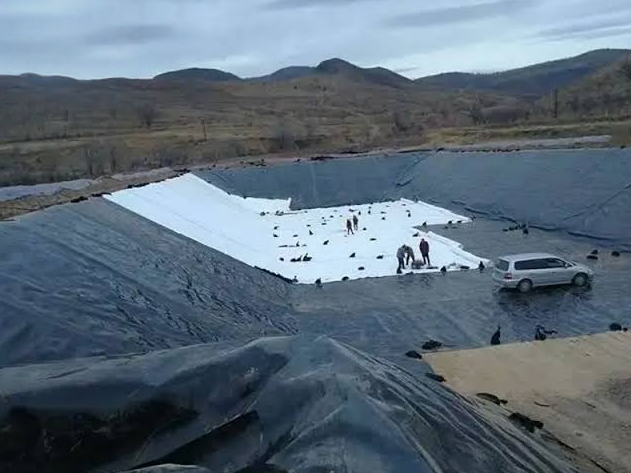
Landfill project planning, whether for municipal domestic waste, industrial residues or hazardous materials, always lists the liner system as one of the most critical and often most complex components for cost evaluation.Cost-cutting on the liner is never advisable, as it serves as the core barrier protecting groundwater and surrounding soil from toxic leachate contamination. Therefore, fully understanding all cost elements of the liner system is a top priority for planners and stakeholders.There is no simple, uniform answer to the common question of "how much a landfill liner typically costs". Total cost is determined by multiple interrelated factors, with the high-density geomembrane layer, as the most critical single component, usually taking up the largest share of the total liner system cost.
A comprehensive landfill liner system is a sophisticated, multi-layered engineering structure.
1. A Typical Modern Composite Liner includes:
Prepared Subgrade: The excavated and compacted soil base.
Geotextile Cushion:A protective fabric layer.
Geomembrane: The flexible, impermeable plastic sheet that is the primary fluid barrier.
Compacted Clay Liner (CCL): A layer of low-permeability soil.
Leachate Collection Pipes:A network to remove contaminated liquid.
Protective Soil Layer: Covering over the pipes.
The total expenditure of the entire system is determined by the procurement cost of each structural layer and the labor costs required for on-site assembly. The anti-seepage membrane itself is the core factor that drives up the total cost, and its market price fluctuates significantly depending on the type of raw materials, section thickness and production grade.
RONSINO Landfill Liner Cost Per Square Meter
HDPE Geomembrane Liner Cost for Landfill
2. Breaking Down the Cost Factors
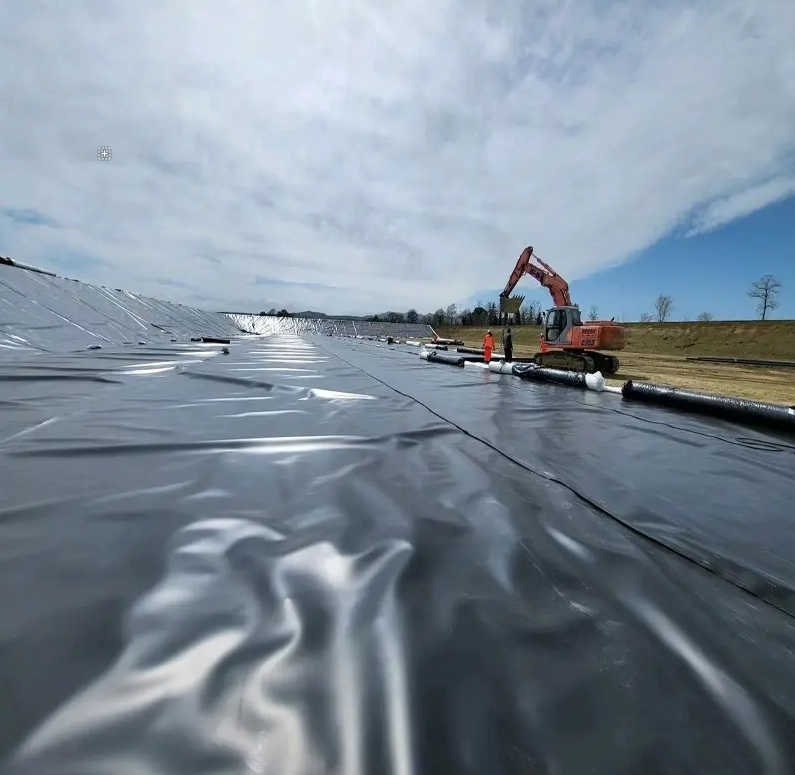
The total cost of a landfill liner system can range from $5 to $20 per square foot or more. For a 10-acre landfill (435,600 square feet), this translates to a total liner cost between $2.2 million and $8.7 million. This wide range is due to several key variables:
2.1 Landfill Liner Cost – Material Type (Geomembrane):
Geomembrane material selection stands as the most prominent factor influencing the overall cost of landfill liner system construction. Quotations for such materials fluctuate drastically, hinging entirely on the physical and chemical characteristics of the raw polymer as well as its long-term operational performance under complex landfill conditions.
High-density polyethylene (HDPE) is one of the most widely used and cost-effective options for general solid waste disposal, demonstrating excellent chemical resistance and durability. In contrast, although linear low-density polyethylene (LLDPE) is slightly more expensive, its performance in flexibility and resistance to stress cracking is more outstanding.
For high-complexity, harsh-operation applications, a full range of high-grade specialized materials are available for selection. Polyvinyl Chloride (PVC) and Flexible Polypropylene (fPP) feature excellent broad-spectrum chemical resistance and superior conformability, fitting seamlessly on uneven, rough subgrades. The highest-performance, most costly options like Ethylene Interpolymer Alloy (EIA) are designated for extremely harsh environments, such as projects facing long-term exposure to highly corrosive, aggressive leachate.
2.2 Landfill Liner Cost – Thickness (Gauge)
Geomembrane thickness (gauge) directly impacts costs: priced by weight per square foot, thicker liners use more polymer resin, raising expenses but delivering better long-term resilience, puncture resistance against overlying waste/underlying subgrade soil, and installation stress tolerance. While standard 60-mil HDPE membranes suit most applications, sites with rocky foundations or dense sharp debris require 80- or even 100-mil variants to retain structural integrity. Thus, selecting appropriate thickness requires balancing required performance standards and project budget constraints, as thicker, more durable membranes carry higher costs.
2.3 Landfill Liner Cost – Project Size and Scale
Economies of scale significantly affect landfill liner system unit costs. Large landfills enjoy volume discounts for bulk purchases of materials, and the continuous construction area facilitates optimization of processes, use of professional equipment, and reduced installation costs per unit area. Therefore, although the total cost of large projects is higher, their unit cost is still lower than that of small projects, which have a higher proportion of fixed costs.
2.4 Landfill Liner Cost – Site Preparation
Subgrade condition is a key variable that affects total cost. Before construction, ground treatment such as excavation of remaining soil, site leveling, and subsoil compaction is required to build a stable and flat foundation for the anti-seepage liner to prevent damage to the liner and ensure uniform support. The cost of this process depends on the geological topography of the site: Pretreatment costs are very low for construction sites with flat terrain and soft soil; construction sites with rocky, rugged or sloping surfaces require a large amount of manpower, large equipment, and even blasting or large-scale earthmoving operations. The cost is extremely high and may significantly increase the total project budget before the geomembrane arrives for installation.
2.5 Landfill Liner Cost – Installation Labor
The labor cost for geomembrane liner installation is a critical part of the project budget. The work is highly technical, including unrolling the roll, hot-melt welding to form a continuous barrier, strict inspection of seams and covering with protective layers. Labor costs are significantly affected by on-site conditions: when it is flat and open, with convenient transportation and good weather, the efficiency is high and the cost is low; if the terrain is complex, traffic is difficult, or the weather is unfavorable, the progress will be delayed, requiring additional equipment and man-hours, resulting in a significant increase in costs.
2.6 Landfill Liner Cost – Geographic Location
The cost of a landfill liner system is significantly affected by geographical location, mainly due to transportation and labor costs: geomembrane and other material production plants are limited in distribution, and the longer the transportation distance, the higher the shipping cost of large-volume rolls, which directly drives up the material cost; there are also regional differences in the wages of professional installation teams, with wages, insurance and living costs generally being higher in big cities or areas with active unions. Therefore, even if the design scheme is the same, the total cost of projects in different regions may vary greatly due to the above geographical factors.
2.7 Landfill Liner Cost – Regulatory Requirements
Regulatory requirements are a core factor affecting the structural design and overall expenditure of landfill liner systems. Strict environmental regulations set by municipal, provincial or national agencies often dictate technical standards that go well beyond a basic single-ply liner. Many new landfills are required by law to use a more durable and costly composite liner structure, which is a combination of an impermeable geomembrane and a dense clay layer or a precast geosynthetic clay liner. This dual barrier design can more effectively prevent leachate leakage and spread, but it also significantly increases the cost of raw material procurement and on-site construction. Regulatory requirements may include more stringent quality assurance and control procedures, more frequent environmental monitoring arrangements, and the requirement to employ professionally certified construction teams. Together, these regulations drive up the total project cost, but are an indispensable prerequisite for meeting operational compliance and ensuring long-term ecological security.
3. Let’s Dissect the Factors that Create this Wide Range:
Landfill Liner Cost – Material Selection
The type of geomembrane is the most significant material cost driver.
HDPE (High-Density Polyethylene): The most common choice for landfills due to its excellent chemical resistance, durability, and cost-effectiveness for large areas. We will explore this in detail later.
LLDPE (Linear Low-Density Polyethylene): Compared with HDPE, this material is more flexible and resistant to stress cracking, making it more suitable for uneven road base laying. While the cost per mil of thickness is usually slightly higher, the installation process tends to be easier and faster.
PVC (Polyvinyl Chloride): This material boasts exceptional pliability and remarkable cost-effectiveness, yet its ability to withstand chemical corrosion from a wide range of hydrocarbon substances is notably deficient, and it is generally not selected as the lining material for primary liners of municipal solid waste landfills. It sees far more widespread application in water conveyance canal projects and ornamental pond construction.
PP (Polypropylene): Offers good chemical and UV resistance and is often used in exposed applications.
EPDM (Ethylene Propylene Diene Monomer): A synthetic rubber, extremely flexible but generally not used for primary landfill liners due to cost and susceptibility to certain oils.
4. Landfill Liner Cost – About HDPE Geomembrane :
Owing to its widespread utilization in the domain of waste containment, HDPE geomembrane warrants an in-depth examination. Comprehending its material characteristics and economic breakdown is fundamental to grasping the total expenditure of the barrier system.
What is HDPE liner ?
High-density polyethylene geomembrane is a synthetic barrier material made from high-quality polyethylene compounds. The polymer is carefully blended with carbon black (typically 2-3% to enhance UV resistance) and specialized additives such as advanced antioxidants and heat stabilizers. After homogenization, the composite material is precision extruded into continuous, uniform sheets and rolled into compact rolls for transportation. Due to its excellent performance characteristics, this material is widely used in various environmental and industrial fields.
Key Properties and Advantages:
Excellent Chemical Resistance: High-density polyethylene has excellent chemical inertness and can withstand various corrosive substances, especially the strong permeability produced in landfills. This material will not be degraded by soil microorganisms at all, and can effectively prevent chemical penetration and deterioration, acting as an excellent protective barrier.
High Durability and Longevity: When correctly composed and implemented, high-density polyethylene geomembranes exhibit a proven operational lifespan surpassing five decades, and are frequently designed to endure a century or more of continuous use. They exhibit remarkable resistance to environmental stress cracking, a prevalent failure mechanism observed in certain polymeric materials.
Low Permeability: The primary function of a barrier is to prevent flow. HDPE has an exceptionally low hydraulic conductivity, effectively making it impermeable to liquids and vapors.
High Tensile Strength and Puncture Resistance: Despite lacking absolute resilience, HDPE demonstrates an optimal synergy of robustness and pliability, enabling it to endure the pressures and deformations typically encountered within landfill settings, particularly when shielded by a geotextile layer.
Cost-Effectiveness: On a per-square-foot basis for the performance provided, HDPE is one of the most economical choices for large-scale containment projects.
The Cost Structure of HDPE Geomembrane:
The cost of HDPE geomembrane itself is typically quoted per square foot. This price is driven by several factors intrinsic to the material:
Raw Material (Resin) Cost: The price of HDPE resin is tied to the global price of petroleum and natural gas. Market fluctuations directly impact the baseline cost of the geomembrane.
Thickness: As mentioned, this is the most direct cost driver. A simple cost comparison can be made by calculating the relative thickness (e.g., 80 mil is 33% thicker than 60 mil, and the cost will reflect this).
Carbon Black Content and Quality: Premium-grade, uniformly distributed carbon black is crucial for enduring ultraviolet stability. Substandard carbon black may result in accelerated deterioration. Adherence to precise requirements is critical.
Roll Size: Manufacturers produce rolls in various widths (typically 15-25 feet wide and hundreds of feet long). Wider rolls mean fewer field seams, which can reduce installation costs, but they may be more expensive per square foot and more difficult to handle.
Manufacturer and Quality Certification: Reputable manufacturers who provide certified materials (e.g., with GRI-GM13 standard test data) may command a premium over generic or uncertified products. This is not an area to cut corners.
Installation and Associated Costs for HDPE:
Deployment and Paneling: Unrolling the heavy rolls and positioning the sheets on the subgrade requires skilled labor and equipment.
Seaming (Welding): This is the most critical and costly part of the installation. HDPE panels are joined using specialized welding equipment.
Dual-Track Fusion Welding: The primary method. Two heated wedges melt the top and bottom surfaces of two overlapping sheets, while a channel between them is left open to allow for pressure and air testing. The cost is typically $1.50 to $3.00 per linear foot of seam, depending on complexity and labor rates.
Patching and Repair: Any imperfections or damage discovered during installation must be patched, adding to labor time and material use.
Quality Assurance (QA/QC): For an HDPE liner, this is exhaustive and includes:
Non-Destructive Testing (NDT): Every inch of every seam is tested using an air pressure test on the dual-track channel.
Destructive Testing: Sample seams are cut out from the field and tested in a lab for shear and peel strength. This requires patching the sample location.
CQA Inspector: A full-time, independent inspector is often on-site to oversee all aspects of the installation, from subgrade preparation to final seaming. Their fees are a direct project cost.
Landfill Liner Cost for Waste Containment
Landfill Liner Geomembrane for Waste Management
5. Conclusion:
Though the upfront expenditure for a comprehensive composite lining solution, featuring a high-density polyethylene geomembrane, is indeed considerable—often reaching several million dollars even for a limited-scale endeavor—it should be regarded as an indispensable commitment to safeguarding the environment. The repercussions of a liner breach, encompassing severe ecological harm, punitive regulatory penalties, exorbitant remediation expenses, and enduring legal accountability for public harm, vastly overshadow the initial financial outlay of a meticulously designed and flawlessly implemented system.
Consequently, the emphasis must transcend mere cost minimization and instead prioritize securing optimal value: a meticulously engineered and assembled structure adhering to superior benchmarks, guaranteeing its unwavering capability to fulfill its essential protective duty across countless future decades. The true expenditure for the lining is, fundamentally, the investment required for the preservation of our most precious aquatic resources and terrestrial integrity.
6. Choose A Reliable Geomembrane Supplier To Quote Price For You :
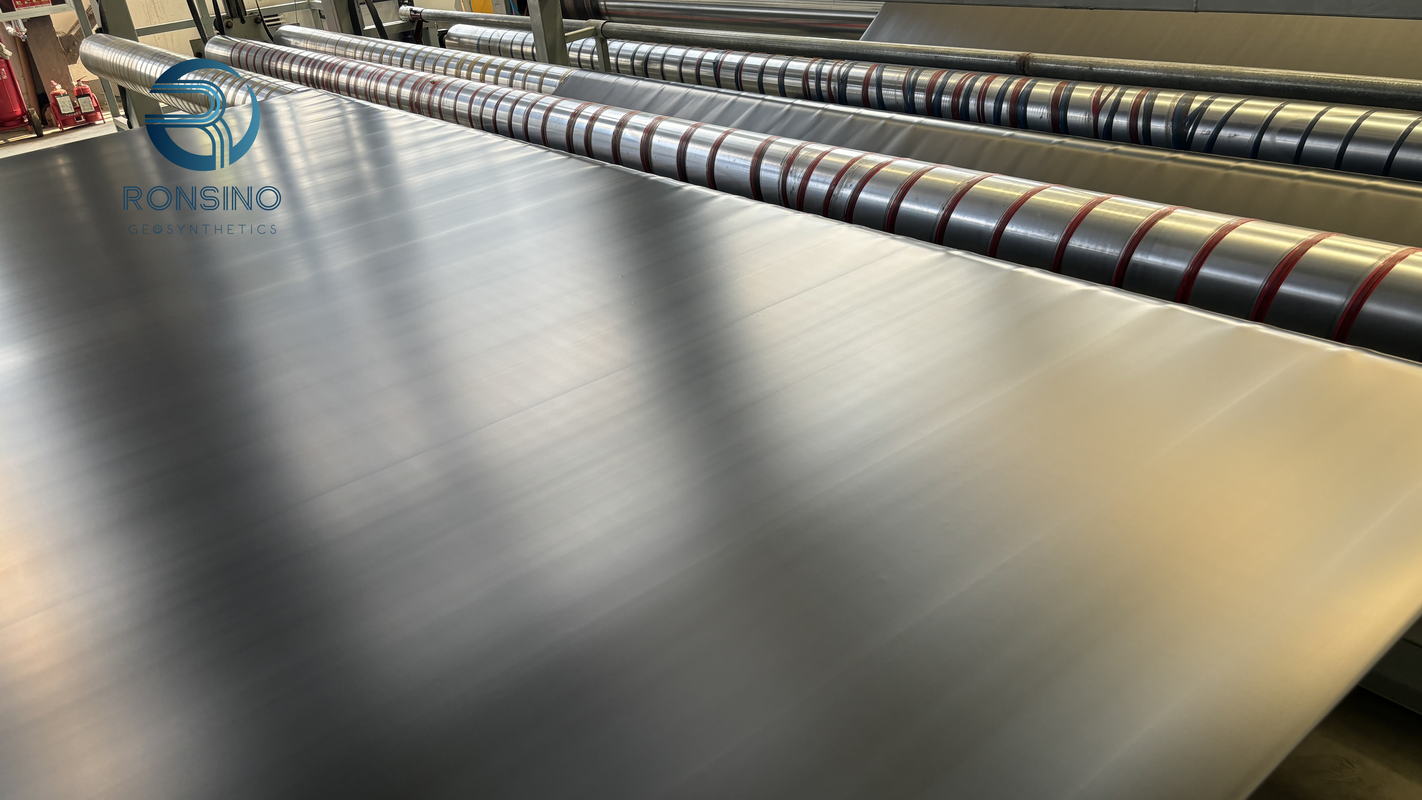
RONSINO continues to invest in technological innovation, improve manufacturing capabilities, and improve turnkey project solutions. The company invested US$10 million to build a factory equipped with advanced automated production lines, using optimized processes to produce high-quality HDPE geomembranes and other products. Our range of geosynthetics is renowned for its reliable quality, superior performance, toughness and affordability.
With its technical strength, innovative solutions and high-quality services, RONSINO provides high-performance HDPE geomembranes and other geosynthetic materials to meet the complex needs of civil engineering, mining and environmental protection fields. Its core advantages are excellent quality, high cost performance and efficient delivery.
A comprehensive landfill liner system is a sophisticated, multi-layered engineering structure.
1. A Typical Modern Composite Liner includes:
Prepared Subgrade: The excavated and compacted soil base.
Geotextile Cushion:A protective fabric layer.
Geomembrane: The flexible, impermeable plastic sheet that is the primary fluid barrier.
Compacted Clay Liner (CCL): A layer of low-permeability soil.
Leachate Collection Pipes:A network to remove contaminated liquid.
Protective Soil Layer: Covering over the pipes.
The total expenditure of the entire system is determined by the procurement cost of each structural layer and the labor costs required for on-site assembly. The anti-seepage membrane itself is the core factor that drives up the total cost, and its market price fluctuates significantly depending on the type of raw materials, section thickness and production grade.
RONSINO Landfill Liner Cost Per Square Meter
HDPE Geomembrane Liner Cost for Landfill
2. Breaking Down the Cost Factors
The total cost of a landfill liner system can range from $5 to $20 per square foot or more. For a 10-acre landfill (435,600 square feet), this translates to a total liner cost between $2.2 million and $8.7 million. This wide range is due to several key variables:
2.1 Landfill Liner Cost – Material Type (Geomembrane):
Geomembrane material selection stands as the most prominent factor influencing the overall cost of landfill liner system construction. Quotations for such materials fluctuate drastically, hinging entirely on the physical and chemical characteristics of the raw polymer as well as its long-term operational performance under complex landfill conditions.
High-density polyethylene (HDPE) is one of the most widely used and cost-effective options for general solid waste disposal, demonstrating excellent chemical resistance and durability. In contrast, although linear low-density polyethylene (LLDPE) is slightly more expensive, its performance in flexibility and resistance to stress cracking is more outstanding.
For high-complexity, harsh-operation applications, a full range of high-grade specialized materials are available for selection. Polyvinyl Chloride (PVC) and Flexible Polypropylene (fPP) feature excellent broad-spectrum chemical resistance and superior conformability, fitting seamlessly on uneven, rough subgrades. The highest-performance, most costly options like Ethylene Interpolymer Alloy (EIA) are designated for extremely harsh environments, such as projects facing long-term exposure to highly corrosive, aggressive leachate.
2.2 Landfill Liner Cost – Thickness (Gauge)
Geomembrane thickness (gauge) directly impacts costs: priced by weight per square foot, thicker liners use more polymer resin, raising expenses but delivering better long-term resilience, puncture resistance against overlying waste/underlying subgrade soil, and installation stress tolerance. While standard 60-mil HDPE membranes suit most applications, sites with rocky foundations or dense sharp debris require 80- or even 100-mil variants to retain structural integrity. Thus, selecting appropriate thickness requires balancing required performance standards and project budget constraints, as thicker, more durable membranes carry higher costs.
2.3 Landfill Liner Cost – Project Size and Scale
Economies of scale significantly affect landfill liner system unit costs. Large landfills enjoy volume discounts for bulk purchases of materials, and the continuous construction area facilitates optimization of processes, use of professional equipment, and reduced installation costs per unit area. Therefore, although the total cost of large projects is higher, their unit cost is still lower than that of small projects, which have a higher proportion of fixed costs.
2.4 Landfill Liner Cost – Site Preparation
Subgrade condition is a key variable that affects total cost. Before construction, ground treatment such as excavation of remaining soil, site leveling, and subsoil compaction is required to build a stable and flat foundation for the anti-seepage liner to prevent damage to the liner and ensure uniform support. The cost of this process depends on the geological topography of the site: Pretreatment costs are very low for construction sites with flat terrain and soft soil; construction sites with rocky, rugged or sloping surfaces require a large amount of manpower, large equipment, and even blasting or large-scale earthmoving operations. The cost is extremely high and may significantly increase the total project budget before the geomembrane arrives for installation.
2.5 Landfill Liner Cost – Installation Labor
The labor cost for geomembrane liner installation is a critical part of the project budget. The work is highly technical, including unrolling the roll, hot-melt welding to form a continuous barrier, strict inspection of seams and covering with protective layers. Labor costs are significantly affected by on-site conditions: when it is flat and open, with convenient transportation and good weather, the efficiency is high and the cost is low; if the terrain is complex, traffic is difficult, or the weather is unfavorable, the progress will be delayed, requiring additional equipment and man-hours, resulting in a significant increase in costs.
2.6 Landfill Liner Cost – Geographic Location
The cost of a landfill liner system is significantly affected by geographical location, mainly due to transportation and labor costs: geomembrane and other material production plants are limited in distribution, and the longer the transportation distance, the higher the shipping cost of large-volume rolls, which directly drives up the material cost; there are also regional differences in the wages of professional installation teams, with wages, insurance and living costs generally being higher in big cities or areas with active unions. Therefore, even if the design scheme is the same, the total cost of projects in different regions may vary greatly due to the above geographical factors.
2.7 Landfill Liner Cost – Regulatory Requirements
Regulatory requirements are a core factor affecting the structural design and overall expenditure of landfill liner systems. Strict environmental regulations set by municipal, provincial or national agencies often dictate technical standards that go well beyond a basic single-ply liner. Many new landfills are required by law to use a more durable and costly composite liner structure, which is a combination of an impermeable geomembrane and a dense clay layer or a precast geosynthetic clay liner. This dual barrier design can more effectively prevent leachate leakage and spread, but it also significantly increases the cost of raw material procurement and on-site construction. Regulatory requirements may include more stringent quality assurance and control procedures, more frequent environmental monitoring arrangements, and the requirement to employ professionally certified construction teams. Together, these regulations drive up the total project cost, but are an indispensable prerequisite for meeting operational compliance and ensuring long-term ecological security.
3. Let’s Dissect the Factors that Create this Wide Range:
Landfill Liner Cost – Material Selection
The type of geomembrane is the most significant material cost driver.
HDPE (High-Density Polyethylene): The most common choice for landfills due to its excellent chemical resistance, durability, and cost-effectiveness for large areas. We will explore this in detail later.
LLDPE (Linear Low-Density Polyethylene): Compared with HDPE, this material is more flexible and resistant to stress cracking, making it more suitable for uneven road base laying. While the cost per mil of thickness is usually slightly higher, the installation process tends to be easier and faster.
PVC (Polyvinyl Chloride): This material boasts exceptional pliability and remarkable cost-effectiveness, yet its ability to withstand chemical corrosion from a wide range of hydrocarbon substances is notably deficient, and it is generally not selected as the lining material for primary liners of municipal solid waste landfills. It sees far more widespread application in water conveyance canal projects and ornamental pond construction.
PP (Polypropylene): Offers good chemical and UV resistance and is often used in exposed applications.
EPDM (Ethylene Propylene Diene Monomer): A synthetic rubber, extremely flexible but generally not used for primary landfill liners due to cost and susceptibility to certain oils.
4. Landfill Liner Cost – About HDPE Geomembrane :
Owing to its widespread utilization in the domain of waste containment, HDPE geomembrane warrants an in-depth examination. Comprehending its material characteristics and economic breakdown is fundamental to grasping the total expenditure of the barrier system.
What is HDPE liner ?
High-density polyethylene geomembrane is a synthetic barrier material made from high-quality polyethylene compounds. The polymer is carefully blended with carbon black (typically 2-3% to enhance UV resistance) and specialized additives such as advanced antioxidants and heat stabilizers. After homogenization, the composite material is precision extruded into continuous, uniform sheets and rolled into compact rolls for transportation. Due to its excellent performance characteristics, this material is widely used in various environmental and industrial fields.
Key Properties and Advantages:
Excellent Chemical Resistance: High-density polyethylene has excellent chemical inertness and can withstand various corrosive substances, especially the strong permeability produced in landfills. This material will not be degraded by soil microorganisms at all, and can effectively prevent chemical penetration and deterioration, acting as an excellent protective barrier.
High Durability and Longevity: When correctly composed and implemented, high-density polyethylene geomembranes exhibit a proven operational lifespan surpassing five decades, and are frequently designed to endure a century or more of continuous use. They exhibit remarkable resistance to environmental stress cracking, a prevalent failure mechanism observed in certain polymeric materials.
Low Permeability: The primary function of a barrier is to prevent flow. HDPE has an exceptionally low hydraulic conductivity, effectively making it impermeable to liquids and vapors.
High Tensile Strength and Puncture Resistance: Despite lacking absolute resilience, HDPE demonstrates an optimal synergy of robustness and pliability, enabling it to endure the pressures and deformations typically encountered within landfill settings, particularly when shielded by a geotextile layer.
Cost-Effectiveness: On a per-square-foot basis for the performance provided, HDPE is one of the most economical choices for large-scale containment projects.
The Cost Structure of HDPE Geomembrane:
The cost of HDPE geomembrane itself is typically quoted per square foot. This price is driven by several factors intrinsic to the material:
Raw Material (Resin) Cost: The price of HDPE resin is tied to the global price of petroleum and natural gas. Market fluctuations directly impact the baseline cost of the geomembrane.
Thickness: As mentioned, this is the most direct cost driver. A simple cost comparison can be made by calculating the relative thickness (e.g., 80 mil is 33% thicker than 60 mil, and the cost will reflect this).
Carbon Black Content and Quality: Premium-grade, uniformly distributed carbon black is crucial for enduring ultraviolet stability. Substandard carbon black may result in accelerated deterioration. Adherence to precise requirements is critical.
Roll Size: Manufacturers produce rolls in various widths (typically 15-25 feet wide and hundreds of feet long). Wider rolls mean fewer field seams, which can reduce installation costs, but they may be more expensive per square foot and more difficult to handle.
Manufacturer and Quality Certification: Reputable manufacturers who provide certified materials (e.g., with GRI-GM13 standard test data) may command a premium over generic or uncertified products. This is not an area to cut corners.
Installation and Associated Costs for HDPE:
Deployment and Paneling: Unrolling the heavy rolls and positioning the sheets on the subgrade requires skilled labor and equipment.
Seaming (Welding): This is the most critical and costly part of the installation. HDPE panels are joined using specialized welding equipment.
Dual-Track Fusion Welding: The primary method. Two heated wedges melt the top and bottom surfaces of two overlapping sheets, while a channel between them is left open to allow for pressure and air testing. The cost is typically $1.50 to $3.00 per linear foot of seam, depending on complexity and labor rates.
Patching and Repair: Any imperfections or damage discovered during installation must be patched, adding to labor time and material use.
Quality Assurance (QA/QC): For an HDPE liner, this is exhaustive and includes:
Non-Destructive Testing (NDT): Every inch of every seam is tested using an air pressure test on the dual-track channel.
Destructive Testing: Sample seams are cut out from the field and tested in a lab for shear and peel strength. This requires patching the sample location.
CQA Inspector: A full-time, independent inspector is often on-site to oversee all aspects of the installation, from subgrade preparation to final seaming. Their fees are a direct project cost.
Landfill Liner Cost for Waste Containment
Landfill Liner Geomembrane for Waste Management
5. Conclusion:
Though the upfront expenditure for a comprehensive composite lining solution, featuring a high-density polyethylene geomembrane, is indeed considerable—often reaching several million dollars even for a limited-scale endeavor—it should be regarded as an indispensable commitment to safeguarding the environment. The repercussions of a liner breach, encompassing severe ecological harm, punitive regulatory penalties, exorbitant remediation expenses, and enduring legal accountability for public harm, vastly overshadow the initial financial outlay of a meticulously designed and flawlessly implemented system.
Consequently, the emphasis must transcend mere cost minimization and instead prioritize securing optimal value: a meticulously engineered and assembled structure adhering to superior benchmarks, guaranteeing its unwavering capability to fulfill its essential protective duty across countless future decades. The true expenditure for the lining is, fundamentally, the investment required for the preservation of our most precious aquatic resources and terrestrial integrity.
6. Choose A Reliable Geomembrane Supplier To Quote Price For You :
RONSINO continues to invest in technological innovation, improve manufacturing capabilities, and improve turnkey project solutions. The company invested US$10 million to build a factory equipped with advanced automated production lines, using optimized processes to produce high-quality HDPE geomembranes and other products. Our range of geosynthetics is renowned for its reliable quality, superior performance, toughness and affordability.
With its technical strength, innovative solutions and high-quality services, RONSINO provides high-performance HDPE geomembranes and other geosynthetic materials to meet the complex needs of civil engineering, mining and environmental protection fields. Its core advantages are excellent quality, high cost performance and efficient delivery.


