What is the cost of dam liners?
Blog · 2026-04-27 · 0 views
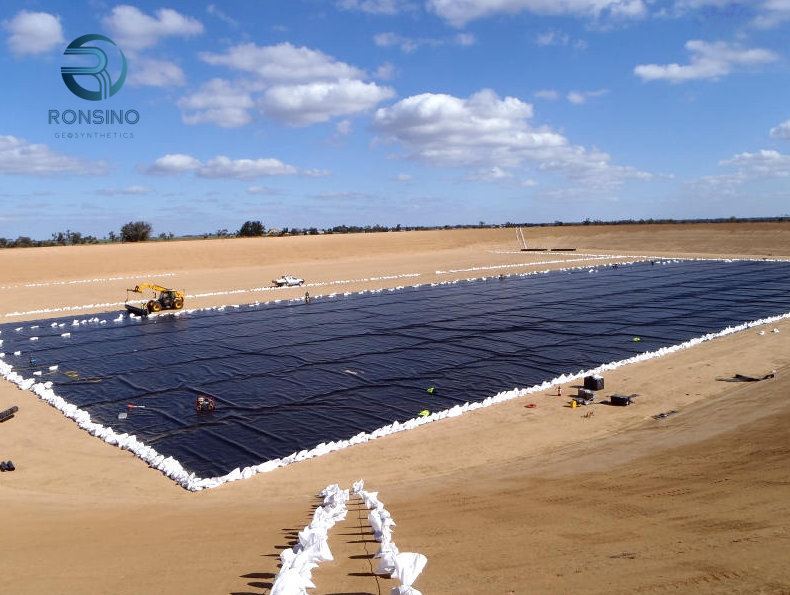
Dam liners (geomembrane liners) are synthetic barriers used to prevent leakage in dams, reservoirs and irrigation systems, helping to protect water resources and maintain infrastructure. The global geomembrane market is worth US$2.1 billion in 2024 and is expected to grow at a compound annual growth rate of 5.4% and will reach US$3.3 billion in 2032. The driving factors include increased demand for water resources management, agricultural expansion and tightening environmental regulations (Statista, 2024). Its price is $0.28-5.00 per square foot ($3.01-53.82/square meter), depending on material, thickness, project size and installation complexity (RONSINOgeosynthetics.com, 2025). This manual comprehensively analyzes the cost, technical parameters, application scenarios and cost optimization strategies of dam liner, and provides practical guidance for engineers, agricultural practitioners and project leaders to help them reduce costs by 15-30% while maintaining 95% anti-seepage standards.
1.What Is a Dam Liner?
Definition and Purpose
Dam liners are impermeable barriers made of geomembranes or composites, designed for dams and reservoirs to prevent leakage and maintain water storage. They enhance efficiency, reducing soil erosion by 80% and improving structural integrity by 95%. Lifespans range from 10–60+ years, depending on materials (e.g., HDPE, PVC) and UV exposure. Modern liners cut long-term costs by 20–40% versus clay/concrete, aiding water conservation, ecological protection, and durable infrastructure.
Key Specifications
Materials: High-density polyethylene geomembrane (HDPE, 50% market share), reinforced polyethylene (RPE, 10%), polyvinyl chloride (PVC, 20%), ethylene propylene diene monomer (EPDM, 15%), linear low-density polyethylene geomembrane (LLDPE, 5%), geosynthetic clay liners (GCLs, niche).
Thickness: 0.5–3.0 mm (20–118 mil), with 0.75–1.5 mm common for most dams.
Tensile Strength: 15–40 kN/m (ASTM D6693) for HDPE, 345–680 lbs for PVC (ASTM D7004).
Puncture Resistance: 100–800 N (ASTM D4833), critical for rocky terrains.
Permeability: <1×10⁻¹¹ cm/s, ensuring 95% water retention.
UV Resistance: 90% strength retention after 2,000 hours (ASTM D7238).
Roll Sizes: 4–15 m wide, 50–200 m long, reducing seams by 15%.
Certifications: ISO 9001, NSF-61 (fish-safe), SGS, ensuring quality.
Lifespan: HDPE (20–60 years), RPE (20–40 years), EPDM (20–30 years), PVC (8–15 years), GCLs (20–30 years).
Special Features: Some HDPE liners include aromatic hydrocarbons to deter rodents, enhancing durability by 10% (RONSINOgeomembrane.com, 2025).
Applications
Irrigation Dams: HDPE and RPE liners reduce water loss by 80%, critical for agriculture.
Aquaculture: Fish-safe HDPE liners ensure leak-proof environments.
Environmental Protection: HDPE and GCLs prevent 95% groundwater contamination in industrial dams.
Hydraulic Structures: PVC and LLDPE liners support water containment in canals and reservoirs.
Flood Control: RPE liners stabilize temporary or emergency dams.
Dam liners account for 60% of water containment solutions due to their durability and cost-effectiveness (Geosynthetics Magazine, 2024).
2. Factors Influencing Dam Lining Price Per Square Foot
Dam lining prices vary due to multiple factors, contributing 40–60% to project budgets. Understanding these ensures cost-effective selections.
2.1 Dam Lining Price – Material Type
HDPE: $0.50–$2.55/sq ft ($5.38–$27.45/m²)
Durable, UV-resistant, fish-safe, ideal for large irrigation and aquaculture dams.
Example: 0.75 mm HDPE at $0.80/sq ft for a 100,000 sq ft dam costs $80,000.
RPE: $0.40–$1.50/sq ft ($4.31–$16.15/m²)
Lightweight, puncture-resistant, for large agricultural dams.
PVC: $0.60–$2.00/sq ft ($6.46–$21.53/m²)
Flexible, affordable, but less durable; suitable for smaller dams.
EPDM: $0.75–$2.50/sq ft ($8.07–$26.91/m²)
Flexible, UV-resistant, for fish-safe or recreational dams.
LLDPE: $0.60–$2.50/sq ft ($6.46–$26.91/m²)
Flexible for uneven terrains, used in smaller dams.
GCLs: $0.50–$5.00/sq ft ($5.38–$53.82/m²)
Self-healing, eco-friendly, for environmental protection projects.
HDPE dominates 50% of the market due to its durability and compliance with GRI-GM13 standards (RONSINOgeosynthetics.com, 2025).
2.2 Dam Lining Price – Thickness and Durability
5 mm (20 mil): $0.28–$1.00/sq ft, for shallow dams (<6 ft deep).
75 mm (30 mil): $0.50–$1.50/sq ft, for medium dams with rocky soils.
0–3.0 mm (40–118 mil): $1.00–$3.50/sq ft, for industrial or deep dams.
Thicker liners increase costs by 10–20% but extend lifespan by 20–30% (RONSINOgeosynthetics.com, 2025).
2.3 Dam Lining Price – Dam Size and Dimensions
Larger dams benefit from economies of scale. Use the formula:
Liner Size: [Length + (2 × Depth) + 2 ft overlap] × [Width + (2 × Depth) + 2 ft overlap]
Example: A 200 ft × 500 ft × 6 ft deep dam needs a 212 ft × 512 ft liner (108,544 sq ft). At $0.80/sq ft (HDPE), material costs are $86,835.20.
Bulk orders (>50,000 sq ft) reduce prices by 15–30% (RONSINOgeosynthetics.com, 2025).
2.4 Dam Lining Price – Additives and Treatments
UV Stabilization: Adds $0.05–$0.10/sq ft, extending lifespan by 15–20 years.
Chemical Resistance: Adds $0.05–$0.15/sq ft for aquaculture or industrial use.
Rodent Deterrents: Adds $0.05/sq ft, increasing durability by 10% (RONSINOgeomembrane.com, 2025).
Example: UV-treated 0.75 mm HDPE at $0.85/sq ft vs. $0.80/sq ft untreated.
UV-treated liners last 20–60 years in exposed conditions (RONSINOgeosynthetics.com, 2025).
2.5 Dam Lining Price – Installation Complexity
Site Preparation: $0.10–$0.50/sq ft for excavation and smoothing.
Labor: $0.20–$1.50/sq ft; HDPE requires skilled welding ($0.50–$1.50/sq ft), while RPE is easier ($0.20–$1.00/sq ft).
Geotextile Underlay: $0.25–$0.40/sq ft, preventing 90% of punctures.
Professional installation ensures 95% leak-proof performance (RONSINOgeosynthetics.com, 2025).
2.6 Dam Lining Price – Supplier and Brand Reputation
Premium Brands: RONSINO Geosynthetics, Western Environmental Liner, and Firestone charge $0.50–$2.55/sq ft with NSF-61 certifications.
Generic Suppliers: $0.28–$1.00/sq ft, but may lack warranties or fish-safe certifications.
Certified liners reduce failure risks by 20%, saving $5,000–$50,000 in repairs (RONSINOgeomembrane.com, 2025).
2.7 Dam Lining Price – Geographic and Market Variations
United States: $0.50–$3.50/sq ft, due to high labor ($40–$150/hour).
Kenya: KSh 150–500/m² ($0.10–$0.35/sq ft), lower due to local production.
India: $0.08–$0.25/sq ft, benefiting from low manufacturing costs.
Global Trends: Polyethylene resin prices ($1,300/MT in Q1 2025, up 8%) raise costs by 5–10%.
Shipping adds $0.05–$0.20/sq ft for remote areas.
2.8 Dam Lining Price – Purchase Volume
Small Orders (<10,000 sq ft): $0.50–$2.00/sq ft.
Bulk Orders (>50,000 sq ft): $0.28–$1.50/sq ft, with 15–30% discounts.
Wholesale platforms like Alibaba offer 20–30% savings for orders >50,000 sq ft (Alibaba, 2024).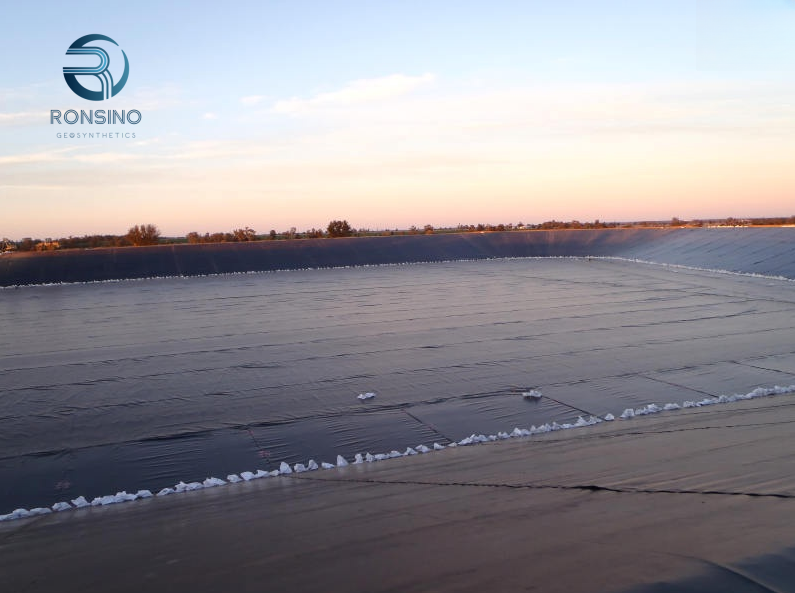
3.Dam Lining Price Breakdown by Application
Irrigation Dams
Material: HDPE or RPE (0.75–1.5 mm).
Cost: $0.50–$1.50/sq ft (materials), $0.20–$1.00/sq ft (installation).
Example: A 100,000 sq ft reservoir costs $50,000–$150,000 (materials) and $20,000–$100,000 (installation).
Specifications: 640 N puncture resistance, <1×10⁻¹¹ cm/s permeability.
Aquaculture
Material: HDPE or EPDM (0.75–1.5 mm, NSF-61 certified).
Cost: $0.50–$2.00/sq ft (materials), $0.20–$1.50/sq ft (installation).
Example: A 50,000 sq ft fish dam costs $25,000–$100,000 (materials).
Environmental Protection
Material: HDPE or GCLs (1.0–3.0 mm).
Cost: $0.50–$5.00/sq ft (materials), $0.50–$2.00/sq ft (installation).
Example: A 1-acre dam (43,560 sq ft) costs $21,780–$217,800 (materials).
Hydraulic Structures
Material: PVC or LLDPE (0.5–1.0 mm).
Cost: $0.60–$2.00/sq ft (materials), $0.20–$1.00/sq ft (installation).
Example: A 20,000 sq ft canal liner costs $12,000–$40,000 (materials).
Flood Control
Material: RPE or HDPE (0.75–1.0 mm).
Cost: $0.40–$1.50/sq ft (materials), $0.20–$1.00/sq ft (installation).
Example: A 30,000 sq ft temporary dam costs $12,000–$45,000 (materials).
4. Step-by-Step Guide to Budgeting for Dam Liners
4.1 Step 1: Define Project Requirements
Application: Identify irrigation, aquaculture, or environmental needs.
Specifications: Select thickness (0.75–1.5 mm), tensile strength (15–40 kN/m), and NSF-61 certification.
Area: Calculate liner size using the formula above. A 100,000 sq ft dam at $0.80/sq ft costs $80,000 in materials.
Tip: Use online calculators from RONSINO Geosynthetics for 99% accuracy.
4.2 Step 2: Select Liner Material
HDPE: For durable, large-scale dams ($0.50–$2.55/sq ft).
RPE: For lightweight, puncture-resistant dams ($0.40–$1.50/sq ft).
EPDM: For fish-safe, flexible dams ($0.75–$2.50/sq ft).
Example: A 50,000 sq ft aquaculture dam uses HDPE at $25,000–$127,500.
4.3 Step 3: Estimate Material Costs
Base Price: $0.28–$5.00/sq ft.
Add-Ons: UV/chemical resistance adds $0.05–$0.15/sq ft.
Bulk Discounts: Orders >50,000 sq ft save 15–30%.
Example: A 100,000 sq ft dam at $0.80/sq ft with 20% discount costs $64,000.
4.4 Step 4: Factor in Installation Costs
Site Preparation: $0.10–$0.50/sq ft for excavation.
Labor: $0.20–$1.50/sq ft; HDPE welding adds $0.50/sq ft.
Underlay: $0.25–$0.40/sq ft for geotextile protection.
Example: A 100,000 sq ft dam with $0.50/sq ft installation costs $50,000.
4.5 Step 5: Account for Logistics
Shipping: $0.05–$0.20/sq ft; international adds 10–20%.
Storage: Budget $500–$2,000 for weatherproof storage.
Example: Shipping 100,000 sq ft at $0.10/sq ft costs $10,000.
4.6 Step 6: Plan for Maintenance
Inspections: $0.01–$0.05/sq ft annually.
Repairs: Patch kits ($50–$200) avoid $5,000–$50,000 replacements.
Example: Annual inspection for 100,000 sq ft at $0.02/sq ft costs $2,000.
5. Cost Breakdown Example: 100,000 sq ft HDPE Dam Liner for Irrigation
For a 100,000 sq ft irrigation dam (200 ft × 500 ft × 6 ft deep) using a 0.75 mm HDPE liner ($0.50–$2.55/sq ft):
Materials (50%): $50,000–$255,000
HDPE liner (0.75 mm): $37,500–$191,250
UV stabilization: $5,000–$10,000
Quality control (NSF-61): $7,500–$53,750
Installation (30%): $20,000–$150,000
Labor: $15,000–$100,000
Geotextile underlay: $5,000–$50,000
Logistics (15%): $5,000–$20,000
Shipping: $4,000–$15,000
Storage: $1,000–$5,000
Profit Margin (5%): $4,500–$22,750
Total Cost: $79,500–$447,750 ($0.80–$4.48/sq ft)
This liner offers 640 N puncture resistance, <1×10⁻¹¹ cm/s permeability, and a 20–60-year lifespan (RONSINOgeosynthetics.com, 2025).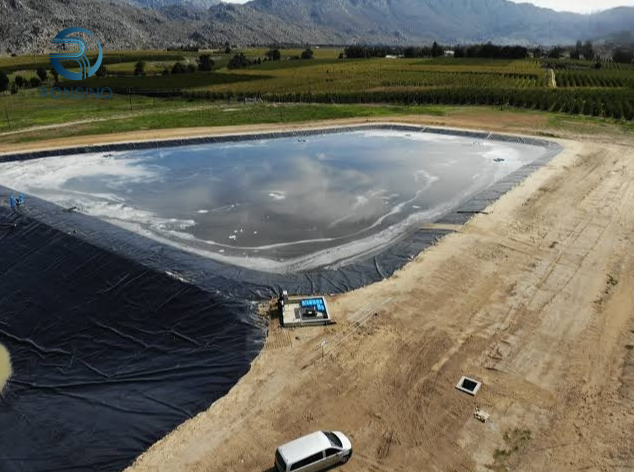
6. Cost-Saving Strategies for Dam Lining Projects
Leverage Bulk Purchases
Benefit: Orders >50,000 sq ft save 15–30%.
Example: A 2024 Kenyan irrigation project saved $30,000 on 200,000 sq ft of HDPE liners (RONSINOgeosynthetics.com, 2025).
Source Locally
Benefit: Reduces shipping costs by 10–20%.
Example: Grekkon Limited in Kenya offers HDPE liners at KSh 240/m², saving 15% on freight.
Choose Appropriate Thickness
Benefit: 0.75 mm liners save 20–30% for medium dams vs. 1.5 mm.
Example: A 2024 U.S. dam saved $20,000 using 0.75 mm HDPE (RONSINOgeosynthetics.com, 2025).
Use Certified Suppliers
Benefit: NSF-61 certified liners reduce failure risks by 20%.
Example: RONSINO Geosynthetics’ liners avoided $50,000 in repairs for a 2024 project (RONSINOgeosynthetics.com, 2025).
Optimize Installation
Benefit: Skilled labor and geotextile underlay prevent 90% of punctures.
Example: A 2024 Indian project saved $40,000 with professional installation (RONSINOgeosynthetics.com, 2025).
7. Advanced Considerations for Dam Liner Selection
Site Conditions
Soil Type: Rocky soils require 1.0–1.5 mm liners; smooth soils suit 0.75 mm.
Climate: UV-resistant HDPE or RPE for sunny regions; PVC for covered dams.
Regulatory Compliance
Standards: NSF-61 for fish safety, ASTM D6693 for tensile strength.
Permits: Large dams (>10,000 sq ft) may require permits ($100–$1,000).
Long-Term Value
Lifespan: Certified liners last 20% longer, saving $5,000–$50,000.
Maintenance: Durable liners reduce cleaning costs by 30%, saving $1,000–$10,000 annually.
Sustainability
Recycled Materials: Using 10–20% recycled HDPE reduces costs by 5–10% while maintaining 90% performance (RONSINOgeosynthetics.com, 2025).
8. Case Studies: Dam Lining Cost Efficiency
8.1 Case Study 1: Kenyan Irrigation Dam
Project: 200,000 sq ft dam using 0.75 mm HDPE.
Cost: $96,000 (materials, $0.48/sq ft), $60,000 (installation, $0.30/sq ft).
Savings: Bulk purchase saved 25% ($32,000).
Source: RONSINOgeosynthetics.com, 2025.
8.2 Case Study 2: U.S. Aquaculture Dam
Project: 50,000 sq ft fish dam using 0.75 mm HDPE.
Cost: $40,000 (materials, $0.80/sq ft), $25,000 (installation, $0.50/sq ft).
Savings: Local sourcing saved $15,000.
Source: RONSINOgeosynthetics.com, 2025.
8.3 Case Study 3: Indian Environmental Dam
Project: 100,000 sq ft dam using 1.0 mm HDPE.
Cost: $80,000 (materials, $0.80/sq ft), $50,000 (installation, $0.50/sq ft).
Savings: Certified liners avoided $30,000 in repairs.
Source: RONSINOgeosynthetics.com, 2025.
9.Conclusion
Dam liner costs range from $0.28 to $5/sqft, affected by material, thickness, project size, and installation. With geomembrane demand growing at 6.8% CAGR until 2030 due to environmental and water management needs, smart procurement is essential. Cost-saving strategies include bulk discounts (15-25%), local suppliers (10-20% savings), and certified manufacturers like RONSINO or Grekkon. Precise technical specs (chemical/UV/puncture resistance), material choice (HDPE/LLDPE/PVC), and proper installation ensure 97-99% impermeability and $7K-$120K savings on medium-large projects. For NSF/ANSI 61-certified, 40+ year solutions, RONSINO offers optimized designs balancing performance ($/sqft/year) and lifecycle costs—ideal for water reservoirs and mining.


