What is Tailings Storage Facility Liner Supplier?
Blog · 2026-06-23 · 0 views

Selecting a tailings pond anti-seepage liner supplier is a critical engineering and procurement decision that directly affects compliance with environmental regulations, operational safety and long-term project viability. This technical manual provides mining engineers, procurement supervisors and EPC contracting teams with a comprehensive guidance framework for comprehensively evaluating suppliers, mastering the technical specifications of lining materials, and ensuring their reliable anti-seepage in harsh mining environments.
What is Tailings Storage Facility Liner Supplier
The tailings pond anti-seepage membrane supplier is a professional service provider for the mining industry. Its core supply is HDPE and reinforced geomembranes suitable for sealing mine tailings and process water to serve as an impermeable layer to prevent leakage and contamination of groundwater. Services include product distribution, technical data manuals, corrosion resistance certification and construction quality assurance (CQA) support. The engineering team's screening criteria include the following: 8-meter maximum width membrane material supply capacity, thickness uniformity, stress cracking resistance (NCTL ≥ 500 hours) up to standard, and long-term operation cases in a highly corrosive environment with pH 0.5-14. The purchasing manager focuses on verifying ISO9001, GRI-GM13 and other certifications, product full-link traceability, and special plans including long-term immersion testing in simulated tailings solution.
Technical Specifications of Tailings Storage Facility Liner Supplier
Products from qualified tailings pond liner suppliers are required to meet stringent performance standards. The following table lists typical parameters and their engineering significance in tailings pond applications.
Parameter Typical Value Engineering Importance
Thickness (nominal) 1.5 – 3.0 mm (60–120 mil) Determines puncture resistance and chemical barrier integrity under ore loads
Density (HDPE) 0.940 – 0.960 g/cm³ Ensures dimensional stability under thermal and chemical stress
Stress Crack Resistance (NCTL) ≥ 500 hours (ASTM D5397) Critical for preventing brittle failure in acidic and alkaline tailings environments
Tensile Yield Strength (MD/TD) ≥ 17 MPa (ASTM D6693) Prevents deformation under tailings loads and thermal cycling
Puncture Resistance ≥ 250 N (ASTM D4833) Protects against sharp tailings particles and installation damage
Chemical Resistance (pH range) 0.5 – 14 (verified immersion tests) Ensures compatibility with acidic drainage, cyanide, and saline tailings
UV Stability (exposed areas) ≥ 50% retained tensile strength (5000 h) Critical for exposed berms and liner surfaces during construction
Design Service Life 20 – 30 years Directly influences project amortization and closure planning
All performance indicators are strictly dual-validated by our internal professional testing team and authoritative third-party inspection institutions in full compliance with ASTM, ISO and GRI international testing specifications and procedures. Reliable tailings storage facility impermeable liner suppliers will proactively provide detailed test reports for each production batch and complete long-term chemical immersion resistance test data for customers to verify product quality.
Material Structure and Composition
High-performance liners from high-performance tailings pond liner suppliers are designed with a layered structure designed to provide superior chemical resistance, puncture protection and resistance to stress cracking. The following table details its typical composition levels and functional characteristics.
Layer / Component Material Function
Top (exposure) layer HDPE with 2.5% carbon black + HALS stabilizers Resists UV degradation and oxidation during exposed periods
Core / structural layer High-molecular-weight HDPE (no fillers) Provides tensile strength, stress distribution, and barrier continuity
Bottom (subgrade) layer Textured HDPE (co-extruded) Enhances friction with compacted clay or geosynthetic clay liner
Weldable seam area Same base resin (non-contaminated) Ensures strong field seams via dual-track thermal welding
The co-extrusion process bonds all layers into a monolithic sheet. The use of high-molecular-weight resin (HLMI ≤ 0.1 g/10 min) enhances stress-crack resistance, a critical property for TSF liners subjected to cyclic chemical and thermal loading. The textured bottom layer improves interface shear strength, reducing sliding on steep slopes.
Manufacturing Process of Tailings Storage Facility Liner Supplier
The manufacturing processes employed by a top-tier provider of liners for tailings containment facilities adhere to a six-step operational workflow incorporating rigorous quality assurance measures throughout each phase—with special emphasis placed on evaluating stress-resistance against cracking as well as ensuring consistent thickness across every section of their liner products.
Raw material preparation – Virgin HDPE resin (high molecular weight), carbon black masterbatch, and antioxidant packages are precision-weighed and blended in forced-air dryers to reduce moisture below 0.02%, preventing bubble formation during extrusion.
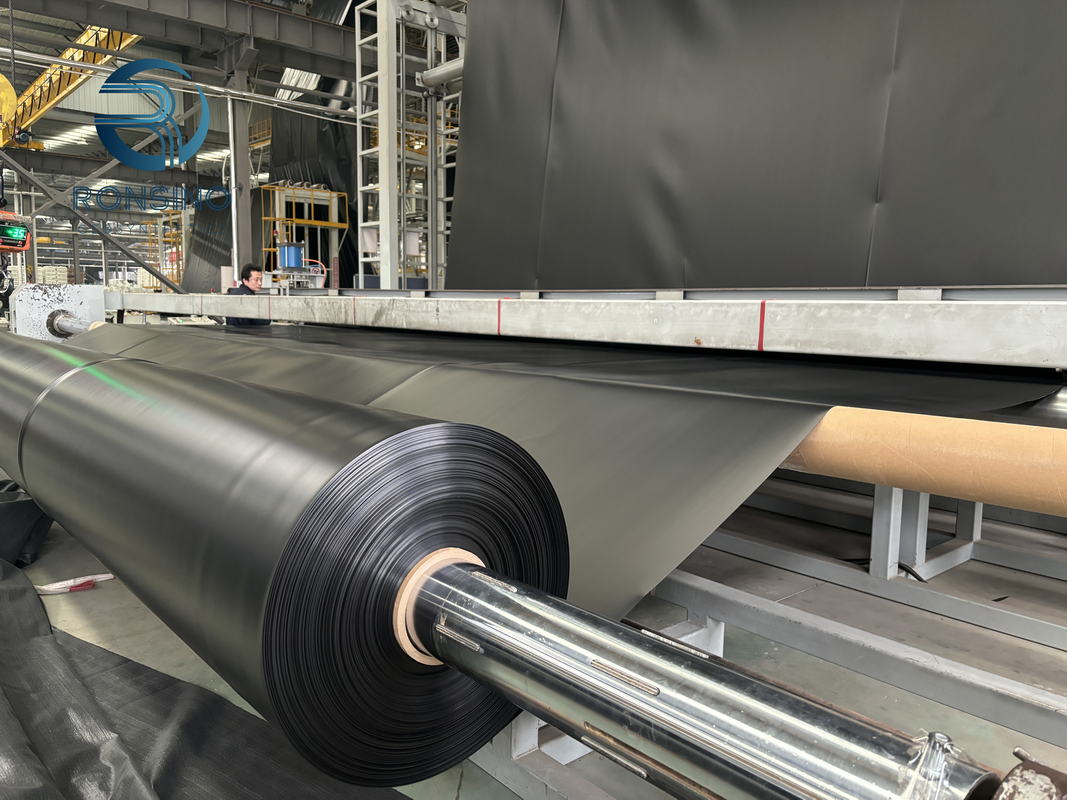
Extrusion and forming – The blend is melted in a twin-screw extruder (230–250°C) and forced through a flat-sheet die. Calender rollers set the precise thickness (typically 1.5–2.5 mm for TSF applications).
Surface texturing – For textured liners, embossing rollers create uniform friction patterns (e.g., spike or dimple profiles) to enhance slope stability.
Precision finishing – The sheet passes through cooling baths and edge-trimming stations. Widths up to 8 m are achievable, reducing field seams by up to 40%.
Quality testing includes online and offline testing items: ultrasonic thickness mapping, tensile property testing (ASTM D6693), puncture resistance testing (D4833), stress cracking evaluation (NCTL method, D5397), and high-voltage pinhole detection. Coils with parameter deviations are isolated and processed.
Packaging and labeling – Rolls are wrapped in opaque, UV-blocking film, labeled with batch number, thickness, and certification marks, then palletized for shipment to mining sites.
Each stage is engineered to prevent defects:Improper drying of resin raw materials can easily cause pinhole defects in the lining, and insufficient stress crack resistance testing can easily lead to premature product failure.Professional tailings pond lining suppliers will establish a full-chain traceability system to accurately record key information throughout the entire process from raw materials entering the factory to finished products leaving the factory.
Performance Comparison with Alternative Materials
When evaluating tailings storage facility liner supplier products and alternatives, engineers consider factors such as material durability, chemical resistance and cost-effectiveness. The table below provides a multi-attribute comparative analysis for reference.
Material Durability (years) Cost Level Installation Complexity Maintenance Typical Applications
HDPE (virgin, high-MW) 20–30 Medium–High Moderate (welding) Low TSF liners, decant ponds, underdrains
LLDPE (linear low-density) 15–25 Medium Moderate Low Milder chemical exposures
PVC geomembrane 10–15 (plasticizer loss) Low–Medium Low (lightweight) Moderate Temporary or small-scale TSFs
Compacted clay (with GCL) 10–20 (cracking risk) Low (material) / high (transport) High (compaction control) High (re-compaction) Secondary layers, low-permeability
High-density polyethylene (HDPE) materials from certified tailings storage facility liner suppliers demonstrate excellent overall performance in harsh mining operating environments. This material not only has excellent chemical corrosion resistance and stress cracking resistance, but also ensures long-term and stable use, making it an ideal choice for long-lasting and reliable protection.
Industrial Applications of Tailings Storage Facility Liner Supplier
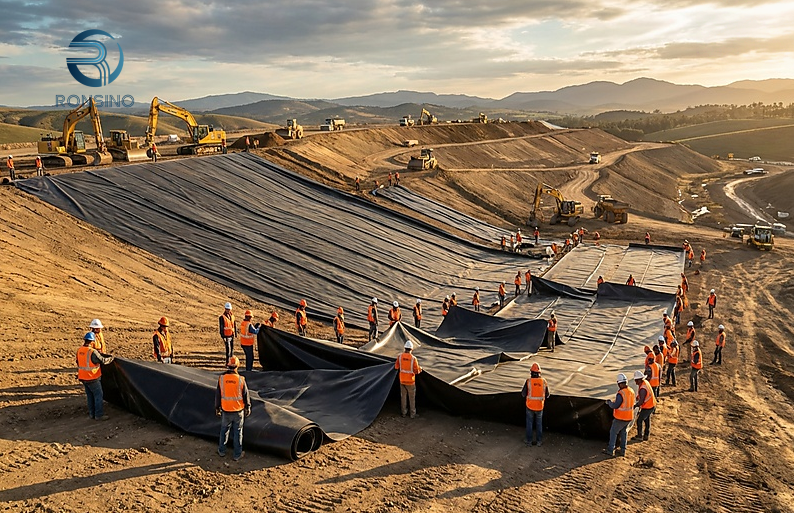
The products from a tailings storage facility liner supplier are deployed in various mining and metallurgical settings:
Tailings storage facilities (TSFs): Liners for decant ponds, supernatant collection, and underdrain systems.
Acid rock drainage (ARD) basins: Containment of acidic wastewater with pH as low as 0.5.
Process solution ponds: Liners for pregnant leach solutions (PLS) and barren solutions.
Sludge drying beds: Liners for dewatering and containment of thickened tailings.
Emergency containment basins: Liners for spill capture and stormwater retention.
An important initiative situated in Peru’s Andes Mountains utilized two-millimeter HDPE liners provided by a well-known supplier focusing on tailings storage facility liners for lining a fifteen-hectare decant basin, attaining twelve consecutive years of service without any observable degradation.
![]()
Common Industry Problems and Engineering Solutions
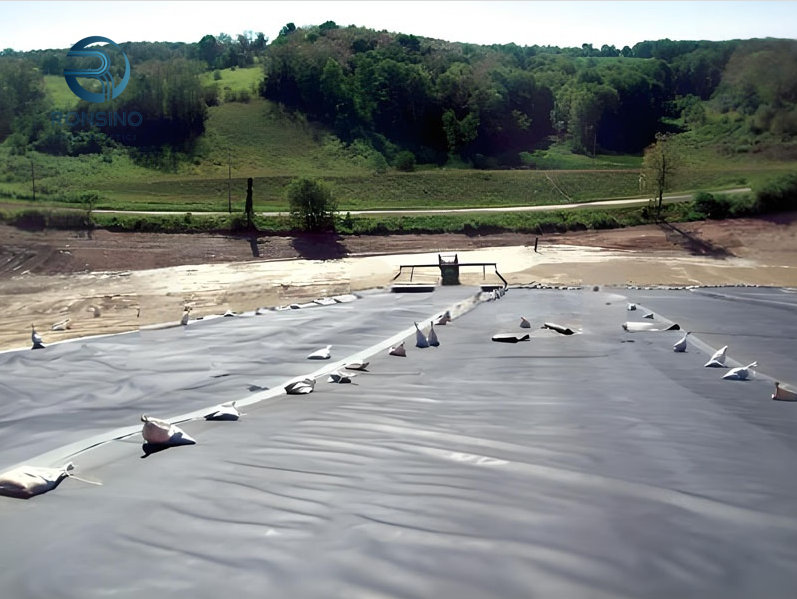
Even high-quality tailings storage facility (TSF) geomembrane liners are prone to performance defects if flawed in structural design or on-site installation. Below are four common TSF lining system failure patterns and corresponding targeted engineering solutions.
Problem 1: Stress cracking near pipe penetrations
Root cause: Differential settlement and chemical attack at stress points.
Solution: Use prefabricated boots with expansion loops; specify NCTL ≥500 h; conduct post-installation leak detection surveys.
Problem 2: Puncture from sharp tailings particles
Root cause: Inadequate protective layer or insufficient liner thickness.
Solution: Install 500 g/m² nonwoven geotextile as cushion; specify thickness ≥2.0 mm for high-load areas.
Problem 3: Seam failure due to improper welding
Root cause: Contamination or incorrect weld temperature under field conditions.
Solution: Perform peel and shear tests on test strips before each shift; use dual-track extrusion welders with automatic temperature control.
Problem 4: UV degradation on exposed berms
Root cause: Insufficient carbon black content or lack of protective cover.
Solution: Specify ≥2.5% carbon black and apply a spray-on UV coating for exposed areas.
Risk Factors and Prevention Strategies
Engineering risk management for projects involving a tailings storage facility liner supplier includes five critical areas:
Improper liner selection: Choosing inadequate thickness or resin type. Prevention: conduct chemical compatibility testing with site-specific tailings solutions.
Material mismatch: Using non-compatible geomembranes for different zones. Prevention: ensure all liner materials come from the same production lot and are chemically compatible.
Environmental exposure: Elevated ultraviolet exposure and repeated temperature fluctuations. Mitigation strategy: incorporate a higher proportion of carbon black into the material composition and immediately shield any sections directly subjected to environmental elements.
Subgrade issues: Sharp rocks or differential settlement. Prevention: perform subgrade proof-rolling; install geotextile cushion layers.
Quality control gaps: Insufficient seam testing. Prevention: implement 100% seam testing (vacuum/air pressure) and independent third-party CQA.
Procurement Guide: How to Choose the Right Tailings Storage Facility Liner Supplier
Buyers should follow this step‑by‑step checklist when engaging a tailings storage facility liner supplier:
Traffic load evaluation – Assess tailings loading and equipment traffic to specify puncture resistance and thickness.
Specification verification – Confirm thickness, stress-crack resistance (NCTL), and chemical resistance data against project design criteria.
Certifications – Require ISO 9001, GRI-GM13, and ASTM compliance; request chemical immersion test reports for site-specific tailings solutions.
Supplier capability – Audit factory capacity, lead times, and track record on similar TSF projects.
Quality control – Review in-house testing frequency, NCTL measurements, and third-party lab reports.
Sample testing – Request 1 m² samples for independent chemical immersion, puncture, and tensile tests.
Warranty evaluation – Examine warranty covering material defects, seam integrity, and stress-crack performance (≥10 years).
Engineering Case Study
Project: 15 ha tailings storage facility decant pond expansion
Location: Andean highlands, Peru (4,200 m elevation)
Size: 500 m × 300 m pond, 6 m water depth, 2.5H:1V slopes
Product specification: A certified tailings pond liner supplier provides a 2.0 mm textured HDPE liner with a non-climatic thermal aging (NCTL) time of not less than 600 hours, a carbon black content of 2.5%, and chemical resistance verified by pH 2.5 (acidic) and pH 11 (alkaline) solutions; the lower layer is laid with 500 g/m2 geotextile; all seams are double welded and 100% air pressure tested to ensure tightness.
Results & benefits: The installation work was completed within 45 days, and there were no leaks in the hydrostatic test. After eight years of continuous operation, the tensile strength of the lining material dropped by less than 5% and there was no sign of stress cracking. The lining system reduced leakage to less than 0.1% of total storage capacity, exceeding environmental standards and saving $2.8 million annually by reducing water treatment expenses and avoiding compliance penalties.
FAQ Section
1. What thickness of liner is recommended for a tailings storage facility?
Typically 1.5–2.5 mm (60–100 mil), with 2.0 mm being the most common for TSF applications.
2. What is NCTL and why is it important?
Notched Constant Tensile Load (ASTM D5397) measures stress-crack resistance; ≥500 hours is critical for acidic and alkaline tailings.
3. Can HDPE liners withstand acid mine drainage (AMD)?
Yes — HDPE is resistant to pH 0.5–14; chemical immersion tests are required for validation.
4. What is the typical service life of a TSF liner?
20–30 years with proper UV stabilization and installation.
5. Is textured or smooth liner better for TSF slopes?
Textured liner provides higher friction (interface angle >25°) and is preferred for slopes steeper than 3H:1V.
6. What certifications should a liner supplier have?
ISO 9001, GRI-GM13, and ASTM compliance; additionally, chemical resistance data for site-specific tailings.
7. How are seams tested in the field?
Using vacuum box (ASTM D6392) or air pressure testing (ASTM D7406) for 100% seam coverage.
8. Can exposed liners be used for TSFs?
Yes — but they require enhanced UV stabilizers (≥2.5% carbon black) and regular inspections.
9. What is the difference between HDPE and LLDPE for TSFs?
HDPE offers higher stress-crack resistance and chemical stability; LLDPE is more flexible but less chemically resistant.
10. Does the supplier provide installation support?
Most reputable suppliers offer CQA (Construction Quality Assurance) guidance and weld training.
Request Technical Support or Quotation
Should you require engineering support tailored to your project, complimentary product samples, or comprehensive technical documentation from a certified provider of tailings storage facility lining solutions, our dedicated technical advisory group stands ready to assist. Our offerings include:
Customized liner selection based on tailings chemistry, pH, and temperature
Free 1 m² sample panels for independent chemical and mechanical testing
Full technical specifications and installation CQA guidelines
Direct consultation with polymer and geotechnical engineers
Submit your project parameters through the contact form on our website to receive a detailed engineering proposal within 48 hours.
About the Author
This manual is written by an industry expert with 15 years of global experience, specializing in geomembrane manufacturing, mining infrastructure and environmental protection projects, with projects throughout the United States, Africa and Australia. We lead EPC projects for tailings ponds, acid drainage interceptions and process water storage ponds, and provide technical assessment, factory inspection and performance evaluation. Adhere to no brand bias and provide objective suggestions based on engineering principles and fault investigation.
What is Tailings Storage Facility Liner Supplier
The tailings pond anti-seepage membrane supplier is a professional service provider for the mining industry. Its core supply is HDPE and reinforced geomembranes suitable for sealing mine tailings and process water to serve as an impermeable layer to prevent leakage and contamination of groundwater. Services include product distribution, technical data manuals, corrosion resistance certification and construction quality assurance (CQA) support. The engineering team's screening criteria include the following: 8-meter maximum width membrane material supply capacity, thickness uniformity, stress cracking resistance (NCTL ≥ 500 hours) up to standard, and long-term operation cases in a highly corrosive environment with pH 0.5-14. The purchasing manager focuses on verifying ISO9001, GRI-GM13 and other certifications, product full-link traceability, and special plans including long-term immersion testing in simulated tailings solution.
Technical Specifications of Tailings Storage Facility Liner Supplier
Products from qualified tailings pond liner suppliers are required to meet stringent performance standards. The following table lists typical parameters and their engineering significance in tailings pond applications.
Parameter Typical Value Engineering Importance
Thickness (nominal) 1.5 – 3.0 mm (60–120 mil) Determines puncture resistance and chemical barrier integrity under ore loads
Density (HDPE) 0.940 – 0.960 g/cm³ Ensures dimensional stability under thermal and chemical stress
Stress Crack Resistance (NCTL) ≥ 500 hours (ASTM D5397) Critical for preventing brittle failure in acidic and alkaline tailings environments
Tensile Yield Strength (MD/TD) ≥ 17 MPa (ASTM D6693) Prevents deformation under tailings loads and thermal cycling
Puncture Resistance ≥ 250 N (ASTM D4833) Protects against sharp tailings particles and installation damage
Chemical Resistance (pH range) 0.5 – 14 (verified immersion tests) Ensures compatibility with acidic drainage, cyanide, and saline tailings
UV Stability (exposed areas) ≥ 50% retained tensile strength (5000 h) Critical for exposed berms and liner surfaces during construction
Design Service Life 20 – 30 years Directly influences project amortization and closure planning
All performance indicators are strictly dual-validated by our internal professional testing team and authoritative third-party inspection institutions in full compliance with ASTM, ISO and GRI international testing specifications and procedures. Reliable tailings storage facility impermeable liner suppliers will proactively provide detailed test reports for each production batch and complete long-term chemical immersion resistance test data for customers to verify product quality.
Material Structure and Composition
High-performance liners from high-performance tailings pond liner suppliers are designed with a layered structure designed to provide superior chemical resistance, puncture protection and resistance to stress cracking. The following table details its typical composition levels and functional characteristics.
Layer / Component Material Function
Top (exposure) layer HDPE with 2.5% carbon black + HALS stabilizers Resists UV degradation and oxidation during exposed periods
Core / structural layer High-molecular-weight HDPE (no fillers) Provides tensile strength, stress distribution, and barrier continuity
Bottom (subgrade) layer Textured HDPE (co-extruded) Enhances friction with compacted clay or geosynthetic clay liner
Weldable seam area Same base resin (non-contaminated) Ensures strong field seams via dual-track thermal welding
The co-extrusion process bonds all layers into a monolithic sheet. The use of high-molecular-weight resin (HLMI ≤ 0.1 g/10 min) enhances stress-crack resistance, a critical property for TSF liners subjected to cyclic chemical and thermal loading. The textured bottom layer improves interface shear strength, reducing sliding on steep slopes.
Manufacturing Process of Tailings Storage Facility Liner Supplier
The manufacturing processes employed by a top-tier provider of liners for tailings containment facilities adhere to a six-step operational workflow incorporating rigorous quality assurance measures throughout each phase—with special emphasis placed on evaluating stress-resistance against cracking as well as ensuring consistent thickness across every section of their liner products.
Raw material preparation – Virgin HDPE resin (high molecular weight), carbon black masterbatch, and antioxidant packages are precision-weighed and blended in forced-air dryers to reduce moisture below 0.02%, preventing bubble formation during extrusion.
Extrusion and forming – The blend is melted in a twin-screw extruder (230–250°C) and forced through a flat-sheet die. Calender rollers set the precise thickness (typically 1.5–2.5 mm for TSF applications).
Surface texturing – For textured liners, embossing rollers create uniform friction patterns (e.g., spike or dimple profiles) to enhance slope stability.
Precision finishing – The sheet passes through cooling baths and edge-trimming stations. Widths up to 8 m are achievable, reducing field seams by up to 40%.
Quality testing includes online and offline testing items: ultrasonic thickness mapping, tensile property testing (ASTM D6693), puncture resistance testing (D4833), stress cracking evaluation (NCTL method, D5397), and high-voltage pinhole detection. Coils with parameter deviations are isolated and processed.
Packaging and labeling – Rolls are wrapped in opaque, UV-blocking film, labeled with batch number, thickness, and certification marks, then palletized for shipment to mining sites.
Each stage is engineered to prevent defects:Improper drying of resin raw materials can easily cause pinhole defects in the lining, and insufficient stress crack resistance testing can easily lead to premature product failure.Professional tailings pond lining suppliers will establish a full-chain traceability system to accurately record key information throughout the entire process from raw materials entering the factory to finished products leaving the factory.
Performance Comparison with Alternative Materials
When evaluating tailings storage facility liner supplier products and alternatives, engineers consider factors such as material durability, chemical resistance and cost-effectiveness. The table below provides a multi-attribute comparative analysis for reference.
Material Durability (years) Cost Level Installation Complexity Maintenance Typical Applications
HDPE (virgin, high-MW) 20–30 Medium–High Moderate (welding) Low TSF liners, decant ponds, underdrains
LLDPE (linear low-density) 15–25 Medium Moderate Low Milder chemical exposures
PVC geomembrane 10–15 (plasticizer loss) Low–Medium Low (lightweight) Moderate Temporary or small-scale TSFs
Compacted clay (with GCL) 10–20 (cracking risk) Low (material) / high (transport) High (compaction control) High (re-compaction) Secondary layers, low-permeability
High-density polyethylene (HDPE) materials from certified tailings storage facility liner suppliers demonstrate excellent overall performance in harsh mining operating environments. This material not only has excellent chemical corrosion resistance and stress cracking resistance, but also ensures long-term and stable use, making it an ideal choice for long-lasting and reliable protection.
Industrial Applications of Tailings Storage Facility Liner Supplier
The products from a tailings storage facility liner supplier are deployed in various mining and metallurgical settings:
Tailings storage facilities (TSFs): Liners for decant ponds, supernatant collection, and underdrain systems.
Acid rock drainage (ARD) basins: Containment of acidic wastewater with pH as low as 0.5.
Process solution ponds: Liners for pregnant leach solutions (PLS) and barren solutions.
Sludge drying beds: Liners for dewatering and containment of thickened tailings.
Emergency containment basins: Liners for spill capture and stormwater retention.
An important initiative situated in Peru’s Andes Mountains utilized two-millimeter HDPE liners provided by a well-known supplier focusing on tailings storage facility liners for lining a fifteen-hectare decant basin, attaining twelve consecutive years of service without any observable degradation.
Common Industry Problems and Engineering Solutions
Even high-quality tailings storage facility (TSF) geomembrane liners are prone to performance defects if flawed in structural design or on-site installation. Below are four common TSF lining system failure patterns and corresponding targeted engineering solutions.
Problem 1: Stress cracking near pipe penetrations
Root cause: Differential settlement and chemical attack at stress points.
Solution: Use prefabricated boots with expansion loops; specify NCTL ≥500 h; conduct post-installation leak detection surveys.
Problem 2: Puncture from sharp tailings particles
Root cause: Inadequate protective layer or insufficient liner thickness.
Solution: Install 500 g/m² nonwoven geotextile as cushion; specify thickness ≥2.0 mm for high-load areas.
Problem 3: Seam failure due to improper welding
Root cause: Contamination or incorrect weld temperature under field conditions.
Solution: Perform peel and shear tests on test strips before each shift; use dual-track extrusion welders with automatic temperature control.
Problem 4: UV degradation on exposed berms
Root cause: Insufficient carbon black content or lack of protective cover.
Solution: Specify ≥2.5% carbon black and apply a spray-on UV coating for exposed areas.
Risk Factors and Prevention Strategies
Engineering risk management for projects involving a tailings storage facility liner supplier includes five critical areas:
Improper liner selection: Choosing inadequate thickness or resin type. Prevention: conduct chemical compatibility testing with site-specific tailings solutions.
Material mismatch: Using non-compatible geomembranes for different zones. Prevention: ensure all liner materials come from the same production lot and are chemically compatible.
Environmental exposure: Elevated ultraviolet exposure and repeated temperature fluctuations. Mitigation strategy: incorporate a higher proportion of carbon black into the material composition and immediately shield any sections directly subjected to environmental elements.
Subgrade issues: Sharp rocks or differential settlement. Prevention: perform subgrade proof-rolling; install geotextile cushion layers.
Quality control gaps: Insufficient seam testing. Prevention: implement 100% seam testing (vacuum/air pressure) and independent third-party CQA.
Procurement Guide: How to Choose the Right Tailings Storage Facility Liner Supplier
Buyers should follow this step‑by‑step checklist when engaging a tailings storage facility liner supplier:
Traffic load evaluation – Assess tailings loading and equipment traffic to specify puncture resistance and thickness.
Specification verification – Confirm thickness, stress-crack resistance (NCTL), and chemical resistance data against project design criteria.
Certifications – Require ISO 9001, GRI-GM13, and ASTM compliance; request chemical immersion test reports for site-specific tailings solutions.
Supplier capability – Audit factory capacity, lead times, and track record on similar TSF projects.
Quality control – Review in-house testing frequency, NCTL measurements, and third-party lab reports.
Sample testing – Request 1 m² samples for independent chemical immersion, puncture, and tensile tests.
Warranty evaluation – Examine warranty covering material defects, seam integrity, and stress-crack performance (≥10 years).
Engineering Case Study
Project: 15 ha tailings storage facility decant pond expansion
Location: Andean highlands, Peru (4,200 m elevation)
Size: 500 m × 300 m pond, 6 m water depth, 2.5H:1V slopes
Product specification: A certified tailings pond liner supplier provides a 2.0 mm textured HDPE liner with a non-climatic thermal aging (NCTL) time of not less than 600 hours, a carbon black content of 2.5%, and chemical resistance verified by pH 2.5 (acidic) and pH 11 (alkaline) solutions; the lower layer is laid with 500 g/m2 geotextile; all seams are double welded and 100% air pressure tested to ensure tightness.
Results & benefits: The installation work was completed within 45 days, and there were no leaks in the hydrostatic test. After eight years of continuous operation, the tensile strength of the lining material dropped by less than 5% and there was no sign of stress cracking. The lining system reduced leakage to less than 0.1% of total storage capacity, exceeding environmental standards and saving $2.8 million annually by reducing water treatment expenses and avoiding compliance penalties.
FAQ Section
1. What thickness of liner is recommended for a tailings storage facility?
Typically 1.5–2.5 mm (60–100 mil), with 2.0 mm being the most common for TSF applications.
2. What is NCTL and why is it important?
Notched Constant Tensile Load (ASTM D5397) measures stress-crack resistance; ≥500 hours is critical for acidic and alkaline tailings.
3. Can HDPE liners withstand acid mine drainage (AMD)?
Yes — HDPE is resistant to pH 0.5–14; chemical immersion tests are required for validation.
4. What is the typical service life of a TSF liner?
20–30 years with proper UV stabilization and installation.
5. Is textured or smooth liner better for TSF slopes?
Textured liner provides higher friction (interface angle >25°) and is preferred for slopes steeper than 3H:1V.
6. What certifications should a liner supplier have?
ISO 9001, GRI-GM13, and ASTM compliance; additionally, chemical resistance data for site-specific tailings.
7. How are seams tested in the field?
Using vacuum box (ASTM D6392) or air pressure testing (ASTM D7406) for 100% seam coverage.
8. Can exposed liners be used for TSFs?
Yes — but they require enhanced UV stabilizers (≥2.5% carbon black) and regular inspections.
9. What is the difference between HDPE and LLDPE for TSFs?
HDPE offers higher stress-crack resistance and chemical stability; LLDPE is more flexible but less chemically resistant.
10. Does the supplier provide installation support?
Most reputable suppliers offer CQA (Construction Quality Assurance) guidance and weld training.
Request Technical Support or Quotation
Should you require engineering support tailored to your project, complimentary product samples, or comprehensive technical documentation from a certified provider of tailings storage facility lining solutions, our dedicated technical advisory group stands ready to assist. Our offerings include:
Customized liner selection based on tailings chemistry, pH, and temperature
Free 1 m² sample panels for independent chemical and mechanical testing
Full technical specifications and installation CQA guidelines
Direct consultation with polymer and geotechnical engineers
Submit your project parameters through the contact form on our website to receive a detailed engineering proposal within 48 hours.
About the Author
This manual is written by an industry expert with 15 years of global experience, specializing in geomembrane manufacturing, mining infrastructure and environmental protection projects, with projects throughout the United States, Africa and Australia. We lead EPC projects for tailings ponds, acid drainage interceptions and process water storage ponds, and provide technical assessment, factory inspection and performance evaluation. Adhere to no brand bias and provide objective suggestions based on engineering principles and fault investigation.


