What is Geogrid Used for?
Blog · 2026-01-14 · 0 views
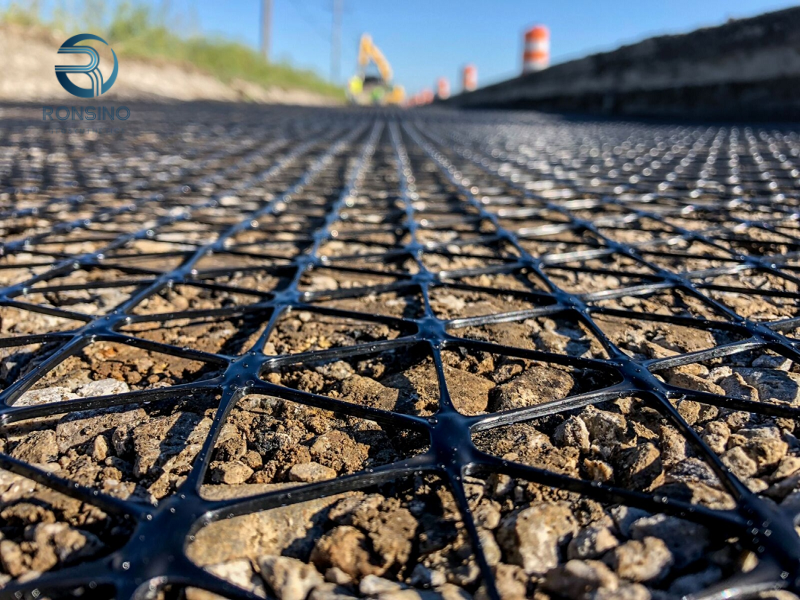
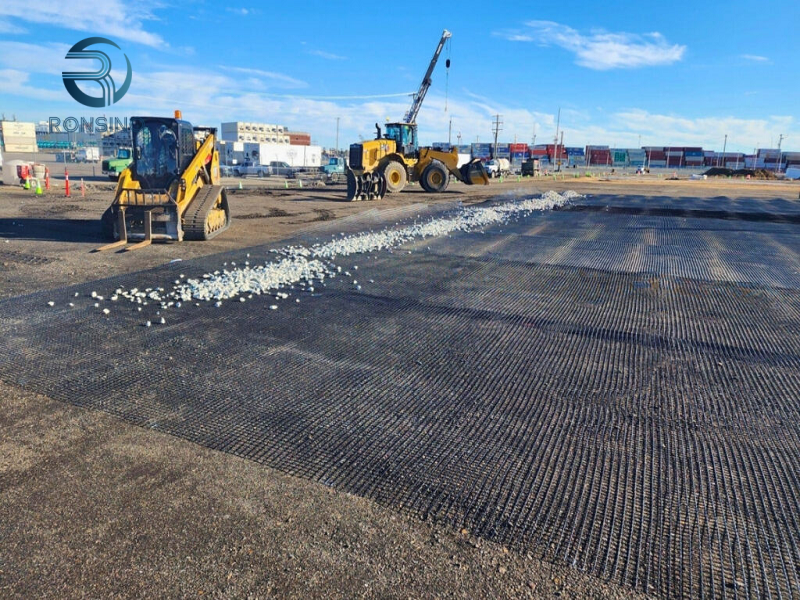
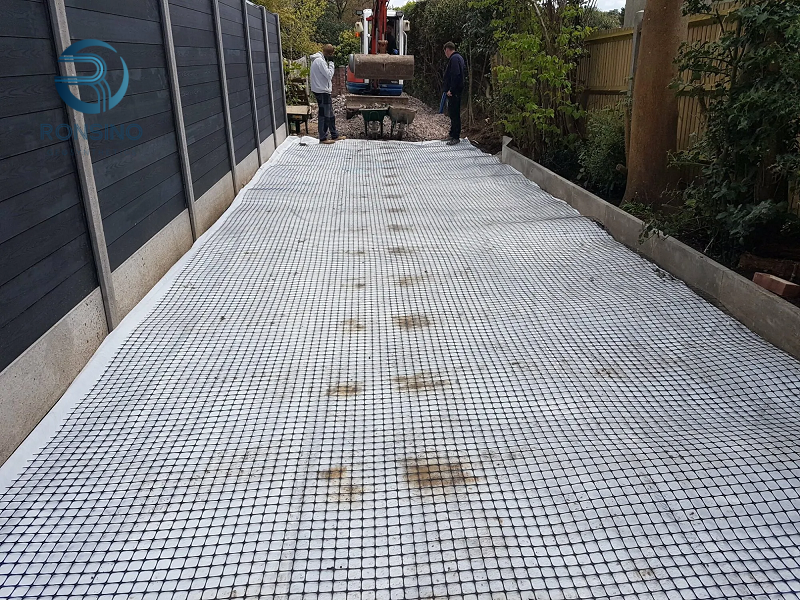
A geogrid is a type of geosynthetic material commonly employed in civil engineering and construction for purposes including soil strengthening, ground stabilization, and load spreading. Usually made from high - strength polymers such as polyester, high - density polyethylene (HDPE), or fiberglass. A plastic geogrid is distinguished by its open, net - like configuration that enables soil grains to engage with the grid. This interaction significantly enhances the mechanical performance of the soil, boosting its strength and steadiness.
Owing to their remarkable robustness and high - level efficiency, geogrids are extensively employed in road construction, retaining walls, slope protection, and erosion control mechanisms. They offer a cost - effective and durable alternative to traditional reinforcement materials like steel or concrete. This makes them the preferred option in contemporary infrastructure undertakings.
1.Multi Scenario Application and Engineering Value of Geogrid
1.1 Geogrid for Roads and Airport Runways
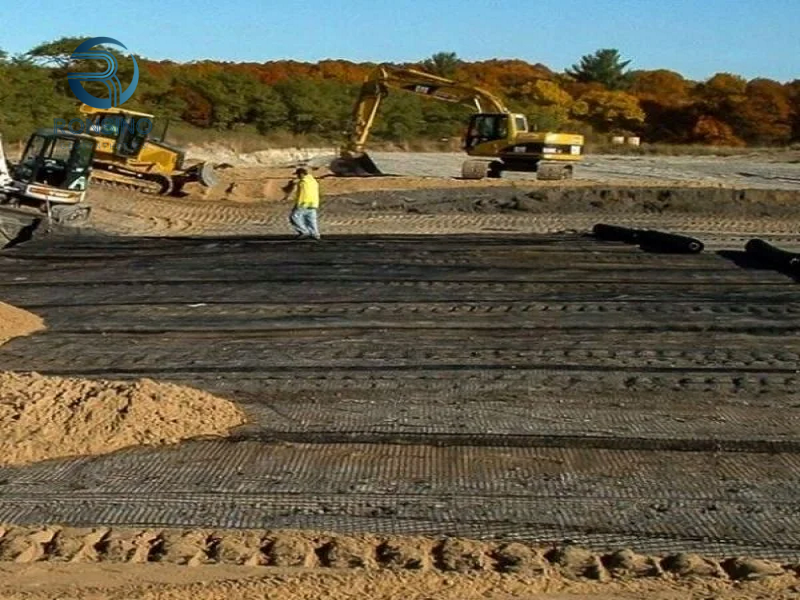
• Soft foundation treatment: Placing two - or three - way grids on silt, grade - one sand, or high - liquid - limit clay enhances bearing capacity by 30% - 60% and prevents “spring soil”. The grids stabilize the foundation for load - bearing.
• Rut prevention: Adding fiberglass or composite grids under the asphalt surface layer reduces rutting deformation by 40% - 70%, extending the maintenance interval 2 - 3 times. It improves driving comfort, safety, and road durability.
• Structural thickness reduction: Applying the “equivalent thickness” concept, a 40 - cm graded crushed stone base is optimized to a 25 - cm crushed stone layer with one or two high - strength polyester grating layers, saving 15% - 25% in cost with similar performance under normal traffic.
1.2 Geogrid for Retaining Partitions and Slopes
• Retaining structure: HDPE or PET gratings are used as reinforcement, arranged in layers with well - graded crushed stones. The retaining structure can be over 30 meters high and reduces masonry work by over 50% compared to concrete retaining walls.
• Slope strengthening: For 45° - 70° rock - soil mixed slopes, "lattice beams + two - way metal - plastic grids + vegetation blankets" are used. This increases the landslide safety factor by 1.4 times and enables rapid slope greening.
1.3 Geogrid for Railway Music Bed
• Ballasted track: Placing PP welded grids (tensile energy 30 - 40 kN/m) at the ballast bottom can reduce train - dynamic - load - induced cumulative settlement by 30% - 50% and lower annual maintenance frequency from four to one or two times.
• Ballastless track transition section: Use a grid geotextile composite layer to adjust stiffness difference, eliminating the "bridge - jumping" and ensuring 350 - km/h high - speed trains run smoothly.
• Heavy - duty railway: For sections with axle loads over 30 tons, a grating and rubber cushion layer can cut ballast pulverization rate by up to 60% and extend track - bed service life up to 15 years.
1.4 Geogrid for Environmental Protection and Water Conservancy
• Landfill area: Spread a 200 kN/m load - bearing high - strength PET geogrid on a 1.5 - mm thick, easy - to - install HDPE anti - seepage film. This prevents settlement and cracking of a 50 - meter - high waste pile. The geogrid also acts as a gas - conducting layer to speed up biogas collection in the landfill.
• River bank protection: We use the "gabion + bidirectional grid filter layer" instead of traditional masonry. This method speeds up water - damage recovery four - fold and allows the river bank slope to have a differential settlement of up to 10 cm without cracking.
• Seawall wave - protection function: By integrating polyester gratings and concrete interlocking blocks, in a splash zone where the tidal range reaches up to four meters, even after 20 years of being subjected to continuous forces, the tensile energy retention rate still stays above 80%.
1.5 Geogrid for Agriculture and Landscape
• Terraced Fields on Slopes: Install a 20 kN/m load - bearing polypropylene grid on 25° - 35° slopes in mountainous tea gardens. It cuts soil erosion by up to 70%, enables smooth machinery operation on slopes, and boosts tea yield per mu by 15%.
• Three - dimensional greening: A drainage grille with an additional 30 - millimeter convex structure is introduced to the base of the rooftop garden. This design effectively reduces the weight by approximately 120 kilograms per square meter. Moreover, it resolves the leakage problem that is often caused by overloading in traditional approaches.
• Temporary grazing area: Install retractable fiberglass grid mats in muddy, water - logged wetlands for 20 - ton forage transport equipment. After mat removal, local vegetation will recover naturally in about two months without extra human intervention.
2.What is Geogrid?
2.1 Structure and Composition of Geogrid
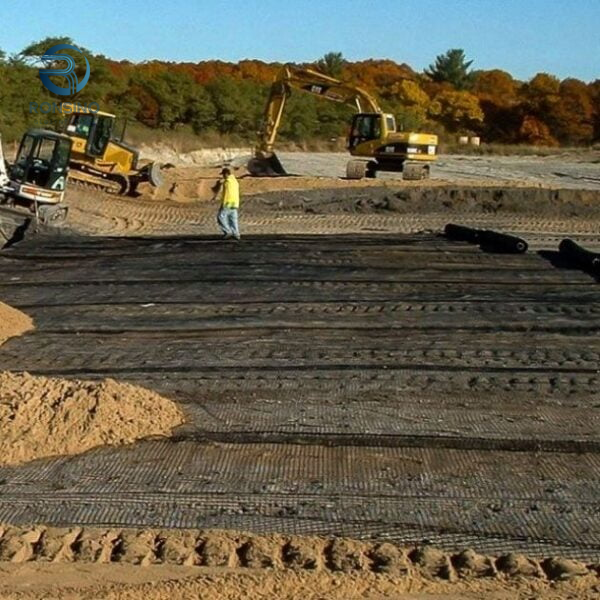
Geogrids are excellent geosynthetic materials with a grid - like structure and large openings. These openings allow soil particles, aggregates or other filling materials to pass through and interlock with the geogrid framework, creating a stable composite system that significantly enhances the strength, load - distribution capacity and stability of the soil - geogrid combination.
2.1.1 Geogrid Core Structural Elements – Ribs (Longitudinal and Transverse)
The ribs are the primary load - bearing parts of the geogrid, running in one or two directions depending on whether it's uniaxial or biaxial. Longitudinal ribs bear tensile forces along the geogrid's length, while transverse ribs offer width - wise stability. Together, they enable the plastic geogrid mesh to withstand stress and distribute loads effectively in its intended applications.
2.1.2 Geogrid Junctions (Nodes)
Junctions serve as the connecting elements where longitudinal and transverse ribs meet. These junctures are designed to provide high shear resistance and maintain the structure and structural integrity of the geogrid under applied loads. Robust junctions ensure that forces are properly transmitted between the ribs, preventing structural failure in challenging soil reinforcement projects.
2.1.3 Geogrid Apertures (Openings)
Apertures are the gaps between ribs, sized to let soil or a mixture seep through and fix in the grid. This mechanical locking increases the friction between the geogrid and surrounding substances, strengthening the bond and preventing soil sideways movement. Aperture shape can be custom - designed. For example, they can be used to stabilize streets, protect slopes from landslides, or reinforce retaining walls.
3.Types of Geogrid
Geogrids can be classified according to their production process, fabric composition, and structural design. Each type exhibits unique properties that are suitable for different engineering uses.
3.1Geogrid Classification by means of Manufacturing Process
3.1.1 Extruded Geogrid
Manufactured by extruding and stretching polymer sheets of High - Density Polyethylene (HDPE) or Polypropylene (PP), this creates a relatively oriented molecular structure for excellent tensile strength.
3.1.2 Uniaxial Geogrid
Engineered to possess an abundance of strength concentrated in a single dominant direction, these structures are ideally suited for maintaining the stability of walls, steep inclines, and embankments where unidirectional reinforcement plays a crucial role.
3.1.3 Biaxial Geogrid
Designed to offer equivalent energy in both the longitudinal and transverse directions, this product is commonly employed for the stabilization of avenue bases, in parking lots, and for foundation reinforcement where multi - directional load distribution is required.
3.1.4 Woven or Knitted Geogrid
Produced by weaving high - strength polyester or fiberglass threads into a grid - like structure and then covering it with a protective polymer (such as PVC or asphalt).
It provides excellent flexibility and resistance to fatigue, which renders it suitable for applications like pavement reinforcement, railroad ballast stabilization, and asphalt overlay projects.
3.1.5 Bonded Geogrid
A rigid grid structure is created by lacing or welding polymeric ribs. It's generally used in short - term construction, erosion control, and lightweight soil stabilization where high tensile strength isn't needed.
3.1.6 Triaxial Geogrid
Characterized by a hexagonal or triangular opening design, it provides multi - directional load - bearing ability.
It demonstrates exceptionally high quality when applied to high - traffic road surfaces, airport runways, and heavy - duty industrial floors where the even distribution of stress is of great significance.
3.2 Geogrid Classification by using Material Composition
1.Polyester PET Geogrids are well - recognized for their high - level tensile strength and outstanding ability to resist chemical deterioration. This makes them an ideal choice for long - term soil reinforcement projects.
2.High Density Polyethylene (HDPE) Geogrids provide strong resistance against ultraviolet (UV) rays as well as corrosion. As a result, they are suitable for outdoor applications and those where the geogrid needs to be buried.
3.Polypropylene (PP) Geogrids are lightweight and flexible materials that are often employed in situations where the ease of installation is a key consideration.
4.Fiberglass Geogrids display extremely high tensile strength. Due to their heat - resistant nature and low elongation characteristics, they are mainly utilized for reinforcing asphalt pavements.
Each material is selected according to factors like the type of soil, the load requirements at the site, the environmental conditions it will be exposed to, and the expected lifespan of the project. This ensures optimal performance in a wide range of engineering situations.
4.Advantages of Geogrid
4.1 Geogrid - High Strength and Lightweight
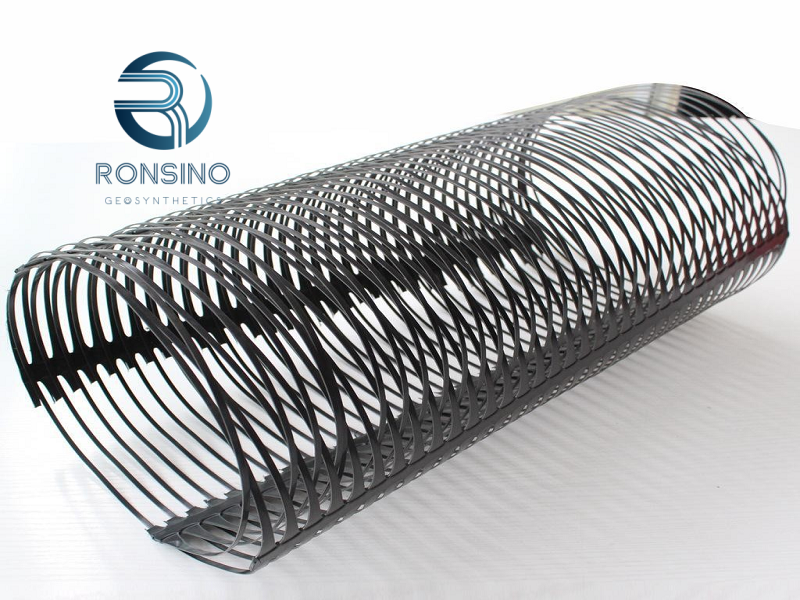
Geogrids are engineered for high tensile strength and light weight. Under certain conditions, their tensile capacity can surpass that of steel. Despite this strength, polyethylene plastic geogrids are easy to handle, transport, and install due to their low weight. They are highly effective for large - scale construction projects where efficiency matters.
4.2 Geogrid - Economic and Material Saving
Geogrids can enhance soil stability and improve load - bearing distribution, greatly reducing the need for costly granular or aggregate filling materials. This cuts down on material consumption and transportation expenditures, leading to substantial savings in overall project costs.
4.3 Geogrid - Durable and Corrosion-Resistant
Geogrids, made of excellent polymer materials, resist chemical corrosion, UV deterioration, and biological threats like mold and bacteria. This ensures a long service life even in harsh environments, making them suitable for long - term infrastructure projects.
4.4 Geogrid - Convenient Construction
Owing to their lightweight characteristic and appropriate flexibility, polypropylene geogrids can be easily unrolled and positioned on - site without the need for heavy - lifting machinery. Their ability to adapt to different terrains and the rapid installation process help reduce the labor time and improve construction efficiency.
4.5 Geogrid - Green and Low-Carbon
Compared with ordinary concrete or asphalt reinforcement methods, geogrid - based solutions require fewer raw materials and significantly less energy in production and installation, reducing greenhouse gas emissions. Thus, ground stabilisation grids are a more sustainable and eco - friendly choice for modern construction projects.
This writing comprehensively presents HDPE geogrids' concept, composition, categories, merits and software application domains, highlighting their key role in advanced civil - engineering projects.Geogrids, high - quality geosynthetics, strengthen soil and distribute loads via a unique grid framework. Widely used in road construction, retaining wall projects, railway infrastructure and environmental protection engineering, they offer economic benefits and positive environmental impacts.
RONSINO Geosynthetics is a China producer of geogrid materials. Through technological innovation and large-scale production, RONSINO geosynthetics has extensively decreased the manufacturing value of geogrids, presenting most economical options for infrastructure projects. In the future, with the development of science and intensified market competition, the price benefit of geogrids will be in addition highlighted, advertising their wider utility in the world engineering discipline and presenting robust aid for sustainable improvement goals.