Top 7 Geogrid Solutions for Effective Erosion Control
Blog · 2026-04-22 · 0 views
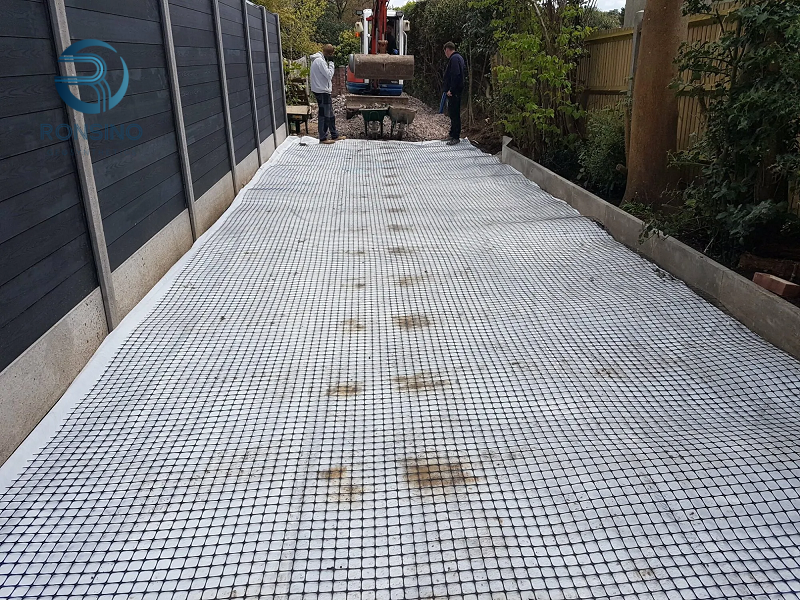
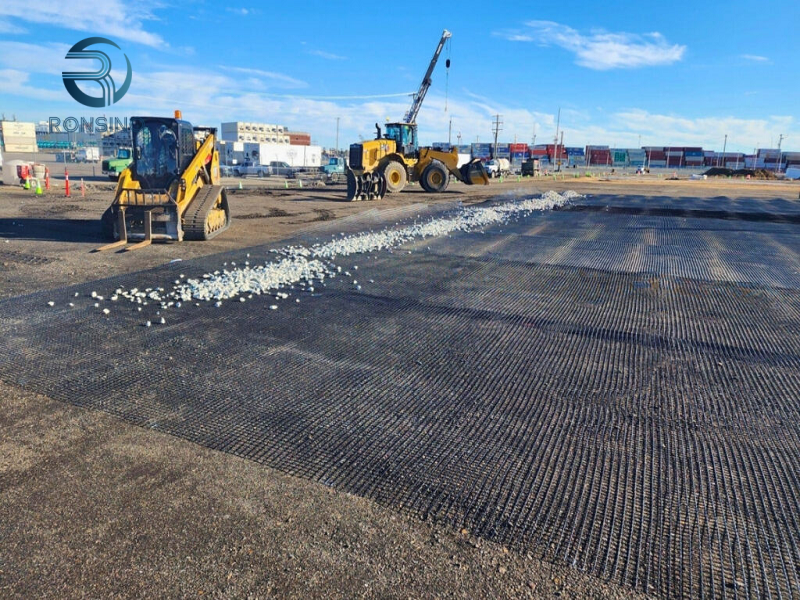
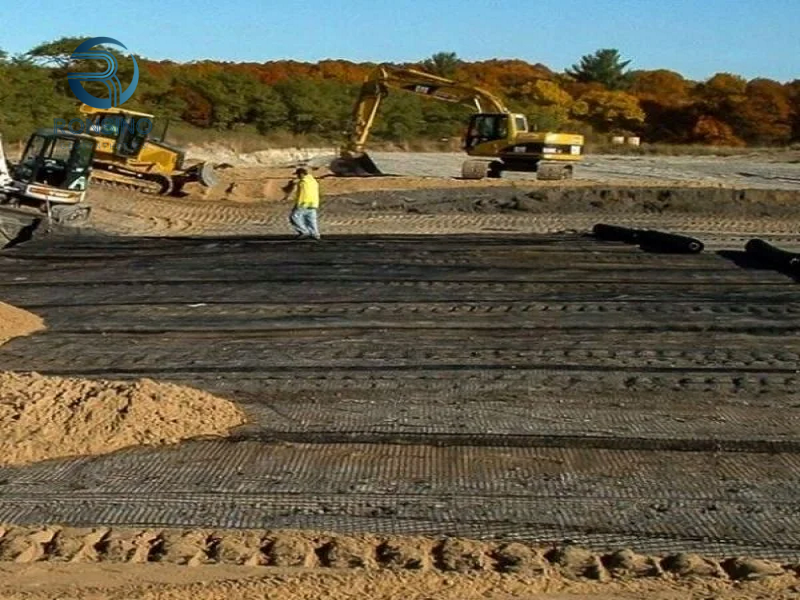
Used for erosion control, geogrids are grid-like reinforcements made of polymers. Common types include unidirectional (with high machine direction tensile strength) and bidirectional structures. This type of material is usually laid inside or on the surface of soil slopes, banks, riverbanks, coastal dunes, landfill covers, and stormwater drainage channels. Its main functions include improving shear strength, restraining soil particles, promoting vegetation growth, and effectively preventing surface peeling, gully formation, and overall instability. Unlike erosion control blankets (ECBs), turf reinforced mats (TRMs) or geocells, geogrids mainly perform tensile reinforcement rather than surface protection, so they are particularly suitable for the following scenarios:
steep reinforced soil slopes (>45–70°) with vegetated or hard facing
permanent or temporary slope stabilization under surcharge or seismic loading
basal reinforcement to prevent deep-seated failure in high embankments
veneer stability on steep landfill final covers
shoreline and riverbank protection when combined with riprap, gabions or vegetation
Through their integration with granular backfill or indigenous soil, geogrids elevate the factor of safety (FS) beyond 1.3–1.5 against both shallow and deep-seated failure mechanisms, aligning with global/compound/external stability criteria as outlined in FHWA NHI-10-024, BS 8006-2, and Eurocode 7. Additionally, they diminish erosion-related sediment discharge by 50–90%, a reduction influenced by slope gradient, precipitation levels, and vegetative coverage. Furthermore, these systems permit slope inclinations 20–40° steeper than the natural angle of repose, even in the absence of structural facing.
The global industry for geosynthetic reinforcement products within erosion mitigation and terrain stabilization segments is projected to reach a valuation of USD 420–580 million by 2025 (accounting for approximately 30–38% of overall geogrid consumption), with an anticipated compound annual expansion rate of 7.6–8.9% to achieve USD 780–1,100 million by 2032 (based on Mordor Intelligence, Grand View Research, and MarketsandMarkets 2025–2026 reports). Primary growth catalysts encompass:
highway cut/fill slope protection
coastal & riverbank stabilization against wave/current scour
landfill final cover veneer stability
mining tailing dam & waste dump reinforcement
urban stormwater channel lining
seismic-prone slope mitigation
This 2025–2026 review ranks the 7 best geogrid products for erosion control based on:
long-term allowable tensile strength (LTDS) per ASTM D6637 / ISO 10319
creep-reduced strength at 10,000 h (>70–90%of ultimate)
junction efficiency (>90–98%)
installation damage reduction factor (RFid) & surficial survivability
documented performance on slopes >45–70°with vegetation or hard facing
vegetation establishment support (aperture size, open area)
cost per kN/m LTDS
global availability & third-party verification (GRI-GG, NTPEP, ISO 9001, CE)
Only non-Chinese manufacturers with transparent, accredited test data are ranked in the main list; RONSINO Geogrid is presented separately in the advantages section.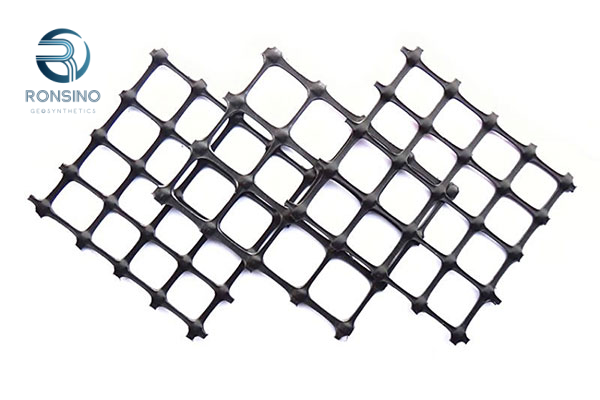
How We Selected & Ranked the Top Geogrid Products for Erosion Control
Evaluation used a weighted scorecard:
Long-term tensile & creep performance(35%) — LTDS, strength at 2%/5% strain, creep rupture strength at 10,000 h
Slope stability & surficial reinforcement(25%) — Junction efficiency, aperture stability, open area for vegetation root penetration
Durability & installation survivability(15%) — RFid, UV resistance, chemical/biological durability, coating integrity
Field validation & reference projects(15%) — Vegetated slopes >45–70°, documented erosion reduction >50–90%, FS >3–1.5
Value & supply-chain reliability(10%) — Cost per kN/m LTDS, roll width, lead time, global support
Data sourced from current manufacturer TDS, GRI-GG / NTPEP / ISO-accredited lab reports, public case studies and industry publications.
The 7 Best Geogrid Products for Erosion Control
1. Tensar UX / RE Series Uniaxial Geogrid
Core indicators and application advantages of high-performance geotextile
Mechanical Properties: Ultimate tensile strength (MD) 35–200 kN/m; 2% strain strength 8–45 kN/m; 10,000-hour creep strength > 70–80% of ultimate strength; joint efficiency > 95%.
Structural Characteristics: Pore diameter 25–40 mm, opening ratio >60–70%, extremely conducive to vegetation growth; roll width 1.2–1.7 meters.
Field Performance: Successfully used in scenes such as >60–70° steep slopes, coastal dunes, landfill capping, etc.; after vegetation is established, erosion is reduced by more than 70–90%.
Outstanding Advantages: It complies with ASTM D6637 standards, has the highest long-term design strength according to the American FHWA NHI-10-024 standard, and has rich experience in vegetation slope design.
Pros
Superior long-term strength retention
Excellent vegetation root penetration
Proven in aggressive environments (coastal, mining)
Cons
Narrower rolls increase overlap waste
Premium pricing for high-strength grades
Verdict → The global reference for permanent vegetated slope reinforcement and erosion control.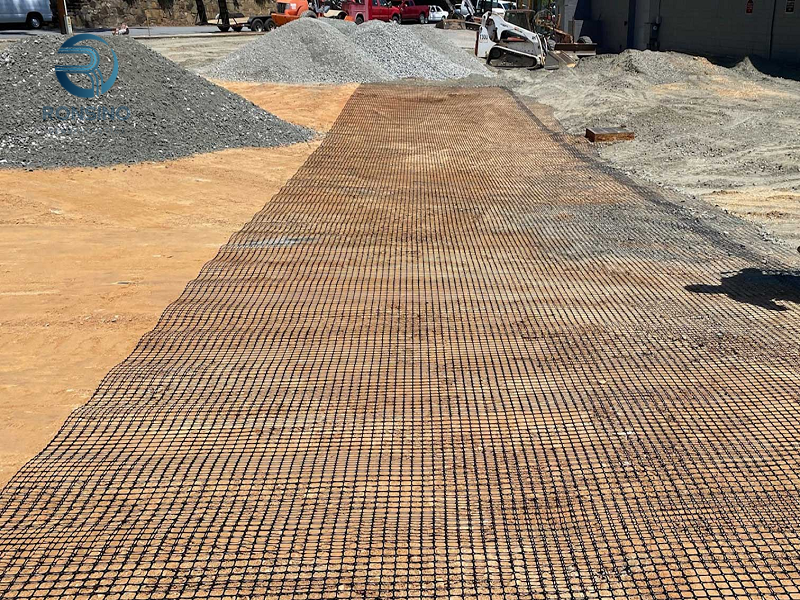
2. Huesker Fortrac® T Uniaxial Geogrid
Material → High-strength polyester (PET) yarn covered with protective polymer coating Ultimate tensile strength → 35–2,800 kN/m (widest range in the industry) Tensile strength at 2% strain → 500–3,000 kN/m Creep strength after 10,000 hours → maintains 80–90% of ultimate strength Connection efficiency → >90–98% Pore size/opening ratio → 20–50 mm / >65% Roll width → 5.0–5.3 m Engineering performance suitable for steep slopes (>70–80°), coastal protection, slag piles; erosion control efficiency >80% when used with vegetation Core advantages → Excellent tensile properties and outstanding creep resistance, especially suitable for ultra-steep slope or high-load slope engineeringPros
Extreme tensile strength for critical slopes
Large roll widths reduce installation time
Proven in aggressive backfill & coastal conditions
Cons
Very high cost for >500 kN/mgrades
Over-engineered for slopes <45–50°
Verdict → The choice for extreme slope angles and heavy loading.
3. NAUE Secugrid® R & Q Series
High-performance polymer materials → Use high-modulus polyethylene terephthalate (PET) or polypropylene (PP) rods to achieve node connections through precision welding technology Ultimate tensile strength → 30–400 kN/m Tensile strength at 2% strain → 400–2,000 kN/m Creep reduction strength at 10,000 hours → maintains more than 80–85% of ultimate strength Node connection efficiency → Welding node efficiency exceeds 98% Pore size / opening ratio → 25–40 mm / more than 70% Roll width → 4.0–5.0 m Actual project performance → Can be applied to slopes with a slope exceeding 70°, landfill cover and coastal protection projects; the soil and water conservation effect reaches 70–90% Highlighting technical advantages → Welded joint technology achieves near-zero creep characteristics and excellent structural stiffnessPros
Exceptional long-term stiffness
High survivability during vegetation establishment
Proven on steep, permanent slopes
Cons
Higher cost than extruded grids
Less flexible on curved slopes
Verdict → Excellent for tall, steep vegetated slopes and permanent erosion control.
4. TenCate Mirafi® HP Uniaxial & Woven Series
Polymer → High-tenacity PET or PP multifilament yarns with coating Ultimate Tensile Strength → 35–200 kN/m Tensile Strength @ 2% strain → 500–1,500 kN/m Creep-Reduced Strength @ 10,000 h → >75–85% of ultimate Junction Efficiency → >90–95% Aperture Size / Open Area → 25–50 mm / >65% Roll Width → 4.0–5.3 m Field Performance → NTPEP-verified, used on slopes >60–70°, landfill covers Standout Advantage → High survivability & NTPEP-validated data
Pros
Good balance of strength & cost
Strong technical support
Widely accepted in North American specifications
Cons
Premium pricing in high-strength grades
Narrower rolls than some competitors
Verdict → Reliable high-performance choice for vegetated slopes.
5. Propex Geotex® Woven Uniaxial Series
Polymer → High-tenacity PET or PP multifilament yarns with coating Ultimate Tensile Strength → 35–200 kN/m Tensile Strength @ 2% strain → 400–1,500 kN/m Creep-Reduced Strength @ 10,000 h → >75–80% of ultimate Junction Efficiency → >90% Aperture Size / Open Area → 25–50 mm / >65% Roll Width → 4.5–5.3 m Field Performance → NTPEP-verified, used on slopes >60° Standout Advantage → High modulus at low strain & good creep performance
Pros
Strong mid-to-high strength performance
NTPEP data availability
Good survivability
Cons
Slightly lower junction efficiency vs. welded products
Higher cost for ultra-high-strength grades
Verdict → Reliable mid-to-high strength woven geogrid for erosion control.
6. Carthage Mills FX & UX Woven Series
Polymer → Slit-film & multifilament PP/PET yarns with coating Ultimate Tensile Strength → 30–120 kN/m Tensile Strength @ 2% strain → 400–1,000 kN/m Creep-Reduced Strength @ 10,000 h → >70–80% of ultimate Junction Efficiency → >90% Aperture Size / Open Area → 25–50 mm / >65% Roll Width → 4.5–5.3 m Field Performance → NTPEP-verified, used on slopes >45–60° Standout Advantage → Excellent price-performance & survivability
Pros
Strong value in mid-strength range
Good construction durability
Widely accepted in North American projects
Cons
Lower modulus than premium products
Regional pricing variations
Verdict → Best mid-market value for erosion control on slopes.
Comparison Table of Top 7 Global Geogrid Products for Erosion Control
Advantages of RONSINO Geosynthetics – Plastic Uniaxial Geogrid for Erosion Control
The Taian Ronsino New Material Co., Ltd (RONSINO Geosynthetics) offers a comprehensive portfolio of geogrids, with the Plastic Uniaxial Geogrid particularly effective for reinforced soil slopes, MSE wall foundations, embankment stabilization and erosion control on steep surfaces. Key advantages include:
Broad Tensile Strength Range— Ultimate strength 30–400 kN/m (MD dominant), tensile strength at 2% strain 400–2,000 kN/m in high-modulus grades
Low Creep & Long-Term Stability— Creep-reduced strength >75–85% of ultimate at 10,000 h (grade-dependent), supporting design lives >75–120 years
High Junction Efficiency— Welded or extruded junctions achieve >95% efficiency, ensuring reliable load transfer
Highly Competitive Economics— Cost per kN/m of long-term design strength typically 30–50% lower than equivalent North American or European products
Wide Roll Availability— Standard widths up to 6 m, reducing seams, overlap waste and installation labor
Proven Field Applications— Installed on slopes >45–70°, MSE wall foundations, coastal dune stabilization, landfill veneer covers and mining waste dumps
Quality & Compliance→ ISO 9001 certified production, CE marking, independent lab testing (ASTM D6637, ISO 10319), full traceability & QC documentation
RONSINO’s Plastic Uniaxial Geogrid provides engineers and contractors with a high-performance, cost-effective solution for erosion control on slopes and reinforced soil structures without sacrificing long-term stability or design safety factors.
Conclusion
Geogrid reinforcement plays a pivotal role in contemporary erosion management across challenging terrains, including steep inclines, riverbanks, coastal dunes, and landfill capping systems, facilitating robust, cost-effective, and ecologically sustainable solutions when combined with vegetative or armored surfaces. Tensar UX / RE Series establishes the benchmark for enduring permissible design tensile strength and broad FHWA endorsement, Huesker Fortrac® excels in ultra-high tensile force applications, whereas RONSINO Geosynthetics offers one of the most competitive price-performance advantages in the 2025–2026 market for uniaxial geogrid reinforcement within erosion control projects.When specifying geogrid for erosion control, match the product’s LTDS, creep behavior, junction efficiency and cost per kN/m to the slope geometry (angle, height, surcharge), soil properties, rainfall intensity, vegetation plan and required design life. For cost-sensitive or large-volume projects requiring reliable uniaxial reinforcement on slopes, RONSINO’s Plastic Uniaxial Geogrid offers an outstanding balance of strength, durability, installation efficiency and overall project value.