Polyester Biaxial Geogrid for Asphalt Highway Construction Project in Germany
Case · 2025-11-03 · 0 views
Bituminous concrete surfacing is extensively employed across numerous nations for the development of thoroughfare networks; however, the detrimental impacts imposed by vehicular loading lead to significant deterioration of these flexible pavements, consequently diminishing the operational longevity of the transportation infrastructure. Consequently, to enhance the structural integrity of bituminous concrete surfacing, it becomes imperative to implement targeted strategies aimed at augmenting its mechanical resilience. For instance, the integration of geogrid reinforcement has proven to be a viable solution, markedly enhancing the performance characteristics of bituminous concrete surfacing while concurrently mitigating the onset of surface deformations such as rutting and fatigue cracking.
Bidirectional geogrid has excellent tensile strength and bidirectional bearing capacity, which can effectively achieve soil locking. Polyester two-way geogrid is particularly suitable for reinforcing subgrades that are subject to sustained heavy loads, such as mechanical foundation reinforcement, weak foundation treatment and other geotechnical structures (such as reinforced foundations and operating platforms). Plastic bidirectional geogrids are usually made of high-density polypropylene or high-density polyethylene resin through processes such as extrusion, molding, drilling, and longitudinal and transverse stretching. As an ideal geosynthetic material, polyester two-way geogrid can significantly improve soil integrity, reduce erosion risks, enhance foundation stability and bearing capacity, and extend the service life of critical infrastructure such as roads, railways, slope protection, and airports.
Role of PP Polyester Biaxial Geogrid in Asphalt Highway Construction
In order to improve the high temperature deformation resistance of asphalt concrete pavement, two-way polyester geogrid can be added. The grid can enhance the bearing capacity of the road surface, form a stable anchoring system, effectively limit the lateral displacement of the aggregate, and enhance the synergy between the asphalt matrix and the grid, thereby improving the dimensional stability of the aggregate frame, reducing rutting, and ensuring driving safety.
Secondly, the issue of cracking in asphalt concrete pavements. The tensile resistance exhibited by both the plastic and mesh components within Polyester Biaxial Geogrid is notably substantial. Incorporating these materials into the asphalt concrete structural layer significantly elevates the material's strength and overall performance characteristics. Upon installation of the geogrid, the propagation angle of cracks is effectively widened, which serves to impede the initiation and progression of surface deterioration.
Thirdly, diminishing the asphalt layer's depth becomes feasible. With the integration of geogrids into asphalt concrete surfaces, the structural stress allocation undergoes a transformation, thereby diminishing the tensile pressure exerted upon the asphalt composite material. This improvement in the asphalt pavement's endurance against fatigue serves to postpone the onset of fissures and deterioration. Employing geogrids during asphalt concrete construction permits the reduction of asphalt depth to a range of 5 to 10 centimeters, which significantly contributes to the conservation of asphalt mixture resources.
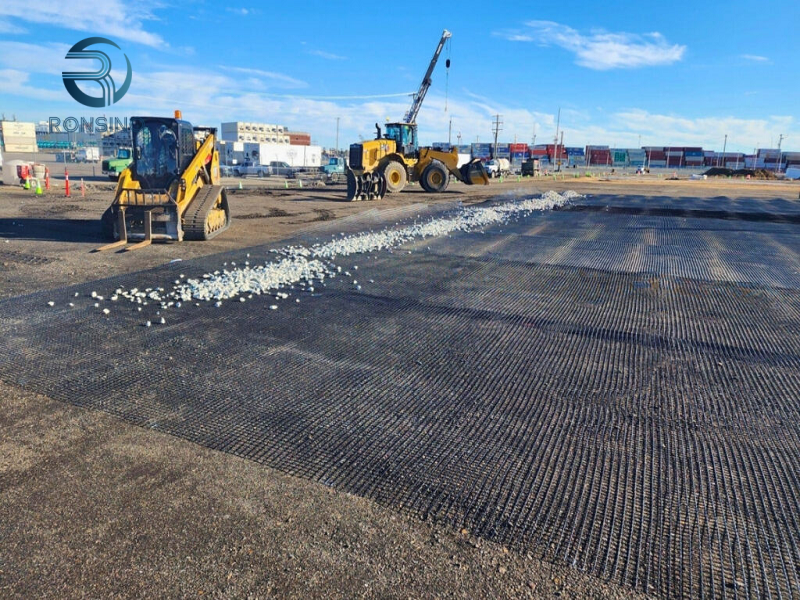
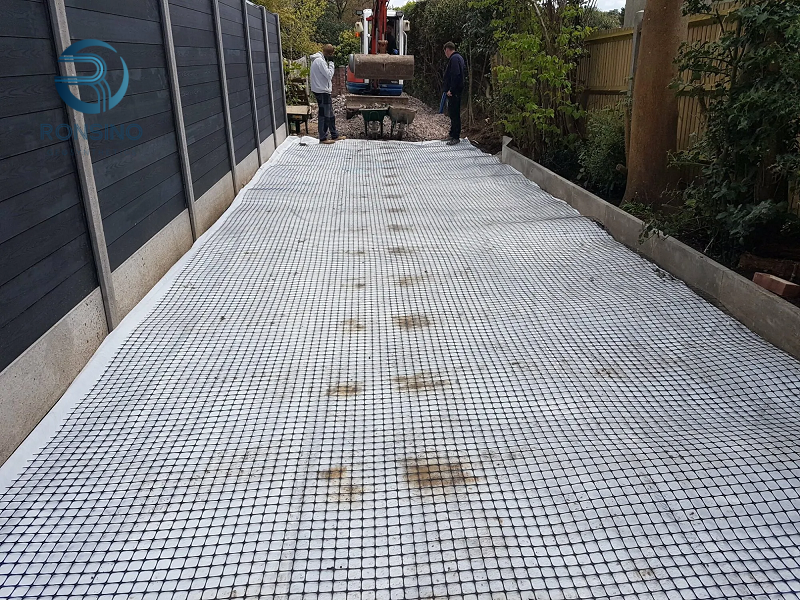
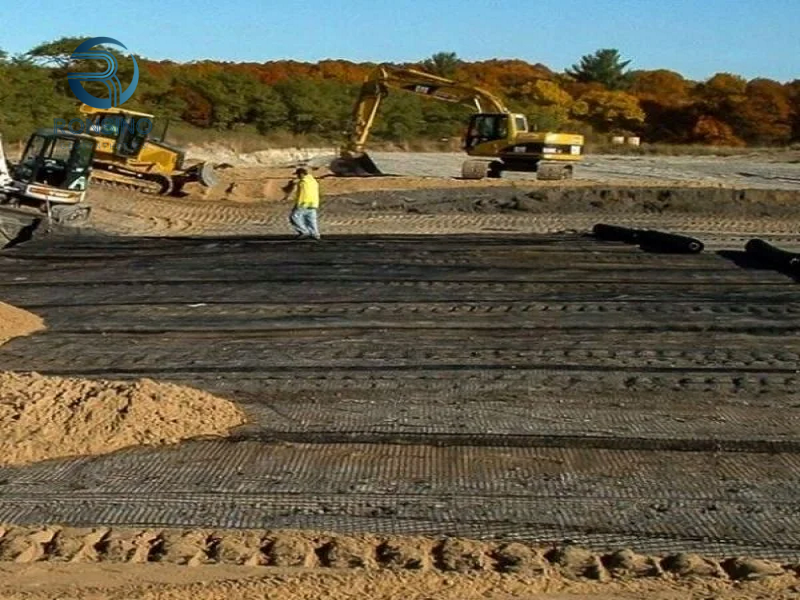
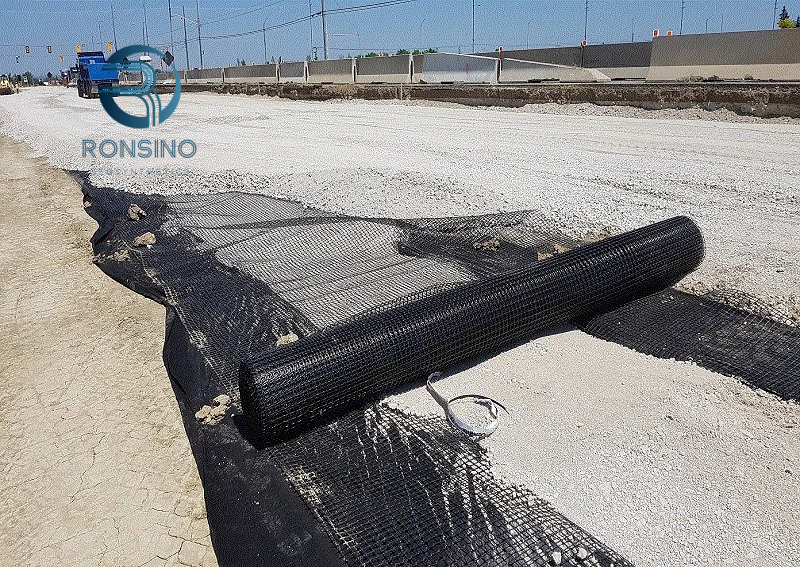
RONSINO Germany customer purchased PP Polyester Biaxial Geogrid from us in order to increase the strength of the asphalt concrete pavement and reduce the occurrence of diseases such as cracks and ruts.
The raw material utilized in the manufacturing of the biaxial geogrid supplied to the German client for this particular undertaking is polypropylene. The tensile capacity of the bidirectional geotextile fabric employed measures 50KN/50KN, and the modulus variation is required to align precisely with this tensile strength. Given that the polypropylene biaxial geogrid serves a reinforcing function, its integration within asphalt concrete pavements enables the material to bind the composite components within its mesh structure effectively. Consequently, this application helps mitigate displacement tendencies in the asphalt concrete surfacing above bridge structures. Therefore, during the asphalt concrete pavement installation phase, the selection of a suitably engineered geogrid plays a pivotal role in enhancing the overall pavement performance and longevity.
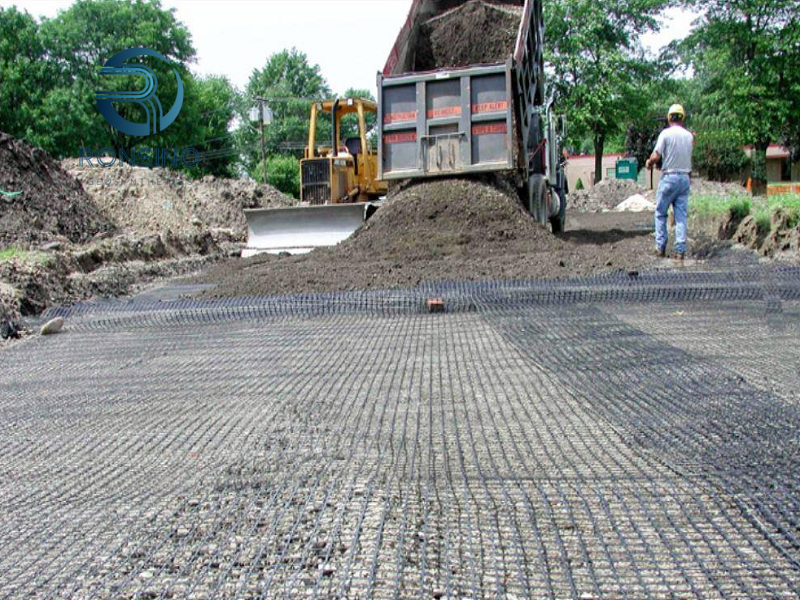
Specifications of Polyester Biaxial Geogrid for Asphalt Highway Construction in Germany
Total geogrid fabric quantity – 46500square meters
Each roll size – 95m*50m
Tensile Strength– 50KN/50KN
About RONSINO
RONSINO focuses on the development and production of various high-performance and cutting-edge technology geogrids, geomembranes, geotextiles and other geosynthetic materials. Its products are exported to more than 36 countries and regions around the world. Our core innovative products include high-quality geomembranes, geotextiles, geocells, bentonite waterproof blankets (GCLs), drainage boards, etc., all manufactured using advanced processes. RONSINO brand products have passed many international authoritative certifications such as ISO9001, ISO14001, OHSAS18001, Soncap, SASO, BV, SGS, and Intertek to ensure excellent quality.