Nitrogen gas Textured HDPE Geomembrana for Mining Project in Argentina
case · 2025-08-22 · 0 views
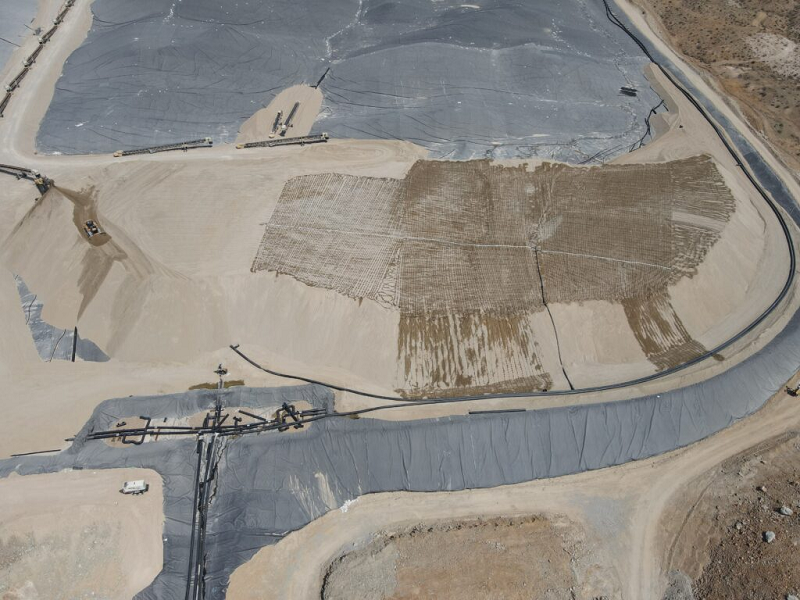
Nitrogen textured high-density polyethylene (HDPE) geomembrane is widely used in mining engineering due to its multiple advantages. As an impermeable barrier, it can effectively block liquid and gas penetration and ensure environmental safety.
The Nitrogen-Infused Textured Surface elevates frictional resistance, effectively minimizing slippage and liner displacement on inclined terrains and in zones with heavy usage. It amplifies interface friction, thereby bolstering structural integrity and operational efficiency through its engagement with adjacent soil or composite materials. Nitrogen gas Textured Geomembranes exhibit superior conformity to irregular or coarse substrates, significantly reinforcing geotechnical stability. Additionally, they augment shear strength at the Geomembrana-soil or rock interface.
Nitrogen textured surfaces significantly reduce the risk of slippage in active or unstable areas. Its enlarged contact surface enhances welding strength and ensures joint reliability. At the same time, this product, like the smooth HDPE film, has excellent chemical degradation and UV resistance, and is suitable for various mining environments.
Effective containment stands as a fundamental attribute of HDPE Nitrogen gas Textured Geomembranes, with the specialized Nitrogen gas Textured surface significantly bolstering this performance. By blocking the migration of hazardous materials into surrounding ecosystems, these advanced geosynthetic liners deliver robust containment solutions specifically tailored for mining environments.
1.Case Study of Nitrogen gas Textured HDPE Geomembrane for Mining Project in Argentina
Location : Argentina
Product(s) : HDPE Nitrogen gas Textured Geomembrane
Application : Mining Project
Why Chose Nitrogen gas Textured HDPE Geomembrana Argentina for Mining Project
Choosing Nitrogen gas Textured HDPE Geomembranas for a mining project in Argentina offers significant benefits, especially considering the potential environmental hazards associated with mining operations.
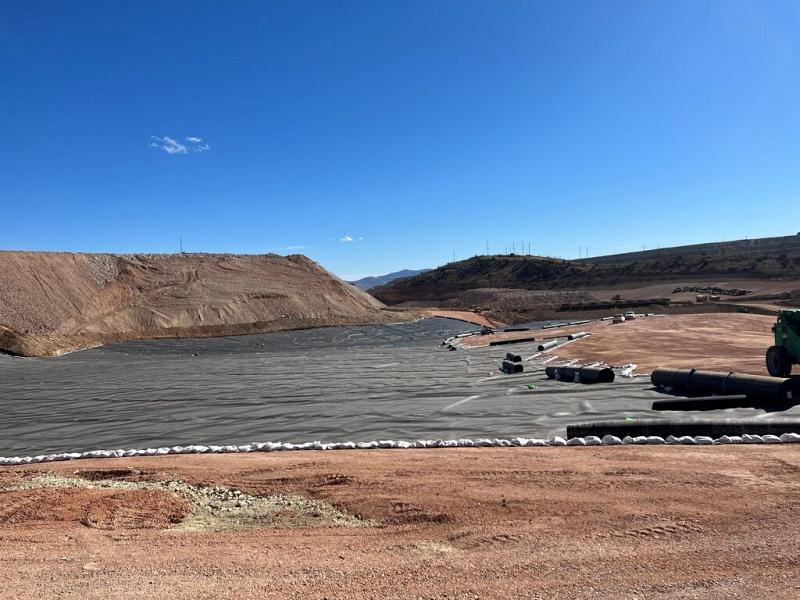
The Argentinian customer chose nitrogen-filled textured high-density polyethylene geomembrane. The main purpose is to reduce leakage and protect the ecological environment from damage by industrial mining activities. The mining industry often handles hazardous materials that, if not properly contained, can cause serious and irreversible damage to ecosystems. The use of a strong geomembrane lining is designed to create an impermeable barrier that effectively blocks the leakage of harmful substances and prevents groundwater contamination, thereby strictly enforcing ecological protection standards.
Although the complex terrain of the construction site brings obstacles to installation, the use of nitrogen foam textured HDPE geomembrane can bring significant advantages. Its unique nitrogen foamed textured surface provides higher friction and interface friction characteristics, allowing the geomembrane to adapt to irregular terrain changes, thereby enhancing stability and performance and ensuring effective anti-seepage under harsh construction conditions.
High-density polyethylene (HDPE) geomembranes with a nitrogen gas-textured surface represent the optimal solution for mining applications in Argentina, reflecting the client’s dedication to ecological preservation and sustainable extraction methodologies. In light of the intricate topographical challenges encountered during the implementation phase, the stakeholder has emphasized the adoption of stringent safeguard protocols to minimize environmental impact and reduce potential hazards linked to mining operations.
2 Solution of Nitrogen gas Textured HDPE Geomembrane Argentina for Mining Project
Our engineers have developed a solution for the mining project in Argentina by implementing Nitrogen gas Textured HDPE Geomembrane slope protection technology. This innovative approach addresses the challenges posed by the complex terrain, ensuring the safety and stability of the slope.
The fundamental mechanism of this technology is rooted in the deployment of an impermeable Geomembrane, which functions as a robust shield, thereby blocking the ingress of precipitation into the subsoil and curtailing the detrimental consequences of unconsolidated terrain under wet conditions. Through the preservation of the slope's structural integrity and equilibrium, it successfully averts the degradation of mechanical properties or the augmentation of self-weight-induced stress, both of which are potential precursors to slope failure and displacement.
HDPE nitrogen-filled textured geomembrane slope stabilization technology can prevent slope displacement even under large-scale cracks induced by rainfall, ensuring the integrity and longevity of the mine structure, while maintaining the ecological balance of Argentina's mining areas and reducing mining risks.
3 Specifications of Nitrogen gas Textured HDPE Geomembrane for Mining Project in Argentina
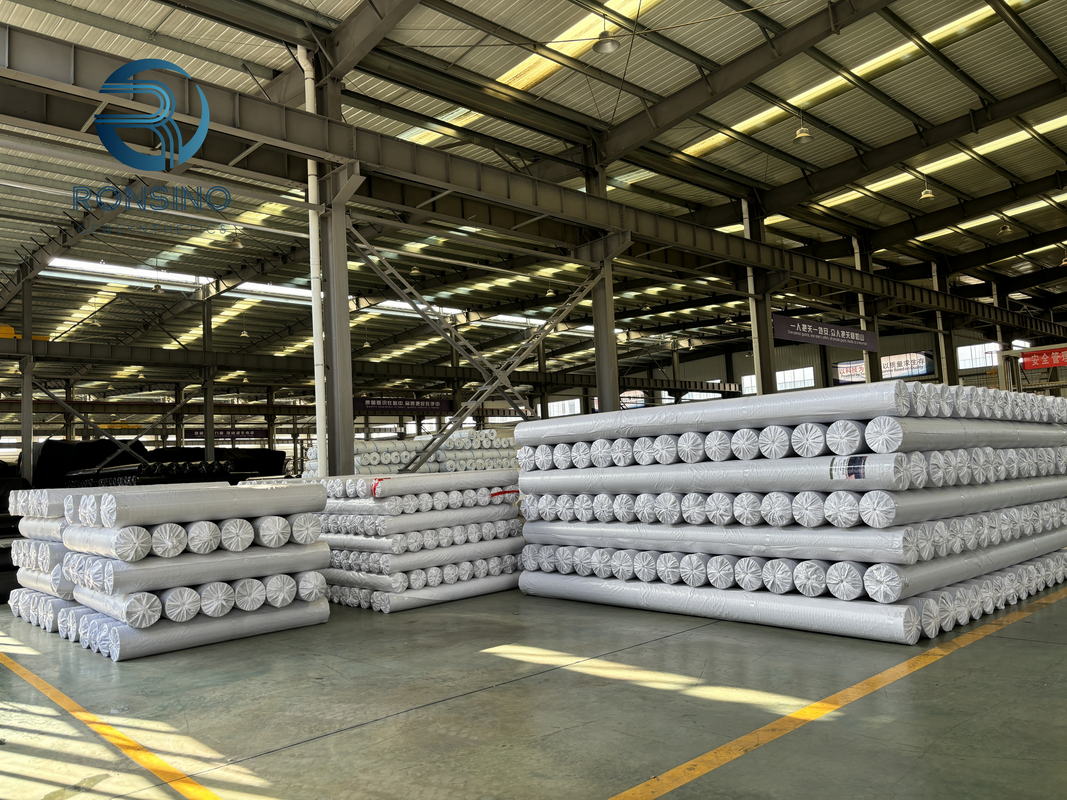
Total Nitrogen gas Textured HDPE Geomembrane quantity–750000 squares meters
Thickness – 1.5mm
Each roll size – 7m*140m
4 Nitrogen gas Textured HDPE Geomembrana Features
1.Can be Nitrogen gas Textured on one or both sides for your demands.
2.Increased frictional coefficient for steep slopes.
3.Outstanding ultraviolet and chemical resistance.
4.Outstanding UV Environmental stress crack resistance.
5.High tensile strength and low elongation.
6.Excellent friction coefficient and tensile strength with Geotextile reinforcement performance.
7.Excellent water impermeability, corrosion and aging resistance.
8.Advanced stabilization.
9.Impermeable, antifouling, antiskid function.
10.Light weight, easy construction and good overall continuity.
5Benifits of Nitrogen gas Textured HDPE Geomembrana for Mining Project in Argentina
Nitrogen gas Textured HDPE Geomembrana offers several benefits for mining projects in Argentina:
5.1Advanced Stabilization:
Nitrogen gas Textured HDPE Geomembrana is specifically designed for landfills and mining applications, providing advanced stabilization. It offers enhanced strength and stability to withstand the demanding conditions of mining sites, ensuring long-term performance.
5.2Excellent Interface Friction Coefficient:
Geomembrana's Nitrogen-Infused Textured Surface delivers an exceptional interfacial friction performance. This characteristic is of paramount significance in mining applications, as it significantly bolsters the structural integrity of the liner system and effectively mitigates the risk of displacement, thereby guaranteeing the secure containment of waste materials and eliminating the potential for fluid infiltration.
5.3Inherent Flexibility:
Nitrogen gas Textured HDPE Geomembranas possess inherent flexibility, allowing them to adapt to various contours and irregularities in the terrain. This flexibility facilitates efficient installation, even in challenging environments or complex broken open slopes.
5.4Wide Range of Applications:
Nitrogen enhanced surface texture HDPE geomembrane is widely used in many fields due to its excellent versatility. They also play a key role in water conservancy (e.g. dams, retention ponds, cesspools), construction, underground infrastructure and waste management as backfill liners, reinforcing steep retaining walls, constructing heap leach pads, and as base liners for landfills and liner systems. This versatile feature makes it a superior solution to the needs of complex mining projects.
The benefits of Nitrogen gas Textured HDPE Geomembrana, including advanced stabilization, excellent interface friction coefficient, inherent flexibility, and its wide range of applications, make it a reliable and effective solution for mining projects in Argentina.
6.Nitrogen gas Textured Geomembrana Installtion Method
Before deploying nitrogen textured geomembrane, it is necessary to ensure that the slope is smooth and defect-free to prevent soil instability. The loose soil is then wrapped with this fully waterproof membrane to effectively block moisture and enhance mechanical stability.
1) It should be extended from the bottom to the high position, not too tight, and 1.50% margin should be reserved for local sinking and stretching. Considering the actual situation of the project, the slope is laid from top to bottom.
2) The two adjacent longitudinal joints shall not be in a horizontal line, and shall be staggered by more than 1m.
3) The longitudinal joint shall be more than 1.50M away from the dam foot and bending foot, and shall be set on the plane.
4) Slope first and then bottom.
5) When the slope is laid, the film spreading direction should be basically parallel to the maximum slope line.
Slope laying:
Before installing an impermeable geomembrane, the designated area needs to be thoroughly inspected and accurately measured. Based on the determined dimensions, geomembrane rolls of corresponding sizes are transported from the storage facility to the initial anchoring trench platform. During installation, the "section-by-section laying method" should be adopted depending on the site conditions, and construction should be carried out in sections from top to bottom. Fine cuts are required within each segment to ensure that the upper and lower edges are firmly fixed.
Site bottom laying:
Prior to the installation of the impermeable geomembrane, a thorough examination and precise measurement of the designated area must be conducted. Accordingly, the appropriately sized geomembrane, sourced from the storage facility, should be conveyed to the specified location based on the ascertained dimensions. Throughout the deployment process, the impermeable geomembrane must be manually guided in a predetermined direction.
Alignment and alignment:
The installation of RONSINO HDPE nitrogen-filled textured geomembrane, whether it is used for slopes or bases, requires careful construction to ensure a smooth and even surface, avoiding wrinkles and undulations, to ensure perfect alignment and seamless connection of adjacent membranes. In strict accordance with the project specifications, it is recommended that the overlap size of adjacent diaphragms be maintained at approximately 10 cm.
Pressing:
Secure the RONSINO HDPE nitrogen textured geomembrane with sandbags to prevent wind displacement. When installing the anchor trench, reserve a sufficient length of anti-seepage membrane on the top of the trench according to design requirements to cope with settlement or expansion.
Longitudinal joint:
The inclined stretch is positioned at the elevated portion, whereas the downward slope occupies the lower segment, with a mandatory overlapping length of no less than 15cm. The bentonite mat must be installed only in sections that have successfully undergone inspection approval, adhering to the method of manual directional "push placement" during application.
7.About RONSINO
Since its establishment in 2007, RONSINO has always focused on providing high-quality geomembrane and geosynthetic materials products and solutions to global customers. Our core innovative products include high-quality geotextiles, geomembranes, geogrids, geocells, bentonite waterproof blankets and drainage boards.
RONSINO offers both high quality geosynthetic products but also professional design and installation service. OEM, ODM, custom development and fabrication are also available. If you have any questions or inquiries, please contact us, we will reply as soon as possible.


