Mining Wastewater Treatment Pond Liner Factory | Engineering Guide
Blog · 2026-06-22 · 0 views

Choosing a reliable manufacturer of geomembranes for mining wastewater storage pools is a high-risk decision, which is related to engineering design and procurement management and directly affects project environmental compliance, operational stability and full life cycle cost control. This professional technical guide builds a systematic screening and evaluation system for geomembrane manufacturers, clarifies the core performance indicators and specification requirements of anti-seepage materials, can ensure the long-term stable anti-seepage of liquid storage systems in highly corrosive and harsh environments, and provides practical reference for mining engineering technicians, procurement managers and EPC general contractors.
What is Mining Wastewater Pond Geomembrane Factory
A high-density polyethylene (HDPE) and reinforced geomembrane manufacturer specializes in special anti-seepage materials for mine water protection, tailing liquid storage, and acid-base industrial wastewater control. The products can be used in sedimentation tanks, tailings ponds, and purification pools to block groundwater pollution and ensure project compliance. In addition to production, manufacturers also provide technical parameters, extreme acid, alkali and heavy metal resistance certification, and construction quality control (CQA) guidance. The engineering team selects suppliers and focuses on the following: 8-meter large-size coil supply capabilities, thickness control accuracy, stress cracking resistance (NCTL test ≥ 500 hours), strong acid and alkali and other special environment application case data; the procurement department focuses on evaluating ISO9001, GRI-GM13 and other qualifications, the full-process traceability mechanism for raw materials, and customized testing service capabilities.
Technical Specifications of Mining Wastewater Pond Geomembrane Factory
Products manufactured by a reputable factory specializing in geomembranes for mining wastewater treatment ponds are required to conform to extremely strict performance evaluation standards. The table presented below outlines common technical indicators and their respective practical value in engineering projects targeting mining wastewater disposal scenarios.
Parameter Typical Value Engineering Importance
Thickness (nominal) 1.5 – 3.0 mm (60–120 mil) Determines puncture resistance and chemical barrier integrity under hydraulic head
Density (HDPE) 0.940 – 0.960 g/cm³ Ensures dimensional stability under thermal and chemical stress
Stress Crack Resistance (NCTL) ≥ 500 hours (ASTM D5397) Critical for preventing brittle failure in acidic and alkaline environments
Tensile Yield Strength (MD/TD) ≥ 17 MPa (ASTM D6693) Prevents deformation under sludge and water loads
Puncture Resistance ≥ 250 N (ASTM D4833) Protects against sharp particles and installation damage
Chemical Resistance (pH range) 0.5 – 14 (verified immersion tests) Ensures compatibility with acidic drainage, cyanide, and saline water
UV Stability (exposed areas) ≥ 50% retained tensile strength (5000 h) Critical for exposed pond berms and liner surfaces
Design Service Life 20 – 30 years Directly influences project amortization and closure planning
Every performance indicator is fully validated via both internal laboratory assessments and independent third-party testing, strictly in accordance with the latest ASTM, ISO, and GRI industry specifications. A trustworthy manufacturer specializing in geomembranes for mining wastewater storage facilities will furnish batch-specific inspection reports as well as complete long-term chemical immersion resistance test data for each product batch.
Material Structure and Composition
The multi-tiered structural design of a heavy-duty impermeable liner, produced by a specialized manufacturer of geomembranes for mine tailings and wastewater retention ponds, is purpose-built to deliver exceptional chemical corrosion resilience, sharp object puncture prevention, and long-term resistance to stress-induced cracking. The subsequent table outlines the standard material composition and structural specifications of this product.
Layer / Component Material Function
Top (exposure) layer HDPE with 2.5% carbon black + HALS stabilizers Resists UV degradation and oxidation during exposed periods
Core / structural layer High-molecular-weight HDPE (no fillers) Provides tensile strength, stress distribution, and barrier continuity
Bottom (subgrade) layer Textured HDPE (co-extruded) Enhances friction with compacted clay or geosynthetic clay liner
Weldable seam area Same base resin (non-contaminated) Ensures strong field seams via dual-track thermal welding
The co-extrusion technique fuses functional layers into a single integrated monolithic sheet with no delamination risk. Using premium high-molecular-weight resin (melt index ≤0.1g/10min) significantly enhances stress cracking resistance—a core indicator for wastewater pond liners exposed to long-term chemical corrosion and temperature fluctuations. The specially engineered textured bottom layer boosts interface shear strength between the liner and base, greatly reducing sliding risks on sloped pond surfaces.
Manufacturing Process of Mining Wastewater Pond Geomembrane Factory
At a premium-grade factory specializing in the production of geomembranes for mining wastewater retention ponds, the entire industrial manufacturing process adheres to a six-step sequential workflow paired with rigorous quality management mechanisms, where the core oversight priorities are specifically centered on the material's resistance to stress cracking and the consistency of its thickness across the entire product surface.
Raw material preparation – Virgin HDPE resin (high molecular weight), carbon black masterbatch, and antioxidant packages are precision-weighed and blended in forced-air dryers to reduce moisture below 0.02%, preventing bubble formation during extrusion.
Extrusion and forming – The mixture is heated and melted in a twin-screw extruder (at a temperature of 230 to 250 degrees Celsius) and then pressed into a flat sheet die. Its thickness is precisely controlled by calendering rollers (typically 1.5 to 2.5 mm for wastewater tank applications).
Surface texturing – For textured liners, embossing rollers create uniform friction patterns (e.g., spike or dimple profiles) to enhance slope stability.
Precision finishing – The sheet passes through cooling baths and edge-trimming stations. Widths up to 8 m are achievable, reducing field seams by up to 40%.
Quality inspection – In-line and off-line tests include ultrasonic thickness mapping, tensile (ASTM D6693), puncture (D4833), stress-crack (NCTL per D5397), and high-voltage pinhole detection. Any coil with deviations is quarantined.
Packaging and labeling – Rolls are wrapped in opaque, UV-blocking film, labeled with batch number, thickness, and certification marks, then palletized for shipment to mining sites.
Each stage is engineered to prevent defects: improper resin drying can lead to pinholes, while inadequate stress-crack testing may result in premature field failures. A professional mining wastewater pond geomembrane factory maintains full traceability from raw material to finished roll.
![]()

Performance Comparison with Alternative Materials
When evaluating geomembrane products for use in mine wastewater ponds, engineers consider several key factors including durability, chemical resistance and cost-effectiveness. The following table provides a multi-attribute comparative analysis for reference.
Material Durability (years) Cost Level Installation Complexity Maintenance Typical Applications
HDPE (virgin, high-MW) 20–30 Medium–High Moderate (welding) Low (inspections) Tailings ponds, decant basins, process water
LLDPE (linear low-density) 15–25 Medium Moderate Low Lower-chemical-aggression zones
PVC geomembrane 10–15 (plasticizer loss) Low–Medium Low (lightweight) Moderate Temporary or small-scale ponds
Compacted clay (with GCL) 10–20 (cracking risk) Low (material) / high (transport) High (compaction control) High (re-compaction) Secondary liners or low-permeability layers
High-density polyethylene materials sourced from a fully qualified manufacturer specializing in geomembranes for mining wastewater storage ponds deliver an unparalleled balance of chemical corrosion resistance, anti-stress cracking properties and service durability, making them perfectly suited to the harsh, highly corrosive operational conditions common in mining sites.
Industrial Applications of Mining Wastewater Pond Geomembrane Factory
The products from a mining wastewater pond geomembrane factory are deployed in various mining and metallurgical settings:
Tailings storage facilities: Liners for decant ponds and supernatant collection systems.
Acid mine drainage (AMD) ponds: Liners for acidic wastewater with pH as low as 0.5.
Process water reservoirs: Liners for raw water and recycled water storage.
Sludge drying beds: Liners for dewatering and containment of thickened tailings.
Emergency containment basins: Liners for spill capture and stormwater retention.
A key construction project in the Peruvian Andes selected 2.0mm high-density polyethylene impermeable liners from a top geomembrane manufacturer for the lining of a 10-hectare tailings supernatant decantation pond for mining wastewater storage. The facility has operated stably for 12 consecutive years, with no detectable liner performance degradation found in routine inspections and tests.
Common Industry Problems and Engineering Solutions
Even top-tier geosynthetic liners are liable to develop performance defects if there are deficiencies in their structural design or on-site installation procedures. Outlined below are four frequently encountered failure issues along with their corresponding engineering solutions tailored for anti-seepage liners used in mining operation wastewater storage ponds.
Problem 1: Stress cracking near pipe penetrations
Root cause: Differential settlement and chemical attack at stress points.
Solution: Use prefabricated boots with expansion loops; specify NCTL ≥500 h and conduct post-installation leak detection surveys.
Problem 2: Puncture from sharp particles in sludge
Root cause: Inadequate protective layer or insufficient liner thickness.
Solution: Install 500 g/m² nonwoven geotextile as cushion; specify thickness ≥2.0 mm for high-abrasion areas.
Problem 3: Seam failure due to improper welding
Root cause: Contamination or incorrect weld temperature under field conditions.
Solution: Perform peel and shear tests on test strips before each shift; use dual-track extrusion welders with automatic temperature control.
Problem 4: UV degradation on exposed berms
Root cause: Insufficient carbon black content or lack of protective cover.
Solution: Specify ≥2.5% carbon black and apply a spray-on UV coating for exposed areas.
Risk Factors and Prevention Strategies
Engineering risk management for projects involving a mining wastewater pond geomembrane factory includes five critical areas:
Improper liner selection: Choosing inadequate thickness or resin type. Prevention: conduct chemical compatibility testing with site-specific wastewater samples.
Material mismatch: Using non-compatible geomembranes for different zones. Prevention: ensure all liner materials come from the same production lot and are chemically compatible.
Environmental exposure: High UV and thermal cycling. Prevention: use high-carbon-black content and cover exposed areas promptly.
Subgrade issues: Sharp rocks or differential settlement. Prevention: perform subgrade proof-rolling; install geotextile cushion layers.
Quality control gaps: Insufficient seam testing. Prevention: implement 100% seam testing (vacuum/air pressure) and independent third-party CQA.
Procurement Guide: How to Choose the Right Mining Wastewater Pond Geomembrane Factory
Buyers should follow this step‑by‑step checklist when engaging a mining wastewater pond geomembrane factory:
Traffic load evaluation – Assess sludge loading and equipment traffic to specify puncture resistance and thickness.
Specification verification – Confirm thickness, stress-crack resistance (NCTL), and chemical resistance data against project design criteria.
Certifications – Require ISO 9001, GRI-GM13, and ASTM compliance; request chemical immersion test reports for site-specific wastewater chemistry.
Factory capability – Audit production capacity, lead times, and track record on similar mining wastewater projects.
Quality control – Review in-house testing frequency, NCTL measurements, and third-party lab reports.
Sample testing – Request 1 m² samples for independent chemical immersion, puncture, and tensile tests.
Warranty evaluation – Examine warranty covering material defects, seam integrity, and stress-crack performance (≥10 years).
Engineering Case Study
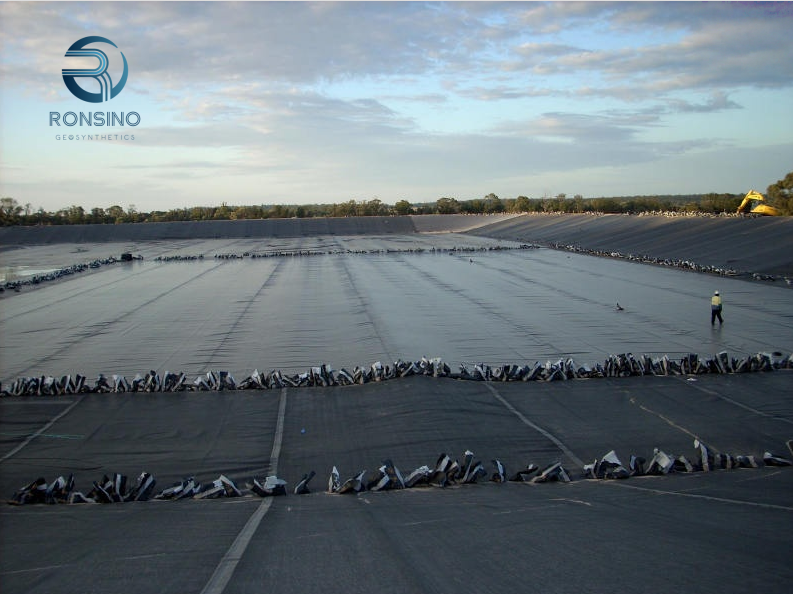
Project: 15 ha tailings decant pond expansion
Location: Andean highlands, Peru (4,200 m elevation)
Size: 500 m × 300 m pond, 6 m water depth, 2.5H:1V slopes
Product specification: 2.0 mm textured HDPE liner from a certified mining wastewater pond geomembrane factory with NCTL ≥600 h, 2.5% carbon black, and chemical resistance verified in pH 2.5 (AMD) and pH 11 (alkaline) solutions; 500 g/m² geotextile underlay; double-welded seams with 100% air pressure testing.
Results & benefits: Installation completed in 45 days with zero leaks detected during hydrostatic testing. After 8 years of operation, liner samples showed<5% reduction in tensile strength and no stress cracking. The liner system reduced seepage to below 0.1% of pond volume, exceeding environmental regulatory limits and saving the project $2.8M annually in water treatment and regulatory fines.
FAQ Section
1. What thickness of liner is recommended for a mining wastewater pond?
Typically 1.5–2.5 mm (60–100 mil), with 2.0 mm being the most common for aggressive chemical environments.
2. What is NCTL and why is it important?
Notched Constant Tensile Load (ASTM D5397) measures stress-crack resistance; ≥500 hours is critical for acidic and alkaline wastewater.
3. Can HDPE liners withstand acid mine drainage (AMD)?
Yes — HDPE is resistant to pH 0.5–14; chemical immersion tests are required for validation.
4. What is the typical service life of a mining wastewater pond liner?
20–30 years with proper UV stabilization and installation.
5. Is textured or smooth liner better for pond slopes?
Textured liner provides higher friction (interface angle >25°) and is preferred for slopes steeper than 3H:1V.
6. What certifications should a geomembrane factory have?
ISO 9001, GRI-GM13, and ASTM compliance; additionally, chemical resistance data for site-specific wastewater.
7. How are seams tested in the field?
Using vacuum box (ASTM D6392) or air pressure testing (ASTM D7406) for 100% seam coverage.
8. Can exposed liners be used for wastewater ponds?
Yes — but they require enhanced UV stabilizers (≥2.5% carbon black) and regular inspections.
9. What is the difference between HDPE and LLDPE for mining wastewater?
HDPE offers higher stress-crack resistance and chemical stability; LLDPE is more flexible but less chemically resistant.
10. Does the factory provide installation support?
Most reputable factories offer CQA (Construction Quality Assurance) guidance and weld training.
Request Technical Support or Quotation
For project-specific engineering assistance, product samples, or detailed technical datasheets from a qualified mining wastewater pond geomembrane factory, our technical advisory team is available. We provide:
Customized liner selection based on wastewater chemistry, pH, and temperature
Free 1 m² sample panels for independent chemical and mechanical testing
Full technical specifications and installation CQA guidelines
Direct consultation with polymer and geotechnical engineers
Submit your project parameters through the contact form on our website to receive a detailed engineering proposal within 48 hours.
About the Author
This practical guide is developed by engineering professionals with over 15 years' hands-on experience in geomembrane production, mining infrastructure, and environmental containment across the Americas, Africa, and Australia. The team has contributed to multiple EPC projects (tailings management facilities, acid mine drainage control systems, industrial water retention basins) offering technical assessments, factory compliance inspections, and post-installation performance tracking. We have no ties to product brands or industry platforms; our guidance is impartial, rooted in engineering fundamentals and insights from real-world field failure investigations.
What is Mining Wastewater Pond Geomembrane Factory
A high-density polyethylene (HDPE) and reinforced geomembrane manufacturer specializes in special anti-seepage materials for mine water protection, tailing liquid storage, and acid-base industrial wastewater control. The products can be used in sedimentation tanks, tailings ponds, and purification pools to block groundwater pollution and ensure project compliance. In addition to production, manufacturers also provide technical parameters, extreme acid, alkali and heavy metal resistance certification, and construction quality control (CQA) guidance. The engineering team selects suppliers and focuses on the following: 8-meter large-size coil supply capabilities, thickness control accuracy, stress cracking resistance (NCTL test ≥ 500 hours), strong acid and alkali and other special environment application case data; the procurement department focuses on evaluating ISO9001, GRI-GM13 and other qualifications, the full-process traceability mechanism for raw materials, and customized testing service capabilities.
Technical Specifications of Mining Wastewater Pond Geomembrane Factory
Products manufactured by a reputable factory specializing in geomembranes for mining wastewater treatment ponds are required to conform to extremely strict performance evaluation standards. The table presented below outlines common technical indicators and their respective practical value in engineering projects targeting mining wastewater disposal scenarios.
Parameter Typical Value Engineering Importance
Thickness (nominal) 1.5 – 3.0 mm (60–120 mil) Determines puncture resistance and chemical barrier integrity under hydraulic head
Density (HDPE) 0.940 – 0.960 g/cm³ Ensures dimensional stability under thermal and chemical stress
Stress Crack Resistance (NCTL) ≥ 500 hours (ASTM D5397) Critical for preventing brittle failure in acidic and alkaline environments
Tensile Yield Strength (MD/TD) ≥ 17 MPa (ASTM D6693) Prevents deformation under sludge and water loads
Puncture Resistance ≥ 250 N (ASTM D4833) Protects against sharp particles and installation damage
Chemical Resistance (pH range) 0.5 – 14 (verified immersion tests) Ensures compatibility with acidic drainage, cyanide, and saline water
UV Stability (exposed areas) ≥ 50% retained tensile strength (5000 h) Critical for exposed pond berms and liner surfaces
Design Service Life 20 – 30 years Directly influences project amortization and closure planning
Every performance indicator is fully validated via both internal laboratory assessments and independent third-party testing, strictly in accordance with the latest ASTM, ISO, and GRI industry specifications. A trustworthy manufacturer specializing in geomembranes for mining wastewater storage facilities will furnish batch-specific inspection reports as well as complete long-term chemical immersion resistance test data for each product batch.
Material Structure and Composition
The multi-tiered structural design of a heavy-duty impermeable liner, produced by a specialized manufacturer of geomembranes for mine tailings and wastewater retention ponds, is purpose-built to deliver exceptional chemical corrosion resilience, sharp object puncture prevention, and long-term resistance to stress-induced cracking. The subsequent table outlines the standard material composition and structural specifications of this product.
Layer / Component Material Function
Top (exposure) layer HDPE with 2.5% carbon black + HALS stabilizers Resists UV degradation and oxidation during exposed periods
Core / structural layer High-molecular-weight HDPE (no fillers) Provides tensile strength, stress distribution, and barrier continuity
Bottom (subgrade) layer Textured HDPE (co-extruded) Enhances friction with compacted clay or geosynthetic clay liner
Weldable seam area Same base resin (non-contaminated) Ensures strong field seams via dual-track thermal welding
The co-extrusion technique fuses functional layers into a single integrated monolithic sheet with no delamination risk. Using premium high-molecular-weight resin (melt index ≤0.1g/10min) significantly enhances stress cracking resistance—a core indicator for wastewater pond liners exposed to long-term chemical corrosion and temperature fluctuations. The specially engineered textured bottom layer boosts interface shear strength between the liner and base, greatly reducing sliding risks on sloped pond surfaces.
Manufacturing Process of Mining Wastewater Pond Geomembrane Factory
At a premium-grade factory specializing in the production of geomembranes for mining wastewater retention ponds, the entire industrial manufacturing process adheres to a six-step sequential workflow paired with rigorous quality management mechanisms, where the core oversight priorities are specifically centered on the material's resistance to stress cracking and the consistency of its thickness across the entire product surface.
Raw material preparation – Virgin HDPE resin (high molecular weight), carbon black masterbatch, and antioxidant packages are precision-weighed and blended in forced-air dryers to reduce moisture below 0.02%, preventing bubble formation during extrusion.
Extrusion and forming – The mixture is heated and melted in a twin-screw extruder (at a temperature of 230 to 250 degrees Celsius) and then pressed into a flat sheet die. Its thickness is precisely controlled by calendering rollers (typically 1.5 to 2.5 mm for wastewater tank applications).
Surface texturing – For textured liners, embossing rollers create uniform friction patterns (e.g., spike or dimple profiles) to enhance slope stability.
Precision finishing – The sheet passes through cooling baths and edge-trimming stations. Widths up to 8 m are achievable, reducing field seams by up to 40%.
Quality inspection – In-line and off-line tests include ultrasonic thickness mapping, tensile (ASTM D6693), puncture (D4833), stress-crack (NCTL per D5397), and high-voltage pinhole detection. Any coil with deviations is quarantined.
Packaging and labeling – Rolls are wrapped in opaque, UV-blocking film, labeled with batch number, thickness, and certification marks, then palletized for shipment to mining sites.
Each stage is engineered to prevent defects: improper resin drying can lead to pinholes, while inadequate stress-crack testing may result in premature field failures. A professional mining wastewater pond geomembrane factory maintains full traceability from raw material to finished roll.
Performance Comparison with Alternative Materials
When evaluating geomembrane products for use in mine wastewater ponds, engineers consider several key factors including durability, chemical resistance and cost-effectiveness. The following table provides a multi-attribute comparative analysis for reference.
Material Durability (years) Cost Level Installation Complexity Maintenance Typical Applications
HDPE (virgin, high-MW) 20–30 Medium–High Moderate (welding) Low (inspections) Tailings ponds, decant basins, process water
LLDPE (linear low-density) 15–25 Medium Moderate Low Lower-chemical-aggression zones
PVC geomembrane 10–15 (plasticizer loss) Low–Medium Low (lightweight) Moderate Temporary or small-scale ponds
Compacted clay (with GCL) 10–20 (cracking risk) Low (material) / high (transport) High (compaction control) High (re-compaction) Secondary liners or low-permeability layers
High-density polyethylene materials sourced from a fully qualified manufacturer specializing in geomembranes for mining wastewater storage ponds deliver an unparalleled balance of chemical corrosion resistance, anti-stress cracking properties and service durability, making them perfectly suited to the harsh, highly corrosive operational conditions common in mining sites.
Industrial Applications of Mining Wastewater Pond Geomembrane Factory
The products from a mining wastewater pond geomembrane factory are deployed in various mining and metallurgical settings:
Tailings storage facilities: Liners for decant ponds and supernatant collection systems.
Acid mine drainage (AMD) ponds: Liners for acidic wastewater with pH as low as 0.5.
Process water reservoirs: Liners for raw water and recycled water storage.
Sludge drying beds: Liners for dewatering and containment of thickened tailings.
Emergency containment basins: Liners for spill capture and stormwater retention.
A key construction project in the Peruvian Andes selected 2.0mm high-density polyethylene impermeable liners from a top geomembrane manufacturer for the lining of a 10-hectare tailings supernatant decantation pond for mining wastewater storage. The facility has operated stably for 12 consecutive years, with no detectable liner performance degradation found in routine inspections and tests.
Common Industry Problems and Engineering Solutions
Even top-tier geosynthetic liners are liable to develop performance defects if there are deficiencies in their structural design or on-site installation procedures. Outlined below are four frequently encountered failure issues along with their corresponding engineering solutions tailored for anti-seepage liners used in mining operation wastewater storage ponds.
Problem 1: Stress cracking near pipe penetrations
Root cause: Differential settlement and chemical attack at stress points.
Solution: Use prefabricated boots with expansion loops; specify NCTL ≥500 h and conduct post-installation leak detection surveys.
Problem 2: Puncture from sharp particles in sludge
Root cause: Inadequate protective layer or insufficient liner thickness.
Solution: Install 500 g/m² nonwoven geotextile as cushion; specify thickness ≥2.0 mm for high-abrasion areas.
Problem 3: Seam failure due to improper welding
Root cause: Contamination or incorrect weld temperature under field conditions.
Solution: Perform peel and shear tests on test strips before each shift; use dual-track extrusion welders with automatic temperature control.
Problem 4: UV degradation on exposed berms
Root cause: Insufficient carbon black content or lack of protective cover.
Solution: Specify ≥2.5% carbon black and apply a spray-on UV coating for exposed areas.
Risk Factors and Prevention Strategies
Engineering risk management for projects involving a mining wastewater pond geomembrane factory includes five critical areas:
Improper liner selection: Choosing inadequate thickness or resin type. Prevention: conduct chemical compatibility testing with site-specific wastewater samples.
Material mismatch: Using non-compatible geomembranes for different zones. Prevention: ensure all liner materials come from the same production lot and are chemically compatible.
Environmental exposure: High UV and thermal cycling. Prevention: use high-carbon-black content and cover exposed areas promptly.
Subgrade issues: Sharp rocks or differential settlement. Prevention: perform subgrade proof-rolling; install geotextile cushion layers.
Quality control gaps: Insufficient seam testing. Prevention: implement 100% seam testing (vacuum/air pressure) and independent third-party CQA.
Procurement Guide: How to Choose the Right Mining Wastewater Pond Geomembrane Factory
Buyers should follow this step‑by‑step checklist when engaging a mining wastewater pond geomembrane factory:
Traffic load evaluation – Assess sludge loading and equipment traffic to specify puncture resistance and thickness.
Specification verification – Confirm thickness, stress-crack resistance (NCTL), and chemical resistance data against project design criteria.
Certifications – Require ISO 9001, GRI-GM13, and ASTM compliance; request chemical immersion test reports for site-specific wastewater chemistry.
Factory capability – Audit production capacity, lead times, and track record on similar mining wastewater projects.
Quality control – Review in-house testing frequency, NCTL measurements, and third-party lab reports.
Sample testing – Request 1 m² samples for independent chemical immersion, puncture, and tensile tests.
Warranty evaluation – Examine warranty covering material defects, seam integrity, and stress-crack performance (≥10 years).
Engineering Case Study
Project: 15 ha tailings decant pond expansion
Location: Andean highlands, Peru (4,200 m elevation)
Size: 500 m × 300 m pond, 6 m water depth, 2.5H:1V slopes
Product specification: 2.0 mm textured HDPE liner from a certified mining wastewater pond geomembrane factory with NCTL ≥600 h, 2.5% carbon black, and chemical resistance verified in pH 2.5 (AMD) and pH 11 (alkaline) solutions; 500 g/m² geotextile underlay; double-welded seams with 100% air pressure testing.
Results & benefits: Installation completed in 45 days with zero leaks detected during hydrostatic testing. After 8 years of operation, liner samples showed<5% reduction in tensile strength and no stress cracking. The liner system reduced seepage to below 0.1% of pond volume, exceeding environmental regulatory limits and saving the project $2.8M annually in water treatment and regulatory fines.
FAQ Section
1. What thickness of liner is recommended for a mining wastewater pond?
Typically 1.5–2.5 mm (60–100 mil), with 2.0 mm being the most common for aggressive chemical environments.
2. What is NCTL and why is it important?
Notched Constant Tensile Load (ASTM D5397) measures stress-crack resistance; ≥500 hours is critical for acidic and alkaline wastewater.
3. Can HDPE liners withstand acid mine drainage (AMD)?
Yes — HDPE is resistant to pH 0.5–14; chemical immersion tests are required for validation.
4. What is the typical service life of a mining wastewater pond liner?
20–30 years with proper UV stabilization and installation.
5. Is textured or smooth liner better for pond slopes?
Textured liner provides higher friction (interface angle >25°) and is preferred for slopes steeper than 3H:1V.
6. What certifications should a geomembrane factory have?
ISO 9001, GRI-GM13, and ASTM compliance; additionally, chemical resistance data for site-specific wastewater.
7. How are seams tested in the field?
Using vacuum box (ASTM D6392) or air pressure testing (ASTM D7406) for 100% seam coverage.
8. Can exposed liners be used for wastewater ponds?
Yes — but they require enhanced UV stabilizers (≥2.5% carbon black) and regular inspections.
9. What is the difference between HDPE and LLDPE for mining wastewater?
HDPE offers higher stress-crack resistance and chemical stability; LLDPE is more flexible but less chemically resistant.
10. Does the factory provide installation support?
Most reputable factories offer CQA (Construction Quality Assurance) guidance and weld training.
Request Technical Support or Quotation
For project-specific engineering assistance, product samples, or detailed technical datasheets from a qualified mining wastewater pond geomembrane factory, our technical advisory team is available. We provide:
Customized liner selection based on wastewater chemistry, pH, and temperature
Free 1 m² sample panels for independent chemical and mechanical testing
Full technical specifications and installation CQA guidelines
Direct consultation with polymer and geotechnical engineers
Submit your project parameters through the contact form on our website to receive a detailed engineering proposal within 48 hours.
About the Author
This practical guide is developed by engineering professionals with over 15 years' hands-on experience in geomembrane production, mining infrastructure, and environmental containment across the Americas, Africa, and Australia. The team has contributed to multiple EPC projects (tailings management facilities, acid mine drainage control systems, industrial water retention basins) offering technical assessments, factory compliance inspections, and post-installation performance tracking. We have no ties to product brands or industry platforms; our guidance is impartial, rooted in engineering fundamentals and insights from real-world field failure investigations.


