Is HDPE a Good Pond Liner?
Blog · 2026-05-07 · 0 views

As a key anti-seepage material, high-density polyethylene (HDPE) geomembrane is widely used in many fields such as modern civil engineering, mining engineering, aquaculture and environmental protection. Its main function is to build an efficient barrier to effectively block the migration of liquids, gases and pollutants. When international buyers or project contractors prepare to purchase HDPE geomembrane rolls, "how much does HDPE geomembrane cost?" is often one of their first core concerns.
Within this publication, RONSINO offers an in-depth analysis of HDPE geomembrane costs, examining the primary variables that influence pricing, presenting the anticipated market valuation for 2025, and delivering actionable guidance to facilitate informed procurement choices that balance affordability with superior quality.
1. What Is HDPE Geomembrane Sheet?
High-density polyethylene geomembrane represents a specialized waterproofing barrier manufactured from premium-grade polyethylene resin compounds. Utilizing state-of-the-art co-extrusion blow molding or advanced flat film extrusion processes, these geomembranes are engineered to deliver exceptional performance. The fundamental attributes of these geomembrane products encompass:
Excellent impermeability — the permeability coefficient is usually less than 1×10⁻¹⁴ cm/s.
High chemical resistance — resistant to acids, alkalis, salts, and most organic solvents.
UV resistance — stabilized by carbon black, suitable for long-term outdoor exposure.
Durability — service life can reach 50 years under proper installation and protection.
Flexibility — adaptable to uneven surfaces and ground settlement.
HDPE geomembranes are commonly manufactured in thicknesses varying between 0.5 millimeters and 3.0 millimeters, with typical widths extending from 5 meters to 8 meters. These dimensions play a crucial role in minimizing the quantity of seams required during installation, thereby enhancing the overall efficiency of the construction process.
1500 micron HDPE Geomembrane Sheet Price for Landfill Lining
RONSINO HDPE Geomembrane Sheet Price
2. Applications of HDPE Geomembrane
HDPE geomembrane has a broad application spectrum in civil engineering and environmental projects. Typical applications include:
2.1 Landfills and Waste Containment
As the primary barrier, the substructure initially traps all leachate from the landfill. A custom covering system then seals the waste, cutting it off from the surrounding ecosystem. These mechanisms work together to continuously block all pollution pathways and prevent leachate from seeping into the geological layer, thus building a solid multiple protection system to ensure that groundwater is protected from pollution for a long time.
2.2 Mining Projects
This advanced composite lining system serves as a fundamental safeguard for diverse industrial vessels. It effectively coats heap leach facilities, enabling the recovery of precious metallic solutions. Concurrently, it fortifies tailing reservoirs, permanently trapping mining residues. Moreover, the compound securely confines reactive substances within retention and evaporation basins. Consequently, it permanently obstructs the infiltration of toxic fluids into adjacent terrestrial and subterranean water sources. In essence, this comprehensive containment framework delivers indispensable ecological defense across numerous rigorous operational scenarios.
2.3 Aquaculture and Fish Ponds
This mechanism rigorously inhibits the infiltration of moisture across its defensive layer. Subsequently, it sustains an unvarying and secure aquatic milieu inside the lagoon or storage basin. Moreover, through the proficient containment of the liquid, it furnishes a dependable sanctuary for aquatic organisms and upholds the designated water elevation. Thereby, this twofold capability shields the architectural soundness of the adjacent zone and the ecological equilibrium of the aqueous ecosystem in question.
2.4 Water Reservoirs and Canals
This system operates by efficiently managing water infiltration, thus preventing excessive wastage of water. In doing so, it significantly preserves precious water supplies. Additionally, this comprehensive method guarantees optimal water preservation in lakes, waterways, and farming applications. Therefore, it actively promotes responsible water stewardship and improves the sustained accessibility of this indispensable resource for both human populations and natural ecosystems.
2.5 Oil and Gas Industry
This geomembrane lining system effectively fulfills two key functions. Initially, it is implemented to establish secure secondary containment zones adjacent to storage vessels or conduits, ensuring the interception of any accidental releases. Additionally, it plays a vital role in lining extensive evaporation basins. Within this capacity, it reliably confines process effluents or saline solutions, enabling their gradual concentration via solar radiation. As a result, this adaptable method persistently safeguards against soil and aquifer pollution while facilitating optimal industrial water resource utilization.
2.6 Tunnel and Dams
This specialized membrane functions as a superior impermeable barrier. Through its seamless, watertight construction, it fundamentally obstructs fluid movement. As a result, it shields essential building elements—including substructures, underground passages, and support walls—from detrimental moisture penetration. Moreover, this preventive measure substantially mitigates potential decay, which enhances the longevity of the construction and preserves its architectural stability throughout its operational period.
Owing to its extensive range of practical uses, the HDPE geomembrane sheet has emerged as a highly sought-after commodity on a global scale. Therefore, gaining insight into its cost composition is of paramount importance for all stakeholders, including distributors and end-users alike.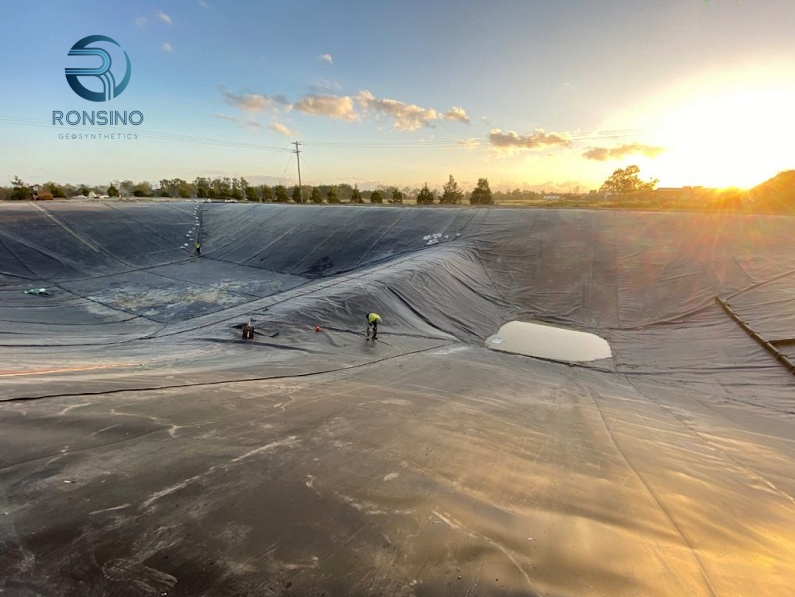
3. Factors That Influence HDPE Geomembrane Sheet Price
The pricing of HDPE geomembrane is not uniform and fluctuates based on a multitude of factors. Various elements play a critical role in determining the cost per unit area. The following are the key considerations that influence the final price per square meter.
3.1 HDPE Geomembrane Sheet Price – Thickness and Density
The primary determinant governing the cost is the sheet's dimension. A substantial increase in gauge directly correlates with heightened material consumption, thereby elevating the overall expense. For instance, a 0.5-millimeter HDPE geomembrane typically ranges from USD 0.7 to 1.0 per square meter, whereas a thicker 2.0-millimeter variant can escalate to USD 2.5–3.5 per square meter, influenced by performance specifications and manufacturer reputation. While density (approximately 0.94–0.97 g/cm³ for HDPE) influences tensile properties and suppleness, its fluctuation generally exerts a marginal effect on pricing relative to the dominant role of thickness.
3.2 HDPE Geomembrane Sheet Price – Raw Material Cost
HDPE resin (typically from brands like Sinopec, ExxonMobil, or Dow) accounts for 60–70% of the total product cost.
HDPE resin prices fluctuate according to international crude oil prices, as it is derived from petroleum.
In 2025, the global HDPE resin price has been hovering around USD 1100–1300 per ton, which directly influences the geomembrane price.
3.3 HDPE Geomembrane Sheet Price – Additives and Carbon Black Content
To enhance UV resistance and extend service life, manufacturers add 2–3% carbon black and antioxidants.
Premium geomembrane panels incorporating specialized imported additives or achieving homogeneous carbon black distribution may carry marginally elevated costs, yet deliver substantially enhanced durability and stability when subjected to prolonged environmental exposure.
3.4 HDPE Geomembrane Sheet Price – Manufacturing Process and Quality Control
There are mainly two production methods:
Blown Film Process
Flat Die Extrusion
The flat die extrusion technique typically generates smoother, more consistent sheets with enhanced tensile strength, though it necessitates more sophisticated machinery and elevated manufacturing expenses. Vendors possessing GSM-certified quality frameworks or adhering to G/T 17643 and ASTM specifications generally command premium pricing, yet their merchandise demonstrates superior stability and dependability.
3.5 HDPE Geomembrane Sheet Price – Surface Type: Smooth or Textured
Smooth geomembrane: used for ponds, tanks, and containment systems.
Textured geomembrane: provides better friction and is ideal for slopes and steep embankments.
Textured geomembranes are about 10–15% more expensive due to the additional texturing process.
3.6 HDPE Geomembrane Sheet Price
Package Size and Wrapping Large-scale purchases markedly decrease per-item expenses as producers enhance manufacturing efficiency and streamline distribution.
For example, ordering 20,000 m² might cost USD 0.05–0.1/m² less than smaller quantities.
3.7 HDPE Geomembrane Sheet Price – Freight and Export Location
In international trade, the expense associated with transporting goods, particularly ocean freight, constitutes a critical component of the final cost delivered to the buyer.
A standard forty-foot container is capable of accommodating approximately fourteen to twenty-four metric tons of high-density polyethylene geomembrane, contingent upon the specific gauge of the material.
Transportation expenses to the Southeast Asian region are comparatively lower than those incurred for deliveries to Latin America or the African continent, resulting in potential price discrepancies of USD 0.2–0.5 per square meter under the CIF pricing framework.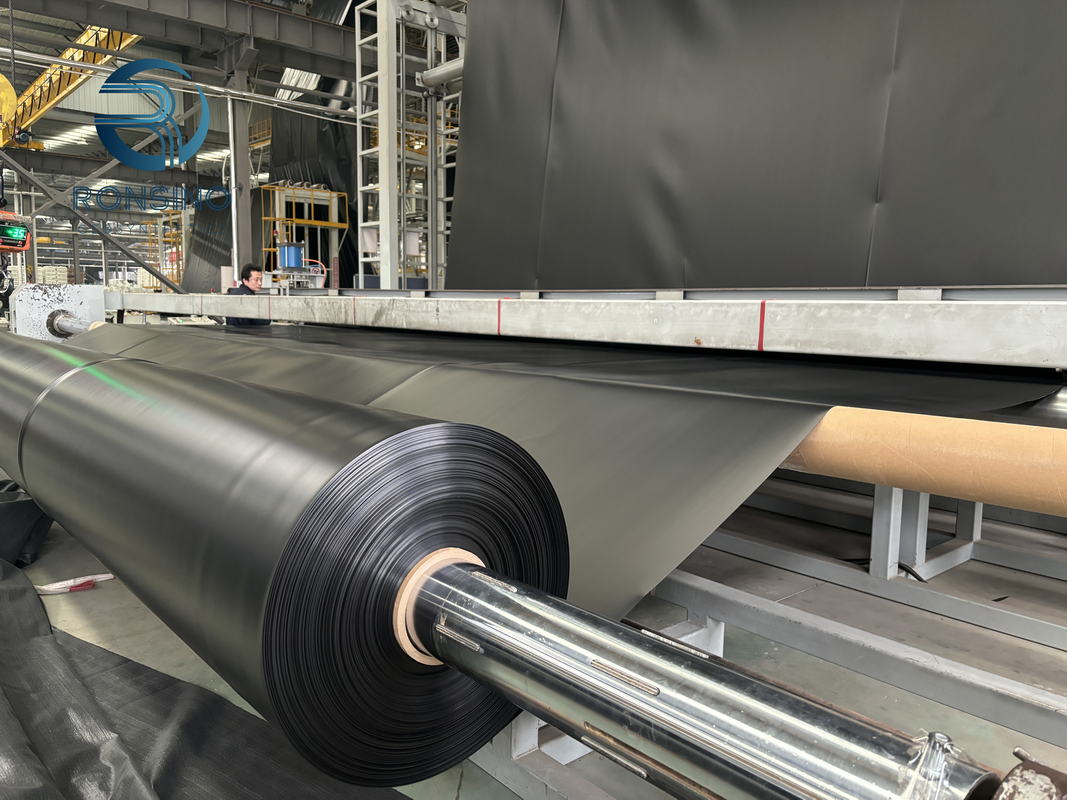
4. How to Evaluate the Cost-Performance Ratio
When evaluating HDPE geomembrane prices, the cheapest option is not always the most economical.
You should consider the service life, installation cost, and environmental risk of the material.
Here are a few key tips from RONSINO’s engineering team:
Choose 100% Virgin Material
Recycled material geomembranes are 20–30% cheaper, but their lifespan is often less than 5 years in outdoor use.
For critical projects like landfills or reservoirs, only virgin HDPE resin should be used.
Ask for Third-Party Test Reports
Reliable manufacturers provide ASTM or GRI GM13 standard test reports for tensile strength, puncture resistance, elongation, and carbon black content.
Check Welding Compatibility
Some low-quality sheets contain too much filler, which affects welding performance.
A poor weld can cause leakage even if the sheet itself is thick.
Consider Installation Services
The expense associated with expert welding and assembly services may range from USD 0.3 to 0.8 per square meter, influenced by the specific characteristics of the project site.
Choosing a supplier who provides both materials and technical guidance can save cost and time.
5. Price Comparison: HDPE vs. LLDPE vs.Geomembranes
Type Material Features Price Range (USD/m²) Typical Applications
HDPE High rigidity, excellent UV and chemical resistance 0.7 – 5.0 Landfills, mining, reservoirs
LLDPE exhibits excellent flexibility and excellent ductility. Its thickness usually ranges from 0.8 to 4.0 mm, and is suitable for a variety of environmental conditions such as ponds, channels, and slopes. Although the initial investment of high-density polyethylene geomembrane is slightly higher than that of polyvinyl chloride materials, its comprehensive economic advantages are more significant from a long-term perspective due to its excellent durability and chemical corrosion resistance.
HDPE Geomembrane Sheet Price for Dam
High Density Polyethylene HDPE Liners for Tailings Storage
6. Procurement and Shipping Suggestions for Buyers
When procuring high-density polyethylene geomembrane panels from global suppliers, implement the following strategies to enhance cost-effectiveness and operational streamlining:
Confirm Technical Specifications Early
Clarify thickness, color, surface type, and standard (ASTM, GRI GM13, ISO) before quotation.
Order in Full Container Loads
Helps you save on sea freight and packaging costs.
Choose Reliable Exporters
Look for companies with export licenses, CE certificates, and quality management systems.
Ask for Free Samples
Evaluate physical properties and weldability before mass purchase.
Inspect Before Shipment
Request factory inspection reports or third-party inspection (e.g., SGS, BV).
Check Packaging
Each roll should be wrapped with black woven fabric or plastic film to protect against UV and moisture during transport.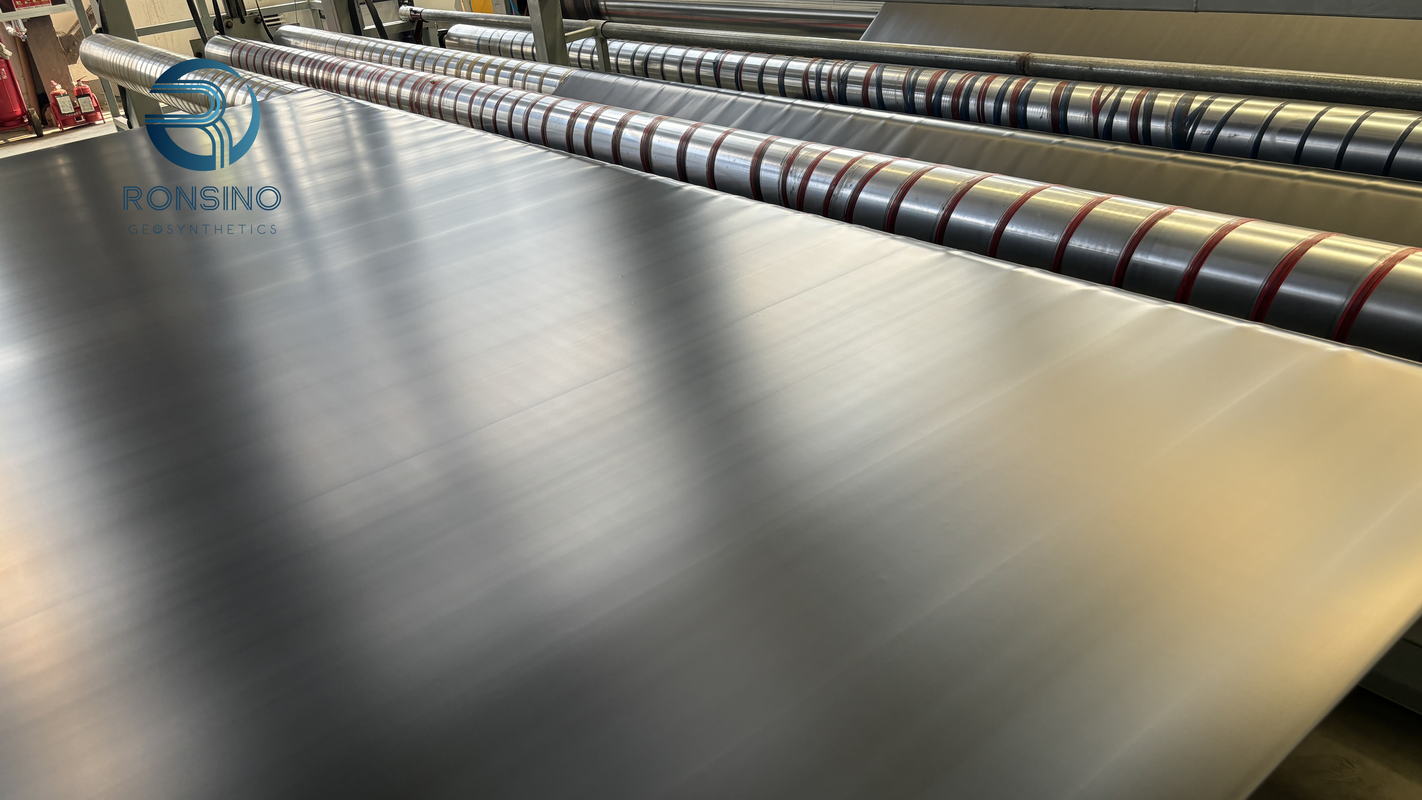
7. Why Choose RONSINO as Your HDPE Geomembrane Supplier
RONSINO is a professional geosynthetics manufacturer and exporter located in China, specializing in HDPE, LLDPE, and textured geomembrane sheets.
Drawing upon extensive expertise acquired through delivering tailored services to clientele across diverse regions such as Asia, Africa, Latin America, and the Middle East, we possess the assured capability to deliver economical yet superior solutions that meet the highest standards.
Our Advantages
ISO9001 & ISO14001 certified factory.
Raw material from Sinopec or Sabic (100% virgin HDPE).
Advanced co-extrusion production lines.
Customized roll size and OEM packaging available.
Prompt delivery and strong export support.
Typical Project Cases
1.5mm HDPE liner for landfill in Saudi Arabia (100,000 m²).
1.0mm smooth geomembrane for aquaculture in Thailand.
2.0mm textured geomembrane for mining tailings in Peru.
8. Conclusion
The cost of high-density polyethylene geomembrane rolls is influenced by numerous technical and commercial elements, including gauge specifications, polymer expenditure, surface profiles, and transportation expenses.
In 2025, the general global price range lies between USD 0.7–5.0 per square meter, depending on specifications.
When selecting a geomembrane provider, purchasers must prioritize factors beyond mere price per unit, carefully assessing the material's durability, installation efficiency, and enduring performance.A premium HDPE geomembrane sourced from a trusted producer such as RONSINO guarantees superior impermeability, extended service life, and minimized upkeep expenses — ultimately providing substantial returns on your expenditure.
If you are looking for a reliable HDPE geomembrane manufacturer in China, feel free to contact RONSINO for the latest quotation and technical support.
We are always ready to provide professional advice and the best solutions for your project.


