How to Pick a Pond Liner?
Blog · 2026-05-30 · 0 views

Whether you are establishing a new body of water or refurbishing an existing one—whether intended for flood control fish farming agricultural conservation aesthetic enhancement ecological preservation—a secure containment system remains indispensable Compromised retention capabilities cause far more than operational inefficiencies unchecked seepage threatens subterranean aquifers destabilizes embankments squanders vital inputs and triggers exorbitant repair costs Therefore selecting appropriate sealing material represents fundamental priority Among various market contenders High Density Polyethylene geomembrane emerges distinguished standard favored by professionals tackling rigorous applications This comprehensive analysis investigates rationale supporting HDPE superiority while assisting readers in determining ideal technical specifications tailored toward their specific endeavors
1. Why the Right A Lake Liner Matters
Before exploring materials, understand the stakes:
Water Security & Conservation: Prevents precious water from seeping into the ground, crucial in arid regions or for critical water supply.
Environmental Protection: Contains potentially contaminated water (e.g., stormwater runoff, aquaculture effluent) or protects groundwater from surface pollutants.
Structural Integrity: Prevents erosion of the subgrade soil, maintaining the lake’s shape and stability.
Cost Efficiency: Minimizes long-term operational costs associated with water loss and repairs.
Project Success: Ensures the lake fulfills its intended purpose reliably for decades.
2. A Lake Liner Options: A Quick Comparison
While HDPE is our focus, understanding alternatives provides context:
2.1 A Lake Liner – Clay Liners:
Sourced from nature with a substantial consistency this substance still maintains a satisfactory level of porosity Nevertheless as time progresses there is a propensity for fissures to appear alongside desiccation Furthermore the implementation phase presents notable hurdles given that atmospheric conditions play a critical role necessitating precise scheduling by technicians In addition the physical exertion involved is rigorous frequently mandating expert craftsmanship to guarantee accurate execution Although endowed with robust longevity these collective drawbacks might ultimately constrain its feasibility within specific environments
2.2 A Lake Liner – Bentonite (GCLs):
In comparison to native bentonite capabilities, geosynthetic composite liners demonstrate significant superiority by delivering more robust impermeability and superior operational efficacy; however, these advanced materials are not without drawbacks as undergoing constant moisture absorption and drying phases may progressively diminish their mechanical properties over time; similarly structural damage caused by jagged edges or extreme pressure can result in perforations that compromise the system's defensive capabilities; although geosynthetic composite liners offer higher reliability than standard soil alternatives addressing these specific deficiencies is essential for maintaining sustained utility requiring meticulous handling alongside strict adherence to installation protocols
2.3 A Lake Liner – LLDPE/LLDPE:
Compared to high-density polyethylene (HDPE), low-density variants exhibit significantly greater pliability and malleability which facilitates processing across a diverse range of specific manufacturing contexts Nevertheless this material category demonstrates inferior resilience against corrosive agents while also experiencing accelerated deterioration when subjected to ultraviolet radiation Furthermore LDPE displays a pronounced tendency towards environmental stress cracking as it ages particularly when enduring sustained mechanical loads Although the inherent elasticity of this polymer presents distinct functional benefits its compromised longevity along with reduced inertness often restricts its suitability for deployment within extreme or demanding operational settings
2.4 A Lake Liner – PVC (Polyvinyl Chloride):
The specific substrate provides considerable adaptability alongside reduced acquisition expenses establishing itself as an enticing choice for numerous operational scenarios yet substantial limitations exist within pivotal performance domains particularly concerning vulnerability where demonstrates markedly diminished ability endure piercing forces relative rival substances Moreover sustained contact sunlight triggers progressive deterioration while continuous seepage internal softeners results eventual rigidity simultaneously inadequate resilience reactive compounds confines employment solely benign conditions Even though present moment appears fiscally advantageous persistent frailty will likely inflate cumulative expenditure duration
2.5 A Lake Liner – EPDM (Ethylene Propylene Diene Monomer):
Possessing elasticity reminiscent of natural latex this polymeric compound conforms effortlessly thereby serving as a prime candidate for fabricating components featuring intricate geometries or miniature dimensions Nevertheless such pliability entails significant trade-offs specifically marked susceptibility toward laceration penetration surpassing rigidity exhibited by alternative materials Furthermore extended contact with petroleum-based solvents frequently undermines molecular stability concurrently reliance on mechanical seaming generates zones of potential weakness standing in stark contrast against monolithic strength achieved through thermal welding within High-Density Polyethylene Although offering superior adaptability these aforementioned constraints likely compromise operational reliability during intensive deployment scenarios
2.6 A Lake Liner – HDPE geomembrane:
High-density polyethylene geomembranes deliver exceptional fluid containment capabilities coupled with a resilience that is hard to surpass in modern construction materials Owing specialized formulation barriers demonstrate heightened ability withstand external stressors photodegradation aggressive agents vastly exceeding comparative standards Furthermore products designed uphold configuration spans exhibiting insignificant attrition thereby guaranteeing operational continuity half-century beyond even precise application entails sophisticated fusion methods enduring efficacy justifies meticulous groundwork eventually distinct substance represents definitive safeguard intricate endeavors seeking consistent isolation strategies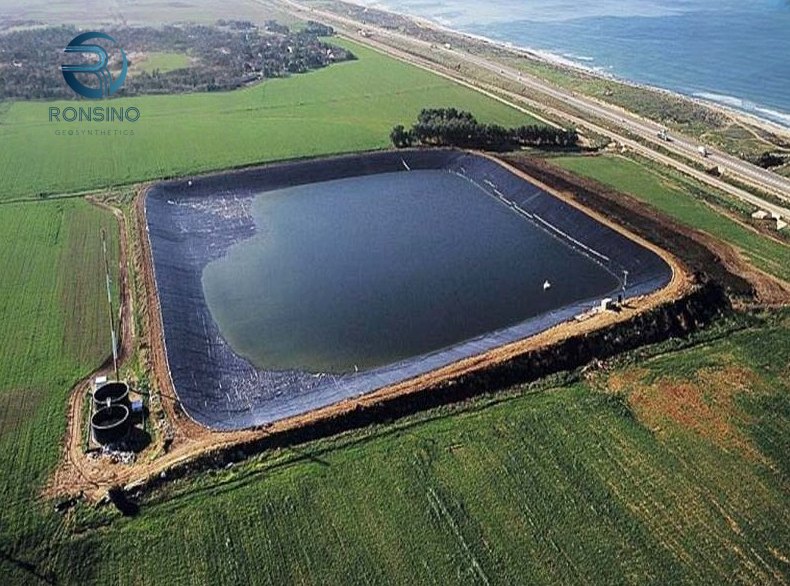
3. HDPE Geomembrane: The Gold Standard for A Lake Liners
HDPE geomembrane has become the dominant choice for large-scale, long-term, and critical lake applications due to its exceptional combination of properties:
3.1 Unmatched Durability & Longevity:
UV Resistance: Formulated with high-quality carbon black (2-3%), HDPE geomembranes offer superior resistance to ultraviolet radiation, preventing degradation and brittleness for decades (often 50+ years design life).
Chemical Resistance: Highly resistant to a vast array of chemicals found in soils, water (including acids, alkalis, salts), and biological agents. This is critical for lakes handling agricultural runoff, treated wastewater, or industrial stormwater.
Biological Resistance: Impervious to root penetration, microbial attack, and rodent damage.
Temperature Tolerance: Performs well across a wide temperature range (-40°C to +80°C) without significant loss of properties.
3.2 Superior Impermeability:
HDPE has an extremely low permeability coefficient (typically < 1 x 10^{-13} cm/s), effectively creating a water-tight barrier. This minimizes seepage losses to negligible levels.
High Strength & Puncture Resistance:
While inherently stiffer than PVC or EPDM, modern HDPE formulations offer excellent tensile strength, tear resistance, and crucially, high puncture resistance. This is vital during installation and when resisting potential punctures from underlying rocks, roots, or debris over time.
Proven Seaming Technology:
High-density polyethylene sheets are usually spliced using hot-melt welding technology. The main technical methods include double-wedge hot-melt method and extrusion welding method. If the operation is carried out by professionally qualified technicians who strictly follow the established specifications, a seamless and uniform connection gap can be constructed, whose physical strength is comparable to or even exceeds the performance indicators of the parent material itself; ensuring the perfection of such connection parts plays a decisive cornerstone role in maintaining the overall effectiveness and reliability of the entire anti-seepage liner system.
Cost-Effectiveness Over Lifecycle:
Although preliminary capital outlays may surpass those associated with options such as PVC, superior resistance, longevity, and negligible maintenance needs translate into minimal overall expenses over time for pond applications; subsequent renewal expenditures and leakage losses remain at their lowest feasible levels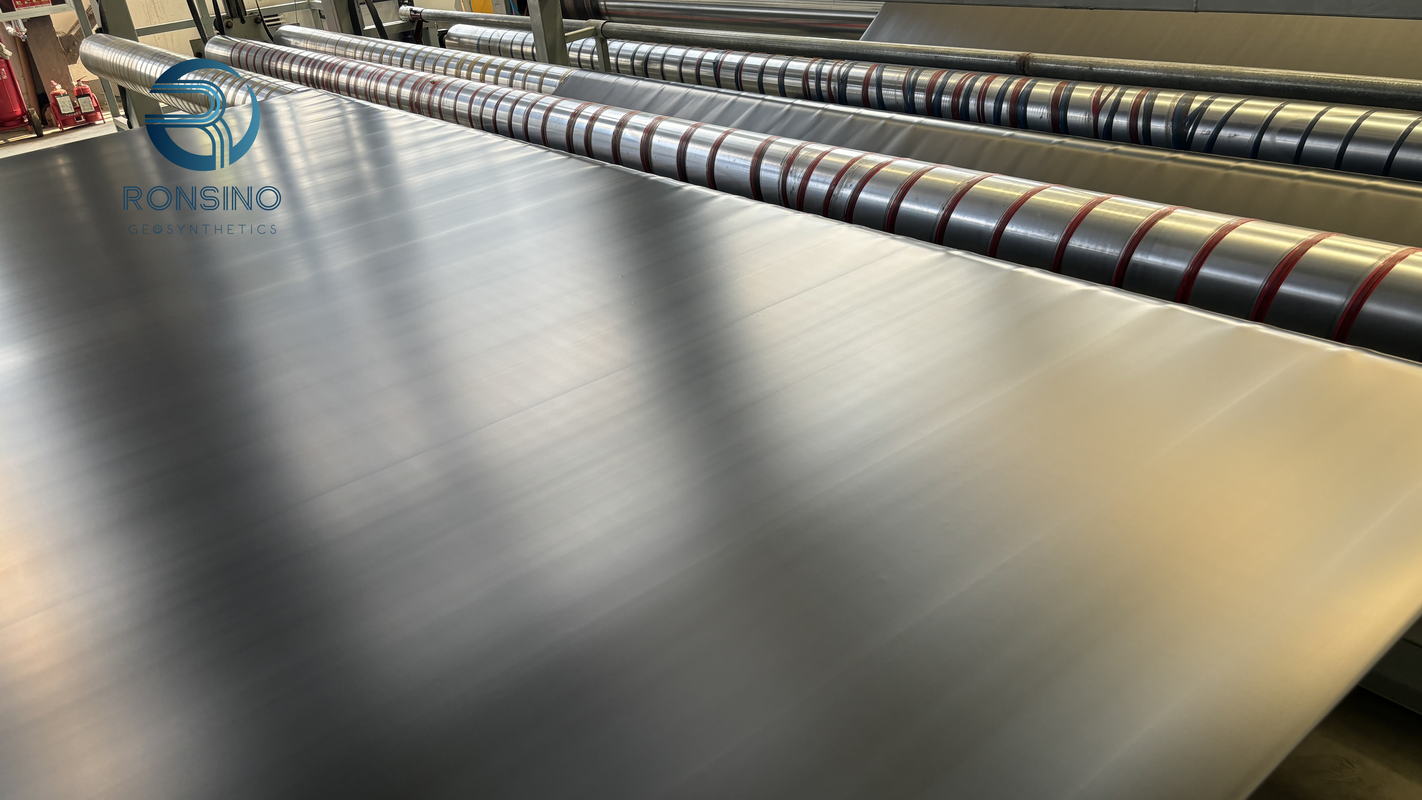
4. Choosing the RIGHT HDPE Geomembrane for Your Lake: Key Specifications
Not all HDPE geomembranes are created equal. Selecting the correct specification is crucial:
4.1 Thickness:
The single most critical specification. Thickness directly correlates with puncture resistance, durability, and longevity.
Common Lake Thicknesses: 0.75mm (30 mil), 1.0mm (40 mil), 1.5mm (60 mil), 2.0mm (80 mil).
4.2 Choosing Thickness: Consider:
Subgrade Quality: Rougher, rockier subgrades demand thicker liners (1.5mm+).
Water Depth: Deeper water exerts more pressure; 1.5mm+ is often recommended for depths > 15-20 feet.
Intended Use & Criticality: Decorative ponds might use 0.75-1.0mm; critical water supply or hazardous containment reservoirs typically require 1.5mm+.
Potential Loads: Anticipated foot traffic, equipment, wave action, or ice formation.
Local Climate: Freeze-thaw cycles can stress liners.
Recommendation: For most permanent lakes, 1.0mm (40 mil) is the absolute minimum. 1.5mm (60 mil) is strongly recommended for superior performance, durability, and peace of mind, especially for larger or more critical projects. Never compromise on thickness.
4.3 Resin Quality & Additives:
Virgin Resin: Demand geomembrane manufactured from 100% primary (virgin) HDPE resin. Recycled content compromises consistency, strength, and chemical resistance.
Carbon Black: Must be high-quality, finely dispersed carbon black (2-3%) for optimal UV stabilization. Avoid liners with recycled carbon content.
Antioxidants & Stabilizers: Ensure inclusion of premium additives to enhance long-term resistance to oxidation and environmental stress cracking (ESCR). Look for resins meeting high ESCR standards (e.g., ASTM D5397).
4.4 Textured vs. Smooth Surface:
Smooth HDPE: Standard surface. Lowest cost, excellent chemical resistance.
Textured HDPE: Features surface projections (co-extruded or structured). Crucial for applications on slopes:
Enhanced Interface Friction: Dramatically increases friction between the liner and adjacent materials (geotextile, soil), preventing slippage on steep slopes.
Improved Drainage: Can facilitate gas/water drainage beneath the liner.
Recommendation: Use textured HDPE on slopes steeper than 3H:1V (horizontal:vertical). Smooth is often sufficient for flat bottoms and gentle slopes.
4.5 Certifications & Standards:
Ensure the geomembrane meets relevant international and project-specific standards:
GRI-GM13: Standard Specification for Test Methods, Test Properties, and Testing Frequency for High Density Polyethylene (HDPE) Smooth and Textured Geomembranes (Global benchmark).
ASTM Standards: Covering material properties, seam testing (e.g., ASTM D6392, D5820, D6693).
NSF/ANSI 61: Essential if the lake stores potable water.
CE Marking: Indicates conformity with European health, safety, and environmental standards.
Manufacturer Quality: Choose reputable manufacturers with proven quality control systems (ISO 9001 certification is a plus). Request certified test reports (CTRs) for the specific roll.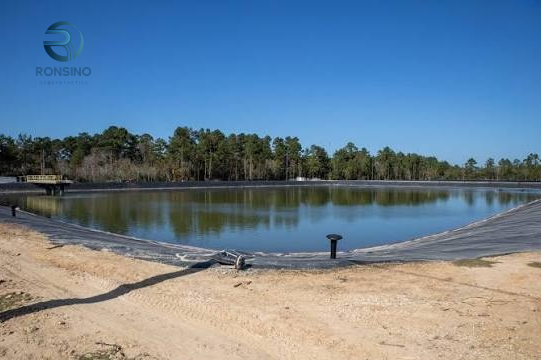
5. Beyond the Membrane: Installation is Paramount
The best HDPE geomembrane is only as good as its installation:
Subgrade Preparation: The foundation of success. Must be smooth, compacted, free of sharp rocks, roots (> 1″ diameter), debris, and standing water. A protective geotextile cushion is highly recommended over potentially puncturious subgrades.
Qualified Installers: HDPE welding requires specialized equipment and certified welders. Insist on contractors with proven experience in large-scale HDPE lake liner installations and certified weld technicians.
Seam Testing: Every single seam must be rigorously tested:
Destructive Testing (DT): Samples cut from seams and tested in a lab (Peel Test, Shear Test) to verify strength. Frequency per project size/welder.
Anchoring: Securely anchor the liner in a perimeter trench (“anchor trench”) designed to prevent pull-out.
Protection: Cover the liner promptly with protective cover soil or sand (typically 12-18 inches minimum) or appropriate ballast (e.g., concrete blocks, riprap) as per design. Avoid exposure to UV for extended periods before covering.
6. Conclusion: Making the Smart Long-Term Choice
Selecting an appropriate lining system serves as a foundational step toward guaranteeing lasting operational efficiency alongside eco-friendly compliance for any fluid retention initiative Even though diverse fabrications might be accessible high density polyethylene geosynthetic membranes remain unmatched providing superior fusion properties including absolute leak prevention tolerance towards hazardous compounds steadfastness amidst solar radiation exceptional resistance to tearing plus extended fiscal savings which are indispensable features for sophisticated aquatic construction demands
To guarantee that your impermeable system remains impenetrable for decades to come, it is essential to focus on several critical specifications during installation Begin by specifying appropriate material dimensions ideally aiming for a standard thickness of sixty mils strictly insist on virgin resin compositions infused with premium carbon black and essential stabilizing additives opt for roughened finishes on inclined areas to enhance stability verify adherence to industry protocols such as GRI GM13 and engage qualified professionals who execute rigorous base preparation alongside thorough welding inspections Following these strict protocols ensures that your HDPE reservoir lining functions as an impenetrable trustworthy safeguard against leakage effectively preserving water resources Resist the temptation of cost cutting now which inevitably spawns expensive complications later instead view top tier HD geomembranes as the fundamental building block ensuring lasting triumph in aquatic engineering For further inquiries or assistance please reach out directly to RONSINO support


