How Much Does it Cost to Install a Root Barrier?
Blog · 2026-02-05 · 0 views

Root barriers protect infrastructure from aggressive roots, constituting a significant portion of the $2.1 billion geomembrane market, projected to grow 6.5% annually by 2030. HDPE barriers dominate due to their resilience, helping owners save 30–50% on repair costs versus foundation remediation averaging $7,500. This analysis examines material types, installation factors, and regional costs to aid planning.
1. What is a Root Barrier?
A root - prevention barrier is a measure (physical or chemical) to redirect or restrict tree and plant root growth, preventing damage to adjacent structures. Physical barriers, made of HDPE, polypropylene or metal, are placed underground to guide roots downward or stop lateral growth. Chemical barriers, less used due to environmental concerns, use growth - inhibiting compounds. Industry stats show 80% of installations are physical barriers, with HDPE holding 60% of the market share, thanks to its 50 - year lifespan and 4409 N puncture resistance.
Types of Root Barriers
The expense of a root barrier is greatly affected by its material and type. Here are the main market types:
HDPE Geomembrane Barriers: Highly flexible and long - lasting, with thickness from 0.76 to 2.032 mm, tensile strength of 15 - 20 MPa, and 99.9% impermeability. Ideal for large oaks, pines, bamboo, and invasive plants like Japanese knotweed. Cost: $1.5 - $6 per m².
Polypropylene Panels: Used in modular systems like DeepRoot. Thickness ranges from 0.08 to 2.0 mm, with 90 - degree vertical ribs to direct roots downwards. Cost: $6 - $15 per m².
Permeable Geotextile Barriers: Woven fabrics, sometimes copper - infused. Allow water flow while blocking roots. Shorter lifespan (15 - 20 years) but cost - effective at $1 - $3 per m².
Concrete Barriers: Made by pouring concrete into trenches, a permanent solution. Installation is labor - intensive. Cost: $10 - $20 per m².
Chemical Barriers: Mesh treated with growth inhibitors, effective for 5 - 15 years. Not environmentally friendly, used in about 5% of installations. Cost: $3 - $8 per m².
Among them, HDPE barriers are most popular, used in around 70% of residential and commercial projects, due to the best balance of cost, durability, and ease of installation.
Applications of Root Barriers
Root barriers fulfill a variety of functions, with their cost being influenced by the scale of the project:
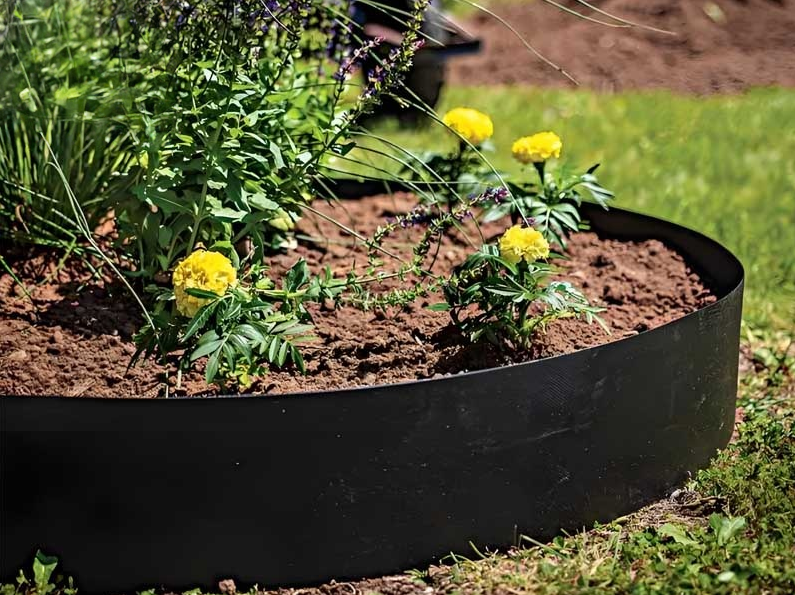
Residential Use: These root barriers are employed to shield home foundations, sidewalks, and driveways from the encroachment of tree roots. The typical size of a residential project ranges from 10 to 50 linear meters in length.
Municipal Use: They play a crucial role in safeguarding urban infrastructure such as roads and utility systems. Municipal projects usually involve root barriers that extend over 100 linear meters.
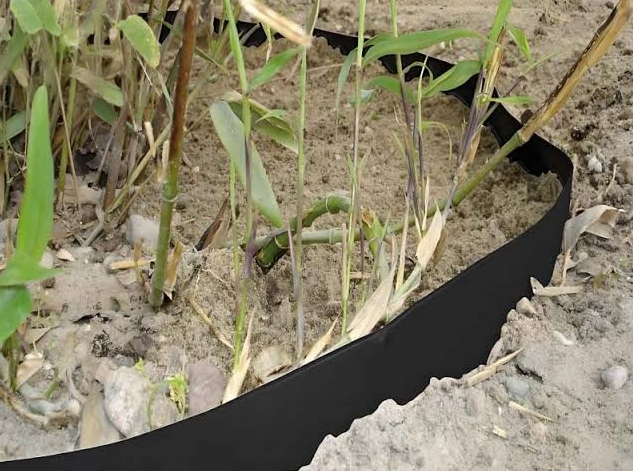
Agricultural Use: Root barriers are used to contain the spread of bamboo or invasive weeds like Japanese knotweed. For this purpose, barriers with a depth of 0.6 to 2 meters are required.
Commercial Use: In commercial settings, root barriers are used to protect parking lots, building foundations, and the landscaping within corporate campuses.
Each specific application has an impact on the choice of materials and the complexity of installation, which directly determines the overall cost of the root - barrier project.
2.Benefits of Investing in Root Barriers
Root barriers offer long - term savings and environmental benefits:
Cost - effectiveness: They prevent foundation repairs ($3,500 - $17,567) and plumbing damage ($1,200 - $5,500). A $1678 high - quality root barrier can save 6 - 12 times its cost in the long run.
Property Preservation: Properly installed, they can prevent up to 92% of sidewalk and driveway damage from invasive tree roots, maintaining property aesthetics and ensuring safety.
Environmental Impact: HDPE root barriers are recyclable, with a 54 - year lifespan. This reduces replacements and overall environmental impact by 22 - 33%.
Tree Health: They guide roots downward, promoting deeper root systems for better tree stability in bad weather. Surface roots seeking water are reduced by up to 85%, benefiting the tree and infrastructure.
3.Factors Influencing Root Barrier Cost
The cost of installing a root barrier varies greatly, generally ranging from $60 to $150 per linear meter, with a project's minimum average cost around $1400.Several factors determine the final price: the type of root - barrier material (as different materials have different costs), labor (including workers' wages and expertise), site conditions (flat or uneven ground, presence of obstacles), and project scale.Next, we'll analyze these influencing factors in detail.
3.1 Root Barrier Cost – Material
The choice of material significantly impacts the budget. Here’s a detailed breakdown:
HDPE Geomembranes: Priced at $1.5–$6/m², depending on thickness (0.76–2.032 mm). A 100 m² roll (0.76 mm) costs $150–$300, while thicker 2.0 mm rolls reach $500–$600. Custom fabrication adds 10–15% to costs.
Polypropylene Panels: DeepRoot panels (24” x 24”) cost $6–$15/m², with a carton of 20 panels (40 linear feet) priced at $200–$400.
Geotextile Barriers: Basic permeable barriers cost $1–$3/m², while copper-infused options reach $5–$8/m² due to added root-deterrent properties.
Concrete Barriers: Material costs are $5–$10/m², but labor-intensive pouring increases total costs to $10–$20/m².
Chemical Barriers: Mesh with inhibitors costs $3–$8/m², with additional expenses for environmentally safe disposal.
For a 15 m linear installation at 0.6 m depth, material costs range from $90 (geotextile) to $360 (HDPE, 2.0 mm).
3.2 Root Barrier Cost – Installation Labor
The labor proportion in total cost is 50% - 70%, varying by region and project complexity:
For standard installation on clay - based soils, labor costs $40 - $80 per linear meter for 0.6 - 1 - meter - deep trenches. A 15 - meter project costs $600 - $1200.
Complex sites with rocky soils or obstacles (e.g., utility lines) raise labor costs. Specialized equipment is needed, and it can reach $8 - $12 per square meter.
Large - scale or municipal projects require certified installers, who charge $100 - $150 per square meter for HDPE seam welding.
Urban areas like California have 20% - 30% higher labor rates than rural regions like Texas, where clay soils reduce digging time.
3.3 Root Barrier Cost – Site Conditions
Specific site conditions can increase project costs by 10%-50%:
Soil Composition: Clay excavation costs approximately $40-60/meter, while geotechnical excavation is more time-consuming and more expensive, up to $60-100/meter.
Tree proximity: If the tree is less than 3 meters away from the structure, a special protective barrier 1-2 meters deep needs to be installed, which will increase the material and labor costs by approximately 20%-30%.
Obstacles on site: Obstacles such as underground or above-ground pipelines, existing building foundations, or landscaping will increase the cost of cleaning or detouring. The cost is approximately US$10-20/linear meter, depending on the difficulty of treatment.
Slope Impact: In slope areas, HDPE anti-seepage membrane with textured surface must be used. Its cost is about 15% higher than ordinary membrane, and an additional cost of US$5 per square meter will be added.
3.4 Root Barrier Cost – Project Scale and Depth
Larger or more profound installations increase costs due to material and labor requirements:
Small - scale projects (10 - 2 meters in length): For residential use, total cost is $640 - $2,700, with materials costing about $180 - $580 and labor $460 - $2,120. For large - scale projects (especially municipal or commercial), there are quantity discounts. Orders over 17 square meters get a 13% - 23% price reduction.
Regarding depth, installing barriers about 0.4 - 0.6 meters deep often applies to large - scale municipal or commercial projects. Costs range from nearly $999 up to $4,999. Larger material orders can get better deals.
3.5 Root Barrier Cost – Regional Variations
Expenses vary by region due to different labor charges and material accessibility:
US: The typical cost is $60 - $100 per meter. In coastal states like California, it's about $80 - $120 per meter; in Midwest states like Ohio, $50 - $87 per meter.
UK: General costs average £59 - £99 per meter. For specialized barriers like Root Barrier C3 for Japanese knotweed, there's an additional £7 - £9 per square - meter charge depending on factors like location.
Australia: Prices range from AUD 79 - AUD 149/m, and are higher in big cities. For example, Sydney has steeper rates than other parts.
3.6 Root Barrier Cost – Additional
Additional costs can raise the project's expense by 10 - 20%:
Geotextile Underlayment: Protects HDPE barriers from punctures, $1 - $3/m², recommended for rocky soil.
Seaming Tape: For HDPE barriers, $50 - $100/roll (19 - meter roll).
Backfill Materials: Sand or engineering aggregate for compaction, $2 - $5/m² extra.
Permits: Required for some municipal projects, especially near utilities, $50 - $500.
Maintenance: Annual inspections of invasive - species barriers cost $100 - $30.
4.Cost Breakdown by Project Type
To provide clarity, here’s a cost breakdown for common root barrier projects:
Residential Foundation Protection
Scenario: 15 m linear barrier, 0.6 m deep, HDPE (1.0 mm), clay soil.
Material: $90–$180 (15 m² at $6–$12/m²).
Labor: $600–$1,200 ($40–$80/m).
Total: $690–$1,380.
Notes: Add $50–$100 for geotextile underlayment in rocky soils.
Bamboo Containment
Scenario: 20 m linear barrier, 0.8 m deep, HDPE (1.5 mm), sandy soil.
Material: $240–$360 (16 m² at $15–$22.5/m²).
Labor: $1,000–$1,600 ($50–$80/m).
Total: $1,240–$1,960.
Notes: Custom-fabricated HDPE recommended for bamboo’s rapid growth.
Municipal Sidewalk Protection
Scenario: 50 m linear barrier, 1 m deep, polypropylene panels, urban setting.
Material: $600–$1,200 (50 m² at $12–$24/m²).
Labor: $3,000–$5,000 ($60–$100/m).
Total: $3,600–$6,200.
Notes: Permits may add $100–$500.
Japanese Knotweed Containment
Scenario: 30 m linear barrier, 2 m deep, Root Barrier C3, clay soil.
Material: $360–$720 (60 m² at $6–$12/m²).
Labor: $2,400–$3,600 ($80–$120/m).
Total: $2,760–$4,320.
Notes: Requires professional installation to meet environmental regulations.
5.Cost-Saving Tips
To minimize costs while maintaining high - quality standards:
1.Install barriers at planting: Planting new trees and installing barriers together can cut labor costs by 20% - 30% as tree roots are less developed.
2.Buy in bulk: Ordering large - roll materials (e.g., 100 - square - meter rolls) can get 10% - 20% discounts, saving on project costs.
3.DIY installation: For small - scale projects in clay soil, self - installation can save $40 - $80 per meter in labor. Ensure proper trench depth and compaction.
4.Choose the right depth: For shallow - rooted trees like maples, using 0.6 - meter - deep barriers instead of 2 - meter ones can save 30% - 40% on materials.
5.Get multiple quotes: For large projects, get quotes from 3 - 5 certified installers to compare prices and choose the most cost - effective option for high - quality installation.
6.Choosing the Right Root Barrier
Choosing the right barrier depends on project requirements:
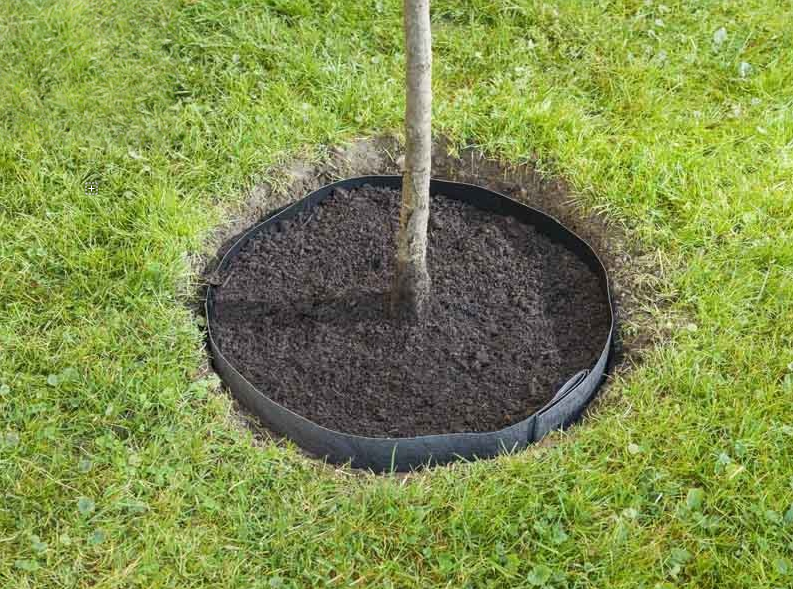
1.Tree Classification: Shallow - rooted trees (e.g., maples, willows) need 0.6 - 1 - meter - deep barriers; deep - rooted trees (e.g., oaks, pecans) require 1 - 2 - meter - deep barriers.
2.Soil Characteristics: Rocky soil needs 1.5 - 2.0 - millimeter - thick HDPE barriers with a geotextile underlayment; clay soil can use about 0.76 - millimeter - thin barriers.
3.Financial Considerations: Geotextile barriers suit small - scale projects on a budget. HDPE or polypropylene barriers are better for long - term, high - risk projects needing durability.
4.Regulatory Requirements: For invasive species like Japanese knotweed, use barriers meeting Environment Agency standards, e.g., Root Barrier C3.
Seek advice from an arborist or professional installer for site - specific suggestions, especially near utility lines or building foundations.
7. Installation Process and Costs
The installation procedure affects expenses and efficiency. Summary:
Location Evaluation: Specialists assess soil, tree distance, and obstacles, costing $100 - $300.
Trench Digging: Dig a 0.6 - 2 - meter - deep trench. Cost per meter: $20 - $50 in clay, $40 - $80 in rocky soil.
Barrier Installation: Install the barrier vertically, 2.5 - 5 cm above ground. Seaming is required for large - scale HDPE projects, with seaming tape costing $50 - $100 per roll.
Backfilling: Compact soil or use aggregates at $2 - $5 per square meter.
Inspection Process: Check barrier placement and seam integrity (important for HDPE), costing $50 - $200.
Professional installation following ASTM GRI - GM13 for HDPE cuts failure risk by up to 95%.
8. Conclusion
Root barrier expenses are $60 - $150 per linear meter, varying by material, labor, site conditions, and project scale. High - density polyethylene (HDPE) geomembranes ($1.5 - $6/sq m) and polypropylene panels ($6 - $15/sq m) are durable and cost - efficient, with a 50 - year lifespan and 95% effectiveness in preventing root damage.Investing in a quality root barrier can save on foundation repairs, protect infrastructure, and support tree growth.For budgeting, get multiple quotes and assess the site. DIY can cut labor for small projects if you have the skills and tools.
A well - installed root barrier is an economical long - term solution for protecting foundations or containing invasive plants.
Contact RONSINO Geomembrane pros for advice and quotes. Act now to secure your property.


