HDPE Waterproof Sheet for Starch Tail Sedimentation Tank in Poland
case · 2025-11-06 · 0 views

HDPE anti-seepage membrane sheet, also known as HDPE pond lining or HDPE Waterproof Sheet, is the preferred geomembrane material in most current anti-seepage lining projects. As an ideal geosynthetic material, HDPE waterproof board is particularly suitable for starch tailings sedimentation tank lining projects.
As a leading manufacturer and supplier of HDPE anti-seepage membranes, RONISCO geomembrane can provide geomembrane linings of various specifications, support customized thickness and size, and supply them at the most competitive factory prices. This article will delve into the definition, advantages and application cases of HDPE waterproof sheets in starch tailings sedimentation pond projects. We believe this will help you choose the most suitable HDPE pond lining for your project.
For the starch tail sedimentation tanks, HDPE Waterproof Sheet offers several benefits as an anti-seepage lining system.
1.1 Prevent Leakage
The settling basin is custom-engineered for the processing of starch residuals and concentrates the settled solids via solid-liquid separation techniques. A high-density polyethylene (HDPE) geomembrane impermeable barrier is incorporated to enhance containment capabilities, prevent seepage, and maintain operational durability over extended periods. This methodology fortifies the structural resilience, minimizes subsurface water contamination risks, and aligns with contemporary industrial ecological regulations.
1.2 Prevent Soil and Water Contamination
A traditional sedimentation tank is segmented into multiple functional zones, including the water inlet zone, primary settling zone, transitional zone, sludge collection zone, and effluent discharge channel. To address potential ecological threats caused by soil and water contamination, the utilization of a high-density polyethylene (HDPE) geomembrane lining system offers an optimal approach for geotechnical waterproofing requirements. The HDPE geomembrane demonstrates exceptional attributes such as exceptional chemical resistance, unparalleled barrier properties, outstanding resistance to ultraviolet degradation, and maintained mechanical stability in subzero thermal environments.
1.3Protective Barrier
The utilization of high-density polyethylene (HDPE) waterproof barriers significantly reduces the likelihood of fluid leakage and contaminant seepage. This impermeable barrier operates as a formidable defense, safeguarding the cleanliness of aquatic resources and terrestrial substrates throughout the entire water filtration sequence. It provides additional reinforcement to ensure the sustained functionality and structural integrity of the water management systems.
1.4 Impurity Separation
The sedimentation technique is broadly adopted across numerous water treatment facilities to eliminate impurities at various stages. More precisely, in settling tanks designated for starch remnants, this method is employed to separate undissolved particles from the liquid solution. Such containers improve water purity by facilitating the downward movement of suspended substances, while simultaneously permitting the clarified liquid to exit the holding chamber.
1.5 Anti-seepage Protection
High-density polyethylene impermeable membranes, when utilized in sedimentation ponds for starch sludge, deliver a wide array of advantages. They comprehensively impede water seepage, significantly diminish the likelihood of contaminant intrusion, and uphold the peak operational efficiency of the sewage treatment infrastructure. Implementing HDPE geomembrane linings within these containment structures guarantees exceptional watertight reliability, enabling the proficient management of starch byproducts and the improvement of aquatic purity.
2.What Is HDPE Waterproof Sheet?
The high-density polyethylene waterproof membrane serves as a durable barrier for aquatic environments. This robust synthetic compound demonstrates outstanding durability against perforations, ruptures, and abrasions, positioning it as a premier selection for water features measuring up to nine meters in width. Its featherlight composition facilitates convenient conveyance and repositioning whenever necessary adjustments are required.
High-density polyethylene (HDPE) waterproof membranes stand as some of the most durable polyethylene barrier materials available in modern construction. They exhibit extraordinary service life and outstanding resistance to chemical deterioration and corrosive agents. These flexible sheets can be effortlessly joined using thermal fusion methods, creating permanent watertight connections during installation. Employing a certified welding technician equipped with sophisticated equipment is essential to ensuring a flawless fusion bonding process.
HDPE Waterproof Sheet are is for aquatic life, including fish and plants. They are highly cost-effective and boast one of the longest service lifespans among polyethylene liners.
These remarkably versatile HDPE pond liner products are extensively utilized across a wide array of industries, including wastewater management, mining activities, aquaculture infrastructure, energy production sites, as well as various industrial and civil engineering projects. The application of HDPE waterproof barriers effectively prevents the leakage of liquid contaminants, guaranteeing their containment within designated areas. For instance, in a sedimentation basin designed for starch processing wastewater, where water seepage typically affects diversion channels, the integration of HDPE waterproof membranes can significantly reduce water wastage during irrigation processes.
RONSINO HDPE Waterproof Sheet can serve as an effective waterproofing lining system for fish and shrimp ponds, ensuring water retention and preventing seepage.
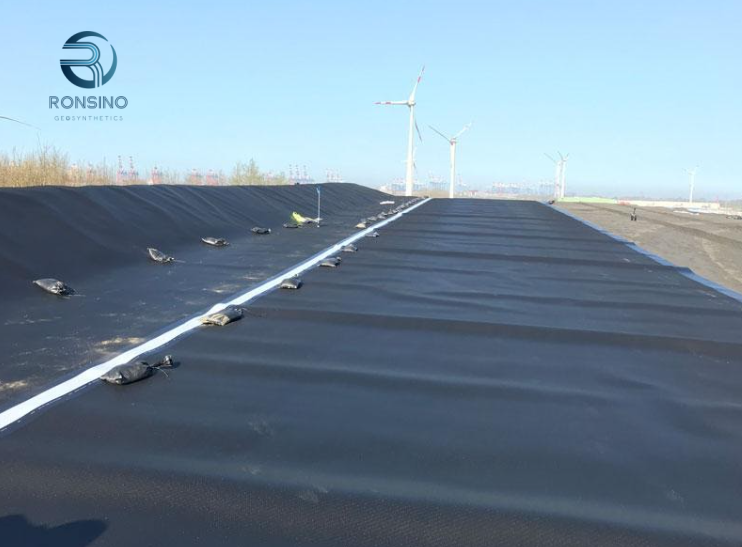
3.Case Study of HDPE Waterproof Sheetfor Starch Tail Sedimentation Tank in Poland
Based on customer requirements, RONSINO Engineering designed an anti-seepage structure using a 1.5mm black high-density polyethylene (HDPE) anti-seepage barrier. Traditional starch wastewater treatment mainly relies on physical containment to prevent pollution. Starch is insoluble at low temperatures and particulate matter can be removed by sedimentation, a process usually carried out in a clarifier. Starch wastewater contains protein, undissolved starch, soluble carbohydrates and suspended matter, forming a stable hydrophilic colloid. However, under the action of organic acids produced by anaerobic metabolism, the pH value decreases, causing protein instability and the formation of flocculent precipitation, thus greatly improving the solid-liquid separation efficiency.
RONSINO takes pride in its team of highly skilled installation specialists. Throughout the construction phase, the contractor first installs a meticulously placed non-woven geotextile layer at the foundation of the sedimentation basin, followed by the precise placement of the geomembrane pond lining. The adjacent sections of the geomembrane are intentionally overlapped by approximately 12 centimeters to ensure proper alignment. It is imperative to avoid excessive overlapping, as this can complicate the welding process and compromise the seam integrity. Once the edge lap joint technique is successfully applied, the welding equipment is gradually preheated to an optimal temperature range of 400℃ to 450℃, enabling the creation of a durable and secure weld that guarantees the lining's long-term performance.
By carefully considering the client’s requirements and employing professional installation techniques, RONSINO ensures the successful implementation of the lining solution, providing effective protection and management of the starch wastewater treatment process.
4.Specifications of HDPE Waterproof Sheetfor Starch Tail Sedimentation Tank
The specifications for the HDPE Waterproof Sheet used in the starch tail sedimentation tank are as follows:
4.1 Total HDPE Waterproof Sheet quantity
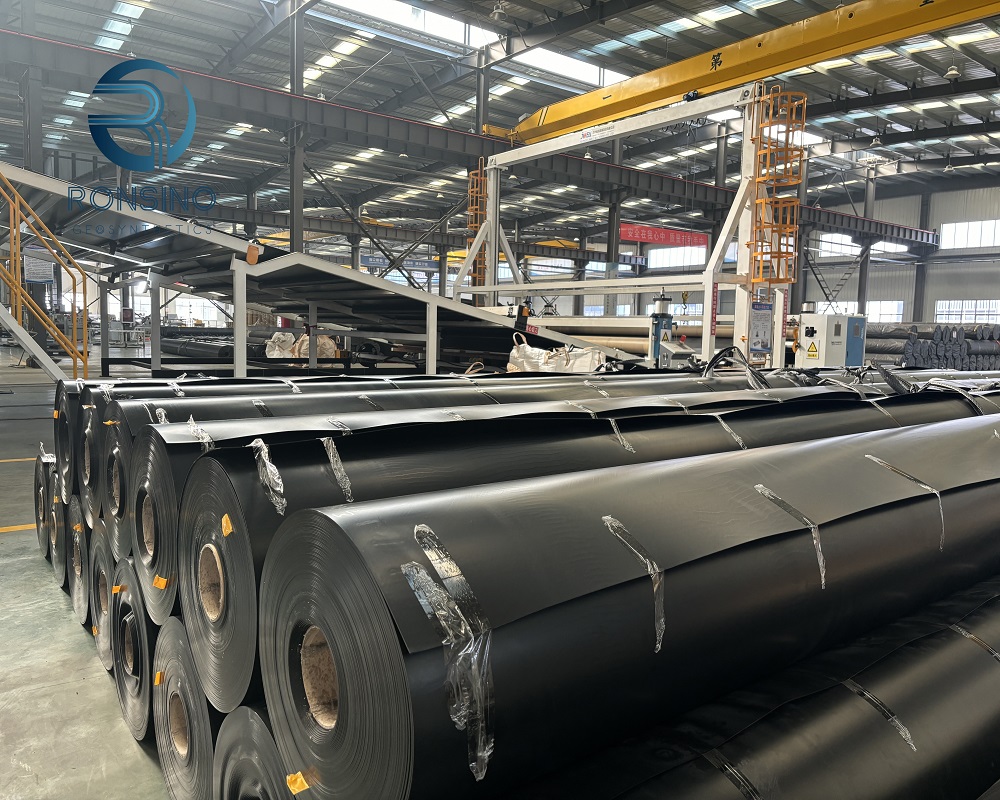
The required quantity for the project is 18000 square meters. This measurement indicates the total surface area that needs to be covered with the HDPE Waterproof Sheet.
4.2 Each roll size
The HDPE Waterproof Sheet is available in rolls with dimensions of 7 meters in width and 50 meters in length. These rolls provide convenient packaging and handling during installation.
4.3 HDPE Liners Thickness
The thickness of the HDPE Waterproof Membrane is meticulously set at 1.5 millimeters. This measurement denotes the layer’s depth, ensuring exceptional durability and flexibility to resist punctures, tears, and multiple types of wear and tear.
Assessing these parameters allows for the precise determination of the required HDPE pond liner quantity to completely cover the target expanse of the starch tailings settling tank. The 1.5mm specification guarantees outstanding waterproof properties, blocking leakage and maintaining the structural integrity of the containment system.
5.About RONSINOGeomembrane
As the the professional geomembrane manufacturer and supplier, RONSINO has been dedicated to supplying one stop geomembranes and services to worldwide customers since its foundation in 2010.
RONSINO geomembranes mainly include Smooth Geomembrane HDPE Liner, HDPE Textured Geomembrane, Composite Geomembrane Liner, etc. RONSINO is also providing professional design and installation service. OEM and ODM are also available. If you have any questions or inquiries, please contact us, we will reply as soon as possible.


