HDPE Pond Membrane Liner for Landfill Project in America
case · 2025-09-25 · 0 views
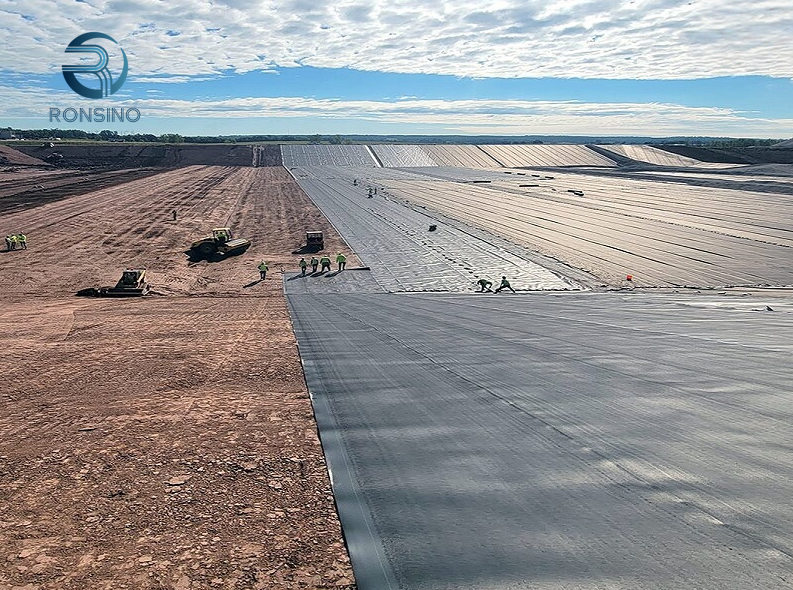
High-Density Polyethylene (HDPE) pond liners in the United States, widely recognized as geomembrane liners, serve as premier engineering solutions extensively deployed in landfill systems to contain and prevent the escape of hazardous materials. These advanced liners demonstrate exceptional impermeability and robust resistance to chemical degradation. When installed in landfill applications, they effectively block the infiltration of toxic contaminants from waste into the surrounding soil and vital groundwater resources.
1.How To Use HDPE Pond Membrane Liner America for Landfill Project?
For a US customer's landfill development project, we recommended the use of 2mm thick HDPE geomembrane and 300gsm silk-spun geotextile. Both engineering materials are widely used in municipal solid waste facilities to protect surface and groundwater resources. These polymer products offer excellent hydraulic properties, easy construction and cost-effectiveness. In landfill infrastructure, geosynthetics integrate multiple critical functions such as soil isolation, liquid drainage, particle filtration, anti-seepage barriers, gas containment and structural protection.
Geomembranes and geotextiles are the most commonly used lining materials today. They can solve landfill problems by providing much low permeability that will ultimately stop harmful leakage.
These two products have gained widespread global popularity owing to their superior durability, minimal porosity, exceptional flexibility, and robust resistance to chemical corrosion. Furthermore, they represent highly economical solutions with remarkable longevity. Among their notable merits are outstanding hydraulic performance, an eco-friendly composition, and straightforward installation procedures.
2.Case Analysis for HDPE Pond Membrane Liner America for Landfill Project
Destination – America
Product – 2mm HDPE Pond Membrane Liner
Purpose – Landfill Project
3.What Are Benefits of HDPE Pond Membrane Liner America?
When evaluating the implementation of a landfill initiative across the United States, selecting HDPE Pond Membrane Liner America presents a multitude of benefits, especially in addressing the intricacies tied to the discarded materials. The landfill is accommodating a diverse assortment of refuse, such as electronic scrap, biomedical refuse, and numerous forms of composite materials and synthetic polymers, thereby rendering efficient containment a formidable undertaking.
By choosing HDPE Pond Membrane Liner America, you can address these challenges in the following ways:
3.1 Chemical Resistance:
High-density polyethylene (HDPE) pond anti-seepage membrane exhibits excellent chemical resistance and effectively builds a strong barrier that can block the migration of harmful substances contained in waste materials. This move successfully avoided potential pollution risks to the surrounding environment and underground aquifers.
3.2 Low Permeability:
High-density polyethylene geomembrane has an extremely low permeability coefficient and effectively blocks the penetration of liquids and gases in landfills. This feature is crucial for the containment and management of complex waste, and can significantly reduce the risk of contamination of soil and groundwater resources.
3.3 Puncture Resistance:
Accumulated refuse within disposal sites frequently incorporates hazardous items or substances capable of breaching containment layers. High-Density Polyethylene (HDPE) geomembranes exhibit exceptional resistance to puncture, thereby reducing potential compromise and preserving the structural soundness of the barrier throughout its operational lifespan.
3.4 Durability:
HDPE Pond Membrane Liners are highly durable and can withstand the harsh conditions and stresses present in landfill environments. Choosing HDPE ensures long-term performance and reliability in waste containment.
By opting for HDPE Pond Membrane Liner America in the landfill initiative, you can adeptly navigate the difficulties introduced by the wide-ranging and intricate waste substances being introduced. The membrane's inherent resistance to chemical infiltration, minimal permeability, ability to withstand punctures, and extended service life collectively facilitate the segregation and confinement of refuse, thereby shielding the adjacent ecosystem from possible pollution.
4.What Is HDPE Pond Membrane Liner America?
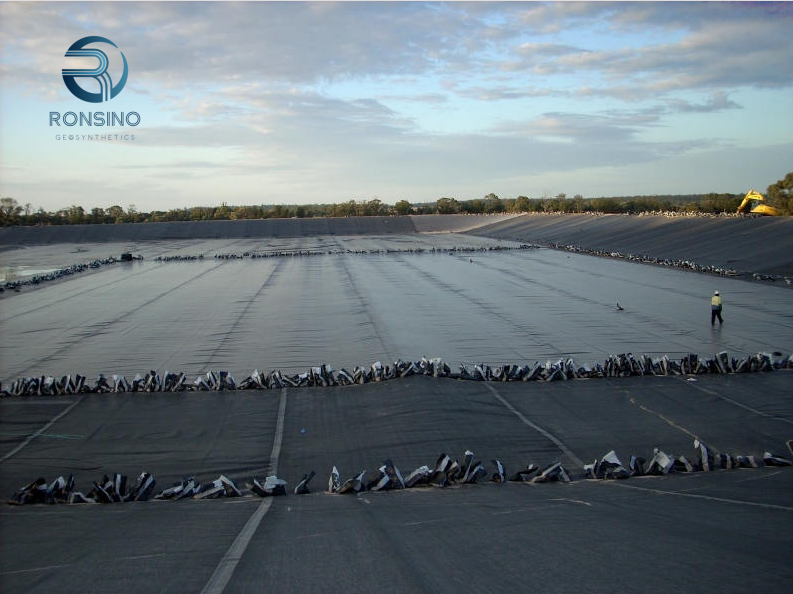
High-Density Polyethylene (HDPE) pond liners have become a cornerstone solution for water containment systems throughout the United States, widely adopted across diverse environmental and industrial applications. These membranes are celebrated for their exceptional durability, robust chemical inertness, and superior resistance to punctures and tearing. Below is a detailed exploration of the defining attributes and advantages of HDPE pond liners in the American market.
One of the primary advantages of HDPE Pond Membrane Liners is their extremely low permeability. This characteristic allows them to effectively isolate waste and prevent groundwater contamination, reducing the risk of environmental damage.
HDPE Pond Membrane Liners in America are also highly resistant to chemicals, gases, and microorganisms commonly found in waste. They exhibit excellent chemical resistance and can withstand corrosive substances such as acids, alkalis, salts, and organic solvents.
Furthermore, HDPE Pond Membrane Liners offer good mechanical strength and durability. They can be joined together through hot melt or chemical bonding methods to ensure proper sealing and stability. Additionally, when combined with other auxiliary engineering materials like geosynthetics, HDPE landfill liners can enhance the overall anti-seepage effectiveness.
5.Installation Steps of HDPE Pond Membrane Liner in America
The installation and fabrication of geomembrane reservoir liners represent a pivotal phase within the comprehensive waterproofing endeavor. The structural integrity of the geomembrane impermeable stratum is fundamentally critical to the ultimate success of the entire initiative. Every procedural stage and interconnected component necessitates meticulous planning and precise execution throughout the implementation phase. Below are the principal methodologies for geomembrane reservoir liner deployment as practiced across the United States.
(1) Geomembrane installation preparation
When unpacking, it is necessary to carefully check the surface condition of the HDPE geomembrane, record all defects (such as production damage, punctures, cracks, etc.) and repair them in time.
Before the geomembrane is installed, the design specifications and industry standards must be strictly followed, and construction can only be carried out after passing the mandatory acceptance review. Before installation, it is necessary to accurately measure the dimensions of the site, cut them according to the design drawings, and transport the cut sections to the designated location.
(2) Equipment requirements
Clean and test the geomembrane welding machine must be before each shift or daily work.
(3) Laying requirements for special parts
When laying pond liner America at the foot of the slope. The base surface should be flat and smooth when turning intersection. The geomembrane can not suspend in the air.
It is necessary to take measures to ensure the membrane pond liners adhere tightly at slope intersections.
The base of the embankment serves as the transition area between the slope and the terrain and requires careful treatment. To ensure waterproofing, a high-density polyethylene geomembrane must be laid along the slope, with its lower edge extending at least 500 mm beyond the slope. The membrane shall be securely connected to the underlying pond liner using thermal welding techniques to form a continuous impermeable barrier to the entire site base.
(4) Foundation preparation and leveling.
Prior to the installation of the HDPE geomembrane, it is imperative that the conducting personnel meticulously examine the subgrade. The foundation must be adequately compacted and uniformly prepared to facilitate proper installation. In the upper 25mm stratum, all foreign materials capable of compromising the HDPE geomembrane must be thoroughly removed. The team shall proactively identify and eliminate any sharp-edged objects or hazardous elements that could jeopardize the structural soundness of the geomembrane lining system.
Backfill soil degree is important when laying the HDPE geomembrane pond liner on the backfill soil foundation. The foundation laid should be free of seepage, silt, stagnant water, organic residues and harmful substances that may cause environmental pollution. The corners of the base should be smooth. Under normal circumstances, the arc radius should not be less than 500mm.
(5) Geomembrane expansion and positioning
Carefully unroll and position the geomembrane roll to ensure adequate coverage and allow for overlapping seams. You should maintain a natural overlap for welding.
Secure the geomembrane pond liner within the anchoring trench by employing sandbags as a temporary measure. Following the welding process and necessary adjustments to the geomembrane, utilize compacted soil to establish a permanent anchoring system. Maintain an unsecured zone of 2 meters along both edges to facilitate subsequent welding operations.
Carry out rammed earth anchoring and geomembrane pond liner welding in a crisscross manner, avoiding overlapping. Avoid immediate anchoring of the newly laid geomembrane pond liner, but instead anchor it after making appropriate adjustments.
Summary
HDPE geomembrane pond liner provides impermeable lining systems in various civil engineering applications, including landfill projects. The main raw materials used are high-density polyethylene (HDPE) and medium-density polyethylene (MDPE). There are two types of geomembrane liners: smooth and rough.
High-density polyethylene geomembrane liner is the core of the anti-seepage system of solid waste landfills. It is often combined with drainage, protection and clay liners to form a composite system to jointly prevent the spread of leachate. The current research focus is the technological innovation and application of the system in fluid and gas leakage prevention and control.
High-density polyethylene geomembrane liner has excellent anti-seepage properties, strong chemical resistance, excellent stress crack resistance, extremely low permeability and excellent UV resistance. Therefore, it is widely used as an anti-seepage material for pool bottoms and covering layers. Its application scope covers many fields such as landfill projects, biogas fermentation projects, sludge and sewage treatment facilities, and livestock and poultry manure evaporation ponds.
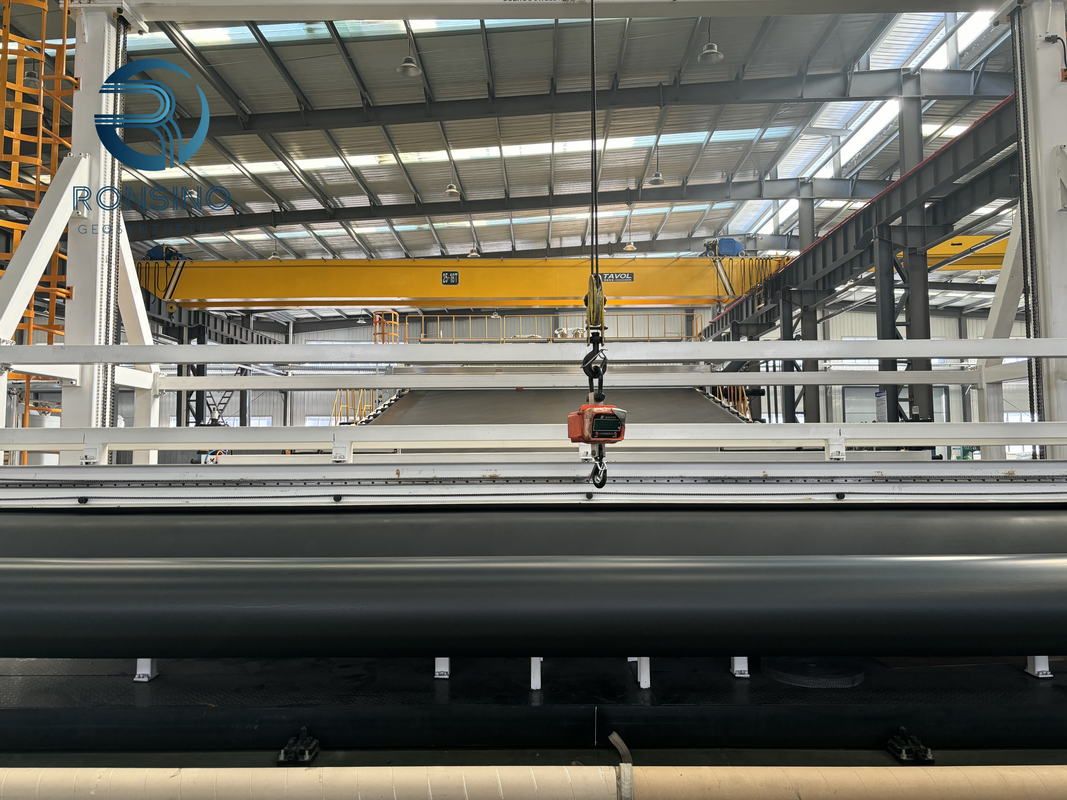
RONSINO specializes in manufacturing geosynthetics products to worldwide customers since its foundation in 2007. If you have any questions or inquiries, please contact us.


