HDPE Landfill Geomembrane Sheet for Mining Project in Inner Mongolia
case · 2025-09-06 · 0 views
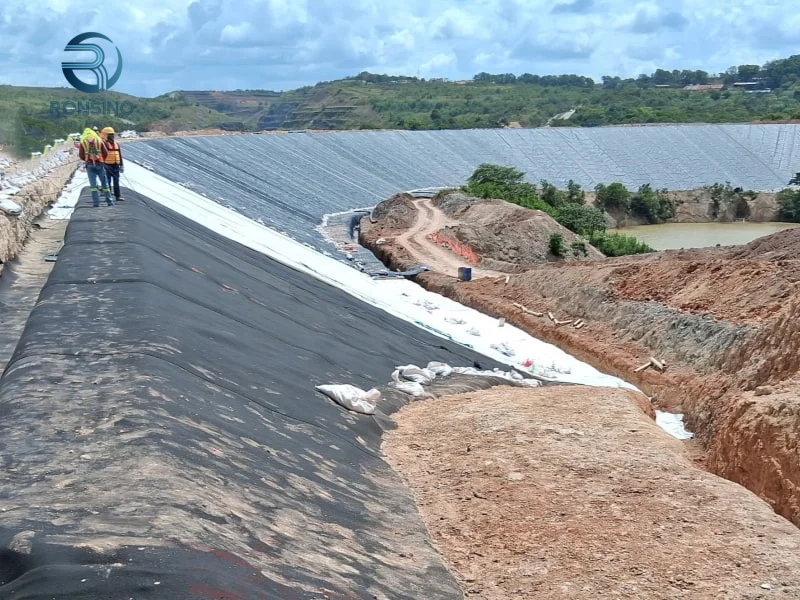
HDPE Landfill Geomembrane Sheet, also known as geomembrane, is a highly effective waterproof synthetic material designed to isolate liquids and waste. It is highly durable, resistant to stress cracking and chemical corrosion, so it is widely used in the mining industry. The RONSINO brand provides a variety of HDPE geomembranes such as smooth, rough and composite types. The products have obtained ISO9001, ISO14001, TUV, Soncap, SASO, BV and other international certifications, and passed SGS, Intertek and other inspections. Among them, 1.5mm thick HDPE anti-seepage membrane has been widely used in mining, aquaculture, sewage treatment, landfills, salt fields and other projects.
1.What Is A Landfill Liner?
A landfill liner is a type of engineered barrier system used in the construction of landfills to prevent the migration of contaminants into the surrounding environment. It is constructed between waste materials deposited in a landfill and the underlying soil and groundwater.
The function of a landfill liner primarily focuses on pollution reduction and preservation of an ecosystem. It involves various layers that act together to form an impermeable shield. In particular, landfill liner systems are typically composed of:
Low-permeability liner: Its composition generally includes geomembrane materials such as high-density polyethylene (HDPE) or clay liners. This level serves to stop leachate (a liquid produced through decomposition of waste) from entering into the underlying soil and groundwater.
Geosynthetic clay liner (GCL): Sometimes, low permeability liners may be replaced by GCLs or they can be added to it. The layer consists of bentonite clay which separates two geotextiles making it perform better hydraulically and have more capacity for holding pollutants.
Protective layer: A protective layer consisting mostly made up of geotextile fabric is laid on top of either low-permeability liner or GCL so as to prevent piercing or damage during dumping activities.
The main working principle of the landfill lining system is to use a synthetic polymer film to prevent liquids from passing through the soil barrier, effectively blocking potential leakage paths. The film has excellent tensile properties and flexibility, can resist water pressure and adapt to the displacement and settlement of soil structures. The matching non-woven geotextile is made of synthetic fibers through mechanical or thermal bonding and has high tensile strength and elongation. After compounding with plastic film, it can significantly enhance the film's resistance to mechanical stress and puncture resistance. The roughness of the geotextile surface can increase the interfacial friction coefficient and is critical to maintaining the integrity of the composite system and its upper protective structure. Both are resistant to biodegradation and chemical attack, and are resistant to acid, alkali and salt corrosion, so they have a long service life when laid underground.
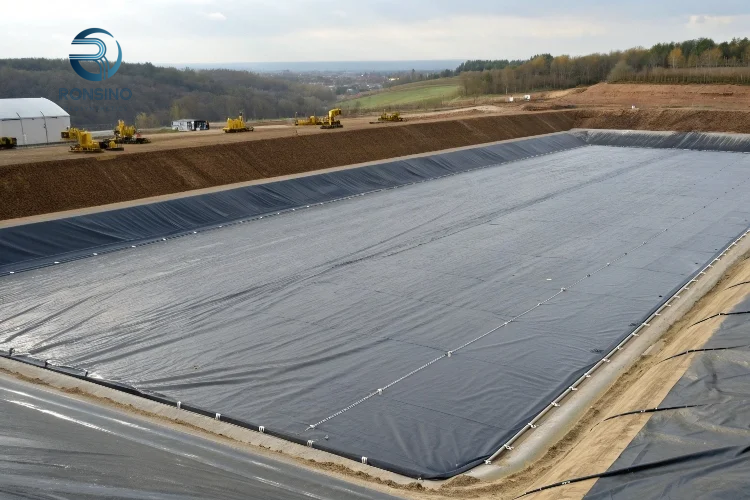
2.Why Chose HDPE Geomembrane Sheetfor Ming Project in Inner Mongolia?
In the past thirty years, projects such as mine depots in Inner Mongolia have been transformed from the traditional cement and soil storage method to the use of HDPE geomembrane liners. Today, geomembrane liners have become standard equipment in mine evaporation ponds, tailings ponds and heap leach pads. Tailings contain a variety of recyclable metal and non-metallic minerals, and their sulfides will generate acidic wastewater and leach toxic heavy metals. If containment fails, soil quality and ecological environment will be seriously damaged. Tailings are prone to fluid migration and structural collapse during storage, threatening infrastructure and safety, and are more likely to cause landslides in the rainy season. Its harmful substances also cause soil salinization and pollution, breed pathogens, contaminate groundwater, poison the food chain, and endanger public health. Improper management of tailings will cause widespread environmental pollution, accelerate soil erosion and destroy habitats.
High-density polyethylene (HDPE) geomembranes boast outstanding physicochemical stability, making them extensively applicable in mineral development scenarios. These include the heap leaching of ore-bearing rock masses, the disposal of milling tailings, as well as salt extraction in evaporation ponds and solar salt fields. By deploying such geomembranes, we can achieve effective isolation of underground heavy metals from surrounding soil matrices, thus cutting off the migration and interaction pathways between heavy metals and soil environments. This innovative mining technique not only features convenient installation procedures but also contributes to substantial reductions in both initial construction costs and long-term maintenance expenditures. At present, tender documents for mining engineering projects have explicitly incorporated mandatory requirements for the application of geomembranes.
A customer based in Inner Mongolia sent an inquiry via the Google Geomembrane official website, stating that they intended to purchase 1.5mm geomembranes for a mining project and asking about the corresponding product pricing. Subsequent communication via email revealed that the customer required the 1.5mm geomembranes we supply to comply with the GM13 standard.
3.How To Use Landfill HDPE Liner for Ming Project in Inner Mongolia?
We have consistently supplied customers with landfill liners made of GM13-compliant geomembranes, which deliver reliable isolation against soil contamination. Drawing on our project expertise, we showcased the application case of our landfill geomembranes from the Ming Project to this Inner Mongolia-based client. During subsequent in-depth discussions, we also learned that the geomembranes required for the client’s mining project needed to be procured alongside geotextiles. To demonstrate the superior quality of our products, we sent the client samples of both 1.5mm geomembrane liners and geotextiles, together with the relevant SGS test certificates.
The client received these samples one week later and expressed high satisfaction with the quality of our landfill geomembrane liners. To gain a more comprehensive understanding of our geomembrane manufacturing process, the client further requested a video-based factory audit. On the afternoon of the same day, we conducted a live video presentation to walk the client through the entire workflow, from raw material sourcing and production processing to finished product loading. The client virtually viewed our production equipment and quality control procedures in real time. This immersive presentation was well-received by the client, who also affirmed our professional capabilities in geomembrane production after witnessing our manufacturing process and tensile strength tests.
High-density polyethylene (HDPE) is a high-density variant of polyethylene (PE) plastic, featuring greater hardness and density than low-density polyethylene (LDPE) while being lighter than water. The yield tensile strength of HDPE geomembranes can reach 24 kN/m, with their breaking strength exceeding 42 kN/m. Boasting such high-performance metrics, this material is well-suited for deployment in diverse harsh geological and climatic settings, and can adapt to uneven ground subsidence. Thanks to the inherent advantages of geomembranes themselves, their application in mining engineering projects has gained widespread adoption.
Once all order details were finalized with the client, a 30% advance payment was received. Given the client’s urgent demand for the geomembrane landfill liners to proceed with their project, we immediately initiated production, organized overtime work to ensure both quality and quantity requirements were met, and finished the manufacturing process within three days. After the client took delivery of the geomembranes, our on-site engineers provided professional guidance throughout the installation phase, which was successfully completed as scheduled. To date, we have maintained a sound, mutually beneficial and win-win partnership with this client.
4.What Are Benifits of HDPE Geomembrane Sheetfor Ming Project in Inner Mongolia
(1) Our landfill liners deliver a yield tensile strength of up to 24 kN/m and a breaking tensile strength of 42 kN/m, coupled with excellent ductility. The yield elongation rate ranges from 13% to 16%, while the elongation at break hits 700% to 800%. Boasting impressive surface conformability and weather resistance, the material can reach a peak strain of approximately 1000%. This robust set of physical properties ensures enhanced safety and durability for mining projects—particularly for pond floors and sidewalls that must bear pressure independently.
(2) Geomembrane has excellent product performance: excellent chemical corrosion resistance (Corrosion); outstanding stress cracking resistance (Resistance to environment stress cracking); minimum permeability; Excellent UV resistance; Stable low temperature brittleness resistance;
(3) Boasting effective prevention of soil contamination caused by heavy metal leakage and reduced maintenance costs, the 1.5mm landfill geomembrane liner has rendered the application of geomembranes a necessity for modern mining initiatives.
5.Specifications of HDPE Liner Inner Mongoliafor Ming Project
Total Geommebrane Landfill Liner Quantity – 80000 square meters
Thickness – 1.5mm
Roll Size -8m * 100m
6.Summary
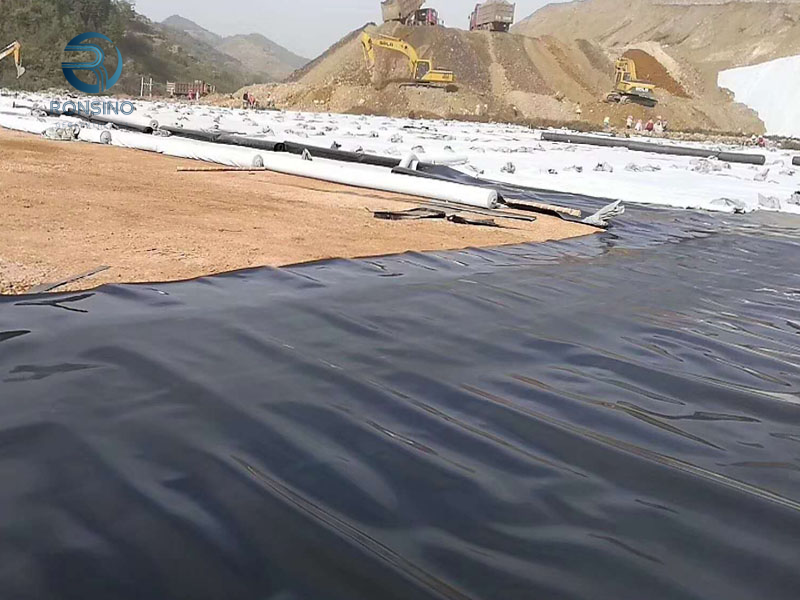
Over the 11 years since we launched our geomembrane production, we have successfully penetrated markets across 88 countries and regions, covering Inner Mongolia, Indonesia, Kenya, the Philippines, Thailand, and Malaysia. In our recent communication with Malaysian clients, we gained a clear understanding of their specific requirements and formulated tailored, comprehensive solutions for them. We also expedited the arrangement of product samples, testing procedures and manufacturing schedules, while providing professional guidance on on-site installation.
A dedicated manufacturer and wholesaler specializing in geotextiles and geosynthetics, RONSINO is committed to the research, manufacturing and installation services of geotextile-related products. We provide clients with an extensive selection of geotextiles and geomembranes for civil, mining, environmental and aquaculture engineering projects. Our main offerings include a series of innovative, high-quality products such as geotextiles, geomembranes, geogrids, geocells, geosynthetic clay liners and drainage boards.


