HDPE Geomembrane Material for Tailings Treatment in Brazil
case · 2025-09-01 · 0 views
1.What Is HDPE Geomembrane Material?
High-density polyethylene geomembrane material is extensively utilized across diverse environmental and civil engineering applications. This synthetic barrier is prevalently integrated as a protective lining within landfill sites, serving to securely confine hazardous waste substances and inhibit their permeation into adjacent soil strata and subsurface water resources.
Moreover, high-density polyethylene geomembrane materials find extensive application in aquatic storage infrastructures, including artificial lakes, water storage facilities, and irrigation channels. These materials function as an impermeable shield, effectively inhibiting water infiltration and ensuring the optimal preservation and controlled allocation of water assets.
This sheet is produced by incorporating various additives, including carbon black, antioxidants, anti-aging compounds, and UV-resistant materials. These ingredients significantly improve its resistance to chemical exposure, stress-induced cracking, permeation, and prolonged UV exposure.
In the fields of energy, mining and industry, HDPE Geomembrane Material have become a key material to prevent leakage, chemical degradation and ecological damage due to their excellent impermeability, chemical resistance and UV stability. They are the cornerstone of the resilience and sustainable development of modern infrastructure.
2.What Are Advantages of HDPE Geomembrane Material for Tailings Project
HDPE Geomembrane Materials offer numerous advantages for tailings projects:
2.1 Weather Resistance and Anti-Aging Performance
These sheets have strong weather resistance and anti-aging properties, enabling them to be exposed to the elements for extended periods while retaining their original performance.
2.2 Excellent Chemical Stability
HDPE Geomembrane Materials exhibit strong resistance to corrosion from strong acids, alkalis, and oil, making them highly effective as an anti-corrosion material in tailings projects.
2.3 Superior Mechanical Properties
The materials exhibit outstanding mechanical characteristics, including superior tensile strength, complete impermeability, exceptional resistance to corrosion, and prolonged anti-aging performance. These attributes collectively guarantee their extended service life and consistent dependability when utilized for the containment of tailings.
2.4Isolation, Protection, Stabilization, and Reinforcement
HDPE Geomembrane Materials serve multiple functions, including isolating and protecting underlying soil or structures, stabilizing the tailings, and providing reinforcement to the project site.
2.5 High Tensile Strength
HDPE Geomembrane Materials have high tensile strength, enabling them to meet the requirements of high-standard engineering projects and withstand the demanding conditions of tailings projects.
2.6 Geotechnical Reinforcement
With a good friction coefficient and tensile strength, HDPE Geomembrane Materials offer geotechnical reinforcement, enhancing stability and preventing erosion or shifting of the tailings.
2.7 Adaptability to Harsh Conditions
These products exhibit exceptional resistance to diverse adverse geological and meteorological circumstances, such as ground subsidence and significant deformation. They sustain their functional integrity under demanding operational settings.
2.8 Resistance to External Forces
HDPE Geomembrane Materials can withstand external forces during construction, resisting damage and maintaining their integrity. They exhibit minimal creep over time.
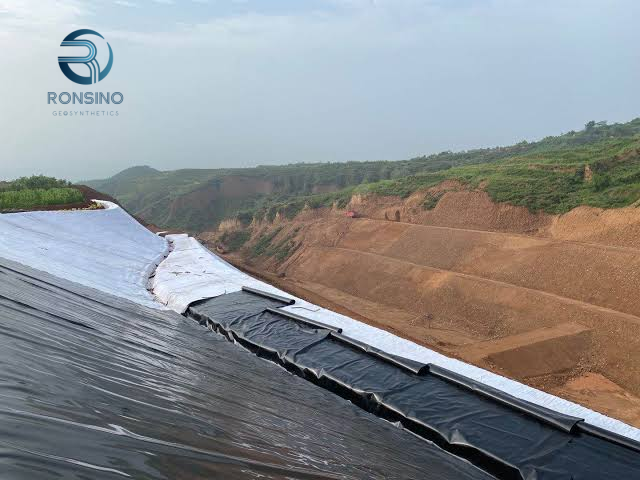
3.How To Install Geomembrane Sheet For Tailings Treatment?
3.1 Preparation before geomembrane sheet laying
(1) Level the ground on the site so that the surface is flat and compacted, and there are no bumps, large stones, iron wires and other hard things on the ground surface to prevent the impermeable membrane from being damaged;
(2) A 40*40 anchoring trench was dug around the landfill to prepare for the anchoring of the anti-seepage membrane on both sides of the tailings.
(1) Flatten the geomembrane roll to be laid in the open space, and cut it into the required shape according to the predetermined plan;
(2) Place the geotextile membrane on solid ground and lay it in a "T" shape. The core is to reduce joints and material consumption. Strictly prevent mechanical damage throughout the entire process, and an extension of 1%-4% (determined based on geological and engineering needs) needs to be reserved to cope with structural deformation, release stress, and prevent tearing.
(3) To avoid man-made damage during the film laying process, it should be smooth, compact, and minimize wrinkles. Reasonably choose the laying direction, minimize the force on the seam, and reasonably arrange the position of each piece of material, and strive to make the seam more perfect. less is better;
(4) All exposed geomembranes must be immediately compressed with sandbags or other heavy objects to prevent the geomembrane from being blown up by the wind or pulled out of the surrounding anchorage ditch.
3.3 Geomembrane welding
The environmental prerequisites necessary for the effective joining of geomembrane sheets through welding and sealing are as follows: the ambient air temperature must be maintained within a range of 4 to 40 degrees Celsius; it is imperative that the surface be completely dry, with absolutely no precipitation, fog, dew, or any other forms of excessive moisture present; additionally, the wind velocity should not exceed 4 on the Beaufort scale per hour.
(1) Hot melt welding
The geomembrane membrane blocks must overlap 15cm before welding, and the membrane blocks must be adjusted so that the seams minimize wrinkles and the possibility of “fish mouth”; before welding and seaming, the seamed area must be cleaned before seaming to clean and free water, dust, debris or any debris.
(2) extrusion welding
Geomembrane seam welding requires 7.5cm overlap. Clean the area pre-weld: no water, dust, or debris. Hot air device for geomembrane heating, avoid damage. No polishing; maintain clean, dry welding rod.
3.4 Geomembrane sheet welding details
Use a soft ladder on the tailings pond slope. Employ a hot-melt welding machine from top to bottom. Lift equipment manually when reaching the platform. For 1:3 to 1:2 slopes, align recessed geomembrane. Ensure smooth welding with no repairs needed. After completing the weld, secure with sandbags in grooves. Anchor membrane at platform with pebbles.
(1) When welding from top to bottom, stop welding when welding reaches the platform.
(2) When the weld seam outside the platform is finished, press the geomembrane into the anchor groove at the platform, and the seam is exposed;
(3) Use a hot air gun to blow the overlapping parts of the two pieces of geomembrane together;
(4) Abrasive grinding is used to form a rough surface with a depth of more than 1.5mm. Precisely process 45° chamfers and polish the oxide layer of the film to ensure adhesion. The thickness after chamfering should be approximately 0.5mm. Slight surface unevenness can increase the material contact area in preparation for subsequent welding. The welding rod is fed in through mechanical extrusion to complete the joint connection. The preprocessing is now complete.
4.Why Choose HDPE Geomembrane Material for Tailings Treatment in Brazil
The mining industry’s growth in Brazil has resulted in a substantial accumulation of ore and, consequently, a significant volume of tailings. However, these tailings frequently contain high concentrations of metals, heavy metals, and residues from mineral processing. In the event of environmental pollution, the consequences can be severe and far-reaching.
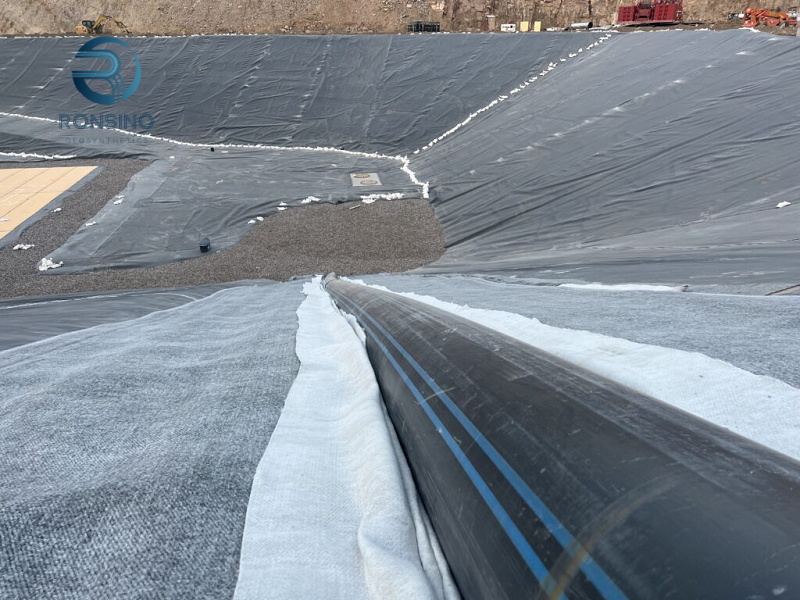
When discussing tailings management projects with Brazilian customers, we recommended the use of 2mm thick high-density polyethylene (HDPE) geomembranes and provided comprehensive installation guidance through video materials. In similar projects, the impermeable geomembrane is the core barrier to prevent seepage from the foundation of the heap leach facility. On top of this anti-seepage system, HDPE drainage pipes are placed on the geomembrane without direct contact, and a protective soil base is laid underneath to ensure the integrity of the geotechnical structure during the ore stacking process.
Through the deployment of a 2-millimeter high-density polyethylene (HDPE) geomembrane, our approach guarantees dependable anti-seepage performance, thereby safeguarding the structural soundness of the tailings management infrastructure. We are committed to delivering customized and high-performance solutions that precisely align with our clients' specific requirements, facilitating the flawless execution of their initiatives while strictly adhering to established methodologies and regulatory benchmarks.
5.Specicfications of HDPE Geomembrane Material for Tailings Treatment in Brazil
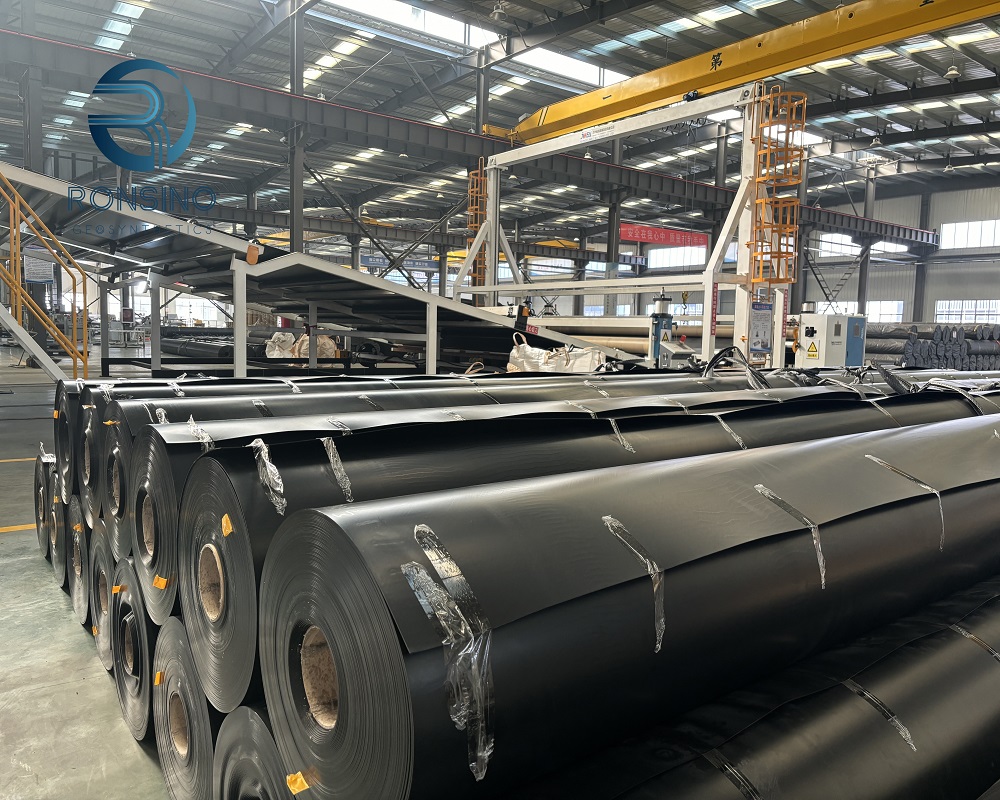
Total HDPE Geomembrane quantity–500000 squares meters
Geomembrane Specifications – 2mm
Each roll size is 7m*105m
6.Summary
In Brazil, the HDPE Geomembrane Material demonstrates remarkable performance in the management of tailings. Its formulation consists of 97.5% premium-grade high-density polyethylene combined with 2.5% specialized additives, delivering a multitude of advantages. Sourced from top-tier virgin resin, this blend ensures superior material characteristics and durability.
The material has excellent resistance to environmental stress cracking and chemical degradation, ensuring structural integrity under the most demanding conditions. Its excellent corrosion resistance can effectively resist chemical attack in tailings environment. Its wide operating temperature range and long life make it widely used in various scenarios such as biogas digesters and tailings ponds.
Implementing HDPE geomembranes within tailings management guarantees secure confinement, effectively halting the escape of hazardous substances into the surrounding environment. The material’s exceptional robustness, resistance to chemical degradation, and extended operational lifespan render it particularly suited for maintaining the enduring integrity of tailings storage facilities while safeguarding the ecological balance.
Since its establishment in 2007, RONSINO has focused on the research and development, production and supply of high-quality geomembrane and geosynthetic materials products and solutions. Core products include high-performance geotextiles, geomembranes, geogrids, etc. If you have any questions or needs, please feel free to contact us and we will respond quickly and provide professional answers.


