HDPE Geo Membranes for Dam Project in Ethiopia
case · 2025-10-17 · 0 views
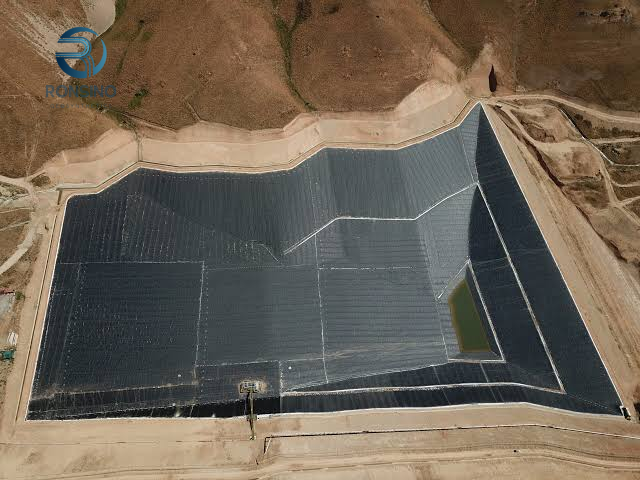
In view of the strict anti-seepage requirements for pumped storage reservoirs, the use of HDPE geomembrane alone is difficult to apply due to high cost and limited technology. After the upgrade, the maximum water level of the reservoir reaches 70 meters, which intensifies the risks of differential settlement and structural deformation, so a flexible anti-seepage solution is needed. After comprehensive evaluation, the HDPE Geo Membranes and clay combined system is the optimal solution: it has the advantages of excellent impermeability, high flexibility (adaptable to deformation), low cost, and easy maintenance.
CASE STUDY
Location – Ethiopia
Product(s) – HDPE Geo Membranes
Application – Dam Project
Benefits
HDPE Geo Membranes is an excellent waterproofing solution with extremely low permeability and excellent anti-seepage properties. It has a wide temperature range (-70°C to 110°C), strong chemical resistance (resistant to acids, alkalis and organic solvents), high mechanical properties, and can adapt to complex geology and climate, ensuring long-term safety and durability of the project.
Issue
Undoubtedly, dams have conferred substantial advantages upon humanity. Nevertheless, as time has passed, the adverse consequences of these structures have grown more conspicuous. Among these are the degradation of soil quality and the escalation of environmental contamination, among other detrimental effects.
Solution
High-density polyethylene geomembrane, with its excellent waterproof performance, serves as an efficient anti-seepage barrier and is widely used as the external protective lining of water conservancy structures such as dams and reservoirs. Its installation process is simple and only requires basic technology, which can not only reduce construction costs but also ensure excellent sealing performance. Therefore, geomembrane has become the first choice anti-seepage solution for most water conservancy projects. Its inherent high-strength mechanical properties, when used as dam lining, can significantly enhance the structural stability and internal composition of the dam, thus improving the overall quality of the project.
When the foundation undergoes irreversible deformation, the geomembrane will also undergo permanent deformation. When the dam is under tension, the inherent tensile resistance of the geomembrane significantly reduces the tensile stress of the overall structure and inhibits destructive cracks in the dam body caused by excessive compressive stress. The displacement difference between the geomembrane and the core wall reduces the relative movement of the upper dam layer, thereby constraining the lateral displacement of the dam body. This phenomenon is mainly attributed to the tensile elasticity of the geomembrane material.
High-density polyethylene (HDPE) geomembrane and supporting slope protection measures provide effective protection during heavy rainfall. The uncovered area can prevent soil particle displacement and erosion and avoid surface settlement; the covered area can disperse the kinetic energy of raindrops and reduce the mechanical stress on the slope. The impermeability of geomembranes directs rainwater toward the edges, potentially forming erosion gullies that reduce soil infiltration capacity and promote surface runoff. This runoff is intercepted by the geotextile layer and guided by the geomembrane to achieve systematic drainage. Strictly following installation specifications is crucial to ensuring protective effectiveness.
1.Material inspection. Before the geomembrane laying construction, the membrane material must be inspected to check whether the material performance index is consistent with the actual needs of the project, and at the same time, the on-site quality inspection should be carried out, and the inspection can only be used for on-site construction.
2.Base surface cleaning. Before the geomembrane is laid, it is necessary to remove the hard protrusions of stones in the sandy soil layer at the bottom of the water system, and there are no other adhering sundries on the ground.
3.Geomembrane laying. First, measure the size, and number the building materials one by one according to the actual size of the building materials used. Then, while laying the geomembrane, carry out the tamping work. Each piece of membrane material is spliced by overlapping, welding or bonding methods until the laying is completed. .
4.Post-installation quality inspection: After the joint laying is completed, the installation quality needs to be comprehensively inspected. Inspect the surface for tears or punctures caused by compaction tension and verify that exposed portions are adequately anchored to prevent wrinkling. The entire system is then inspected for seam defects, including insufficient fusion, uneven welding, or delamination between layers.
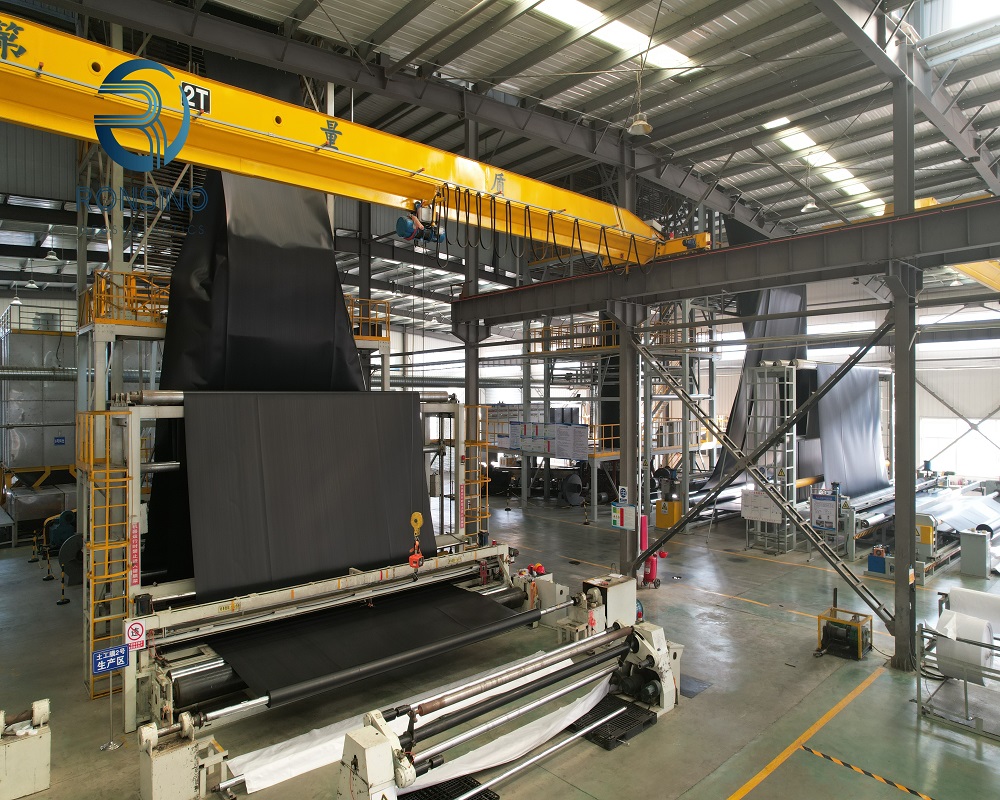
Specifications of HDPE Geo Membranes for Dam Project in Kenya
Total HDPE Geomembrane quantity–55860 squares meters
Geomembrane Specifications – 1.5mm
Each roll size is 7m*140m
Summary
High-density polyethylene (HDPE) geomembrane is a premium synthetic waterproof barrier made from 97.5% virgin HDPE resin, with 2.5% carbon black and additives for enhanced durability. It offers excellent resistance to environmental stress cracking and chemical degradation, performing reliably across a wide temperature range. With a long service life, it is widely used in biogas digesters, tailings facilities, canal linings, dams, and subway projects.
About RONSINO
Since its establishment in 2007, RONSINO has been committed to providing one-stop geosynthetic materials products and services to global customers. The company has supplied a variety of efficient and technologically advanced geomembranes, geotextiles, geocells, bentonite waterproof blankets (GCL), drainage panels and geogrids to more than 81 countries. Our main customers are located in Australia, France, Sweden, the United Kingdom, Hong Kong, Hungary, New Zealand, Poland, Mexico, Ecuador, Brazil, Pakistan, Bangladesh, Thailand, Vietnam, Malaysia, Indonesia, Singapore, Philippines, Sri Lanka, India, United Arab Emirates, Saudi Arabia, Qatar, Kenya, Ghana, Ethiopia, Somalia, Nigeria, South Africa, Swaziland, Mongolia and other countries.
RONSINO is not only manufacturing best quality geosynthetic products but also providing professional design and installation service. OEM, ODM, custom development and fabrication are also available. If you have any questions or inquiries, please fill and submit the following form, we will reply as soon as possible.


