HDPE Fish Pond Rubber Liner for Shrimp Pond Project in Norway
case · 2025-11-24 · 0 views

HDPE Fish Pond Rubber Liner for Shrimp Pond Project in Norway
HDPE Fish Pond Rubber Liner, or HDPE Geomembrane Liners, are made from high-quality polyethylene resins with 2%–3% carbon black and specialized additives for oxidation resistance, durability, and UV protection. They are produced using advanced automated systems and a triple-layer extrusion process. Ideal for harsh environments, these liners resist UV radiation, ozone degradation, and chemicals while meeting strict installation standards. A cost-effective solution for exposed containment, they are widely used in aquaculture, landfill capping, mining, and water storage projects like biogas digesters, ensuring long-term performance without compromising affordability.
1 What is HDPE Fish Pond Rubber Liner?
HDPE Fish Pond Rubber Liner is a high-density polyethylene (HDPE) geomembrane designed for round aquaculture ponds in shrimp and marine fisheries.
These liners provide hydraulic isolation, environmental protection, and optimized aquatic ecosystems, forming an impermeable barrier between cultured organisms and their surroundings.
The circular design enhances spatial efficiency, hydrodynamics, oxygenation, and nutrient distribution, ensuring stable conditions for species growth.
HDPE's UV resistance, chemical inertness, and durability ensure long service life with minimal maintenance. Its tear resistance and flexibility adapt to complex basin shapes and loading conditions.
Professional-grade HDPE liners create efficient, biosecure environments with superior water retention and quality control, maximizing productivity.
Proper selection and installation are crucial, considering basin dimensions, hydrostatic pressures, substrate, and biological needs. Consult aquaculture specialists for optimal performance and longevity.
2.Case Study of HDPE Fish Pond Rubber Liner for Shrimp Pond Project in Norway
Location:Norway
Products:HDPE Fish Pond Rubber Liner
Application:Shrimp Pond in Norway
3.Benifits of HDPE Fish Pond Rubber Liner for Shrimp Pond Project in Norway
(1) The HDPE Fish Pond Rubber Liner made of high-quality virgin resin has excellent performance through full-process quality control. All parameters exceed international standards and are environmentally friendly and non-toxic. This product combines high strength, impact resistance, tear resistance and hydrostatic pressure resistance, excellent chemical stability, resistance to acid and alkali corrosion and microbial degradation, and excellent anti-seepage performance. After laying, an underwater isolation layer is formed, which can effectively prevent leakage and block the invasion of viruses and microorganisms. It is especially suitable for multi-depth shrimp farming systems. The ultra-smooth surface facilitates disinfection and desilting, significantly inhibits the growth of pathogens at the bottom of the pond, and shortens the pond cleaning cycle to 7 days, which not only increases the breeding density but also reduces the overall cost.
(2) The opaque hue effectively suppresses the germination and development of underlying vegetation, eliminating concerns about upward growth compromising the integrity of the barrier. This darkened covering serves as an effective thermal insulator, promoting heat retention within the aquatic environment and maintaining elevated water temperatures. The resultant warmer conditions accelerate biological processes, significantly reducing the duration required for maturation cycles.
(3) Geomembrane is an impermeable barrier that effectively inhibits root penetration, ensuring long-term waterproofing integrity by resisting root damage. It forms a strong waterproofing system with excellent resistance to water pressure, as well as outstanding durability against punctures, tears and cyclic stress. This adaptable waterproofing material has extremely low permeability and exhibits excellent thermal stability in different climate conditions. Geomembrane has remarkable chemical inertness and can withstand strong acid and alkali environments. Its excellent tensile strength can also fully meet the strict requirements of aquaculture pond construction.
4.Why Chose HDPE Fish Pond Rubber Liner for Shrimp Pond Project in Norway
When considering a shrimp pond project in Norway, there are several reasons to choose HDPE Fish Pond Rubber Liner:
Substrate Characteristics: Across Norway's coastal regions, where prawn aquaculture is extensively practiced, the terrain typically comprises marshy grounds, loose granular substrates, or decomposed organic matter. Such geological formations prove inhospitable for conventional agricultural endeavors and present considerable difficulties when constructing and managing aquatic habitats. High-Density Polyethylene (HDPE) geomembranes serve as an impermeable partition between the aquatic environment and the underlying stratum, effectively mitigating seepage and preserving the ideal parameters necessary for prawn development.
Certain regions might harbor pyrite minerals, posing a risk of elevated acidity that adversely impacts shrimp aquaculture. Utilizing high-density polyethylene (HDPE) pond liners serves as an impermeable barrier, effectively isolating the acid-generating substrates from the aquatic system and maintaining optimal water parameters conducive to shrimp growth.
Sandy substrates exhibit limited moisture retention capabilities, posing challenges in sustaining adequate water volumes within aquatic enclosures. High-Density Polyethylene (HDPE) geomembranes function as impermeable barriers, effectively halting subsurface leakage and evaporation, thereby facilitating optimal water regulation and preserving the necessary hydraulic depth essential for successful shrimp cultivation.
Organic substrates often exhibit poor structural stability and require substantial oxygen levels. HDPE Fish Pond Liners enhance the pond's foundation, mitigating soil displacement and preserving the overall soundness of the aquatic structure. These liners also diminish oxygen consumption, fostering a more favorable habitat for aquatic species and lowering susceptibility to pathogenic infections.
In low-lying areas, post-harvest draining and dewatering aquaculture facilities may face topographical obstacles. The use of high-density polyethylene (HDPE) geomembrane as pond lining ensures excellent drainage performance, achieving complete pond drainage and matrix drying. This critical process maintains the ideal environmental parameters of the culture system and protects the pond base from degradation, thereby reducing physiological stress on cultured crustaceans and reducing the risk of pathogen outbreaks and health problems.
Norwegian customers inquired about the procurement and cost of geomembrane for aquaculture facilities through Facebook. The country's coastal swamps or sandy land are low-cost because they are not suitable for traditional agriculture, but there are multiple problems: the soil contains sulfur and causes acidic sulfates, which damages the shrimp; the sandy soil is difficult to store water, and the organic soil damages the dam and consumes oxygen; the low-lying terrain is difficult to drain, making it difficult to dry the bottom of the pond, and the shrimps are susceptible to stress and disease.
5. Solution of HDPE Fish Pond Rubber Liner for Shrimp Pond Project in Norway
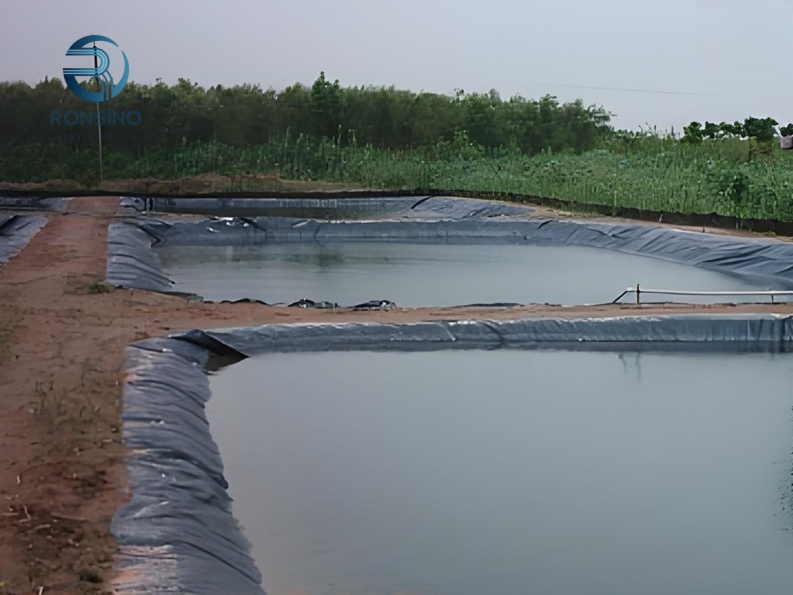
A Norwegian shrimp farm faces challenges. Upon our recommendation, the customer used 0.5 mm HDPE Fish Pond Rubber Liner in its aquatic facilities. This solution effectively isolates the water environment. With its tough and impermeable characteristics, it can not only block aquatic plants and organic sediments, but also reduce the growth of microorganisms in the water, thus reducing the need for antibacterial treatment. Geomembranes also protect banks from scour, simplify maintenance and allow for efficient sediment removal. We provide our customers with 0.5mm HDPE geomembrane samples for their evaluation. The results of the analysis were positive and the customer expressed satisfaction and procured the material for implementation. Our technical experts provided comprehensive consultation and supervisory support during the installation phase, explaining the installation method in detail and emphasizing three key safety measures.
(1) Before laying, the laying surface should be leveled and compacted, and sandbags or heavy objects should be prepared to prevent the laid HDPE geomembrane from being blown away by the wind.
(2) The slope of the breeding pond should not exceed 45°C, otherwise it is easy to collapse and it is not convenient for breeding.
(3) The anchoring ditch shall be dug into a U-shaped ditch or inverted trapezoidal ditch of 40cm-50cm, and then backfilled with soil.
6.Specifications of HDPE Fish Pond Rubber Liner Norway for Shrimp Pond Project
Total HDPE Pond Liner Quantity – 222,720 square meters
Thickness –0.5mm
Roll Size -7m * 420m
HDPE Fish Pond Rubber Liner serves as the premier geosynthetic material in aquaculture endeavors, enabling cultivators to establish a robust and highly efficient containment framework that fosters superior shrimp development and vitality. These advanced HDPE membranes deliver an economical alternative, significantly enhancing the long-term viability and output of the shrimp aquaculture sector.
Since its establishment in 2007, BPM has been committed to providing one-stop geosynthetic materials products and comprehensive solutions to global customers. RONSINO has supplied a variety of efficient and cutting-edge geomembranes, geotextiles, geocells, geocomposite drainage panels, geogrids, bentonite waterproof blankets and other advanced products to more than 81 countries.
RONSINO Geomembrane is not only manufacturing best quality geosynthetic products but also providing professional design and installation service. OEM, ODM, custom development and fabrication are also available. If you have any questions or inquiries, please contact us, we will reply as soon as possible.


