HDPE Biaxial Geogrid for Road Reinforcement Construction in New Zealand
Case · 2025-09-28 · 0 views
HDPE Biaxial Geogrid plays a central role in improving the strength and stability of road structures. This bidirectional geogrid is usually laid in the road base or subgrade layer. By effectively dispersing traffic loads and inhibiting the formation of cracks and deformations, bidirectional geogrids significantly extend the service life of roads. As a country with an extensive road network, New Zealand faces multiple challenges such as heavy traffic loads, expansive soils and harsh environmental conditions. HDPE bidirectional geogrid provides an effective solution to these challenges by enhancing the stability of road infrastructure.
As the leading geosynthetics manfuacturer and supplier, RONSINO Geosynthetics offers HDPE Biaxial Geogrids at best factory price for Road Reinforcement constructions in New Zealand.
1.What Are Beneifts of HDPE Biaxial Geogrid for Road Reinforcement construction?
In road enhancement initiatives, HDPE biaxial geogrids deliver superior soil stabilization, elevated load distribution, economic efficiency, and enduring structural resilience. This advanced geocomposite offers a robust and eco-friendly approach to fortifying and prolonging the service life of transportation networks across New Zealand.
1.1 Improved Soil Confinement
High-density polyethylene (HDPE) bidirectional geogrid effectively restrains and stabilizes soil within the road structure. They inhibit lateral expansion and displacement of soil, thereby significantly reducing the risk of settlement and deformation. This restraint further improves the overall stability and efficiency of the road.
1.2 Increased Bearing Capacity
Through the integration of biaxially oriented high-density polyethylene (HDPE) geogrids, the structural integrity of the roadway is substantially improved. These advanced geosynthetic materials effectively redistribute vehicular loads across a broader area, thereby minimizing localized stress points and mitigating the risk of surface deterioration. As a result, the road surface exhibits superior resilience against increased traffic volumes and extends the service life of the pavement by delaying the onset of distress-related failures.
1.3Reduced Construction Costs
HDPE Biaxial Geogrids can reduce construction costs in Road Reinforcement constructions. They provide effective reinforcement without the need for extensive excavation and replacement of poor-quality soil. This saves time, labor, and material costs associated with traditional soil improvement methods.
1.4 Enhanced Long-Term Performance
HDPE Biaxial Geogrids offer long-term performance benefits to road structures. They minimize the formation and propagation of cracks, helping to maintain the road’s structural integrity over time. This reduces maintenance needs and extends the service life of the road, resulting in cost savings and improved sustainability.
1.5 Durability and Resistance
High-density polyethylene biaxial geogrids are distinguished by their robustness and remarkable ability to withstand harsh environmental influences. They demonstrate outstanding resilience against moisture ingress, chemical degradation, and ultraviolet exposure, making them exceptionally well-suited for New Zealand’s varied and challenging weather patterns. This guarantees sustained performance and structural integrity of the geogrids when utilized in pavement reinforcement applications.
2.What Is HDPE Biaxial Geogrid
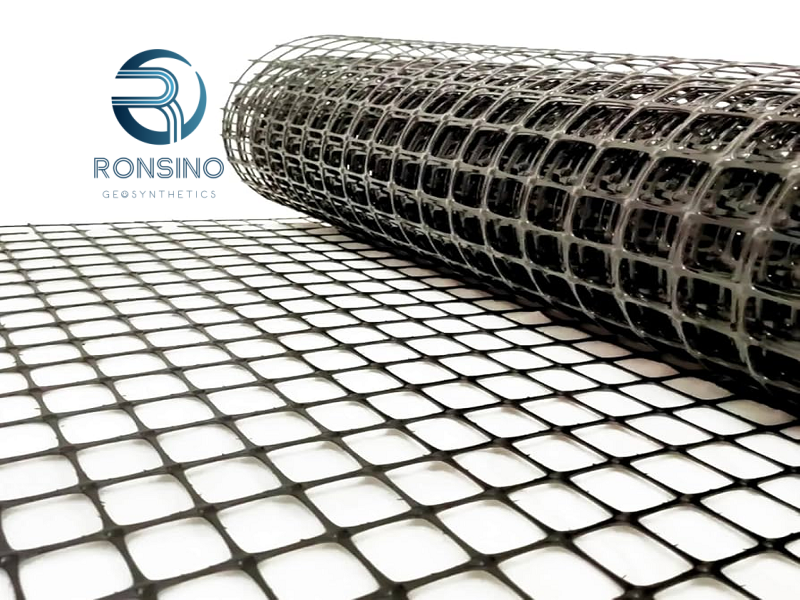
High-density polyethylene two-way geogrid is a geosynthetic material made of polyethylene resin and is widely used for soil reinforcement and stabilization in civil engineering and construction projects. Its unique grid structure consists of intersecting ribs or woven bands, forming permeable pores that can effectively promote the interlocking effect of the soil and achieve uniform load transfer.
The primary purpose of HDPE Biaxial Geogrid is to enhance the mechanical properties of soil. It improves the load-bearing capacity, stability, and resistance to deformation of the soil. By installing the geogrid within the soil, it acts as a reinforcement layer, distributing applied loads and minimizing soil settlement or failure.
High-density polyethylene bidirectional geogrids are widely used in numerous civil engineering projects, covering areas such as road and railway construction, embankment engineering, retaining wall structures, slope reinforcement, and landfill engineering. The material can also be used in the construction of reinforced soil structures, such as mechanically stabilized soil retaining walls, where the geogrid works in conjunction with compacted soil to ensure the stability and durability of the overall structure.
3.What Advantages of HDPE Biaxial Geogrid?
Polyethylene plastic geogrids show excellent performance advantages in the engineering field. With their excellent mechanical strength, structural stability, durability and tolerance to a variety of environmental conditions, this type of material has become an ideal choice for many engineering projects, covering key areas such as retaining wall reinforcement, foundation reinforcement, slope protection and roadbed stabilization.
3.1 High Strength and Stability
Plastic geogrids exhibit high strength and minimal creep, making them suitable for use in tall retaining walls and high-grade highways. They can withstand heavy loads and provide stability to the foundation.
3.2 Improved Bearing Capacity
Through the optimization of interfacial engagement and mechanical interlock within the reinforced soil matrix, polymer-based geogrids substantially augment the load-bearing performance of earthworks. Their active confinement mechanism effectively inhibits transverse soil movement while simultaneously improving the overall structural integrity of the supported foundation system.
3.3 Durability and Convenience
Plastic geogrids offer advantages over traditional grids, including high strength, corrosion resistance, anti-aging properties, large friction coefficient, uniform hole distribution, easy construction, and long service life.
3.4 Seawater Resistance
Synthetic polymer-based grids exhibit exceptional performance in offshore environments and soil stabilization, effectively mitigating the detrimental effects of prolonged saltwater exposure. They surpass conventional metal or stone wire mesh baskets by offering superior tensile strength, enhanced chemical resistance, and extended operational longevity under harsh marine conditions.
3.5 Construction Damage Prevention
Synthetic polymer grids effectively mitigate structural impairments resulting from compaction equipment and potential mishaps throughout the building phase. Their exceptional durability and capacity to withstand physical forces facilitate more streamlined project execution.
3.6 Roadbed Reinforcement
Plastic geogrids are suitable for reinforcing the roadbeds of highways, railways, and airports, improving stability and load-bearing capacity.
3.7 Foundation Reinforcement
They are well-suited for reinforcing foundations subjected to permanent loads, such as large parking lots and wharf freight yards, ensuring long-term stability and durability.
3.8 Slope Protection
Plastic geogrids are effective in slope protection for railways and highways. They prevent soil erosion and maintain slope integrity.
3.9 Secondary Soil Slope Reinforcement
Plastic geogrids can be used to reinforce soil slopes previously reinforced with one-way tensile geogrids. This secondary reinforcement further strengthens the slope and enhances erosion prevention.
4.How To Install PE Biaixal Geogrid for Road Reinforcement construction?
To install HDPE Biaxial Geogrid for a Road Reinforcement construction, the following steps can be followed:
4.1 Construction Site Preparation
Ensure that the construction site is properly prepared by removing spikes, protrusions, and any debris. Compact and level the site to provide a stable base for the geogrid installation.
4.2 Geogrid Laying
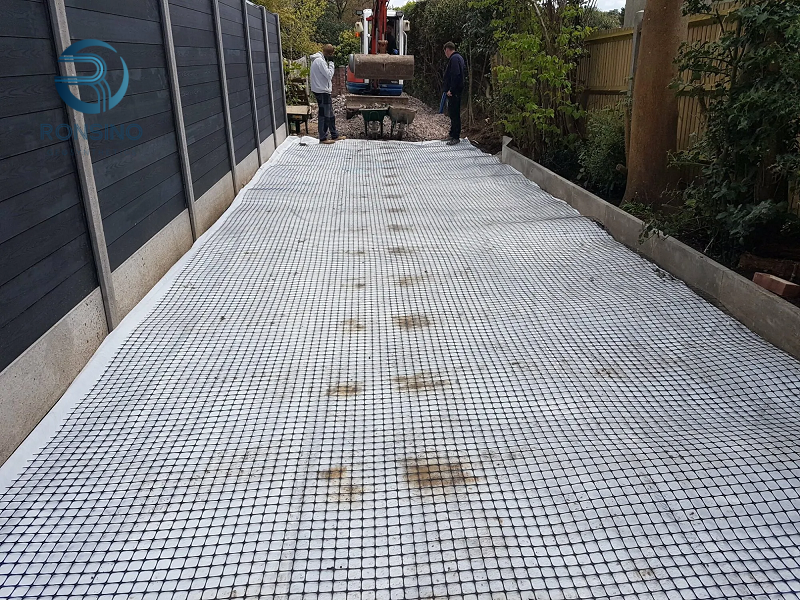
When laying the geotextile on the compaction field, its main bearing direction must be perpendicular to the central axis of the embankment. When laying, it must be smooth, wrinkle-free, and tightened as much as possible. Fix it with steel nails or heavy objects, and the main load-bearing direction must be continuous and seamless. When laying multiple layers, staggered joints are required, and the width of the binding overlap between the panels should not be less than 10 cm. After the laying is completed, adjust the overall straightness.
4.3 Geogrid Tensioning
Before filling the soil, manually or using equipment, tighten the geogrid again to ensure uniform and adequate tension. This will help the geogrid to be in a state of tension and stress within the soil. The force should be applied uniformly.
4.4 Filler Selection
Select the filler material based on the design requirements. Typically, gravel soil and sand soil are preferred due to their stable mechanical properties and less sensitivity to water content. The particle size of the filler should not exceed 15cm, and its gradation should be controlled to ensure proper compaction.
4.5 Filler Placement and Compaction
Once the geogrid is properly placed, backfilling and covering should begin immediately to ensure optimal performance. Grilles should not be exposed to the environment for more than 48 hours to prevent degradation or damage. The sequential construction of laying and backfilling can be adopted: first fill the two ends and fix the grating, and then gradually advance to the middle. Compaction should start from the outside first and proceed to the middle system. The compaction rollers should not be in direct contact with the grid. The backfill needs to be compacted in layers, with each layer being 20-30 cm thick, and it must be ensured that the compaction meets the design parameters, which directly affects the overall performance and long-term stability of the project.
4.6 Waterproofing and Drainage
Effective waterproofing and drainage solutions must be applied throughout the reinforced soil structure, encompassing both interior and exterior zones. Robust protective barriers, erosion-resistant safeguards, and advanced filtration networks should be integrated into the design. Utilization of geotextile fabrics, permeable conduits, or subsurface drainage channels may be required depending on site conditions. It is imperative to maintain unobstructed water flow through regular maintenance activities, thereby eliminating potential obstructions that could jeopardize the structural integrity of the reinforced soil system.
5.Case Study of RONSINO HDPE Biaxial Geogrid for Road Reinforcement construction in New Zealand
5.1 Project
RONSINO HDPE Biaxial Geogrid Road Reinforcement in New Zealand
5.2 Objective
The objective of the project is to reinforce a deteriorating road section that experiences significant settlement and cracking. The goal is to improve the road’s bearing capacity, stability, and longevity, while minimizing maintenance needs and costs.
5.3 Challenges
The road section is prone to differential settlement and cracking due to poor soil conditions and heavy traffic loads. The existing pavement is showing signs of distress, including rutting and surface cracks. Traditional soil improvement methods are deemed costly and time-consuming for this project.
5.4 Solution
The project engineers decide to implement HDPE Biaxial Geogrids as a reinforcement solution. The geogrids will provide soil confinement, distribute loads, and enhance the road’s structural integrity.
5.5 Implementation:
Site Preparation: The road section is surveyed and evaluated to determine the extent of reinforcement required. The existing pavement is assessed for damage and distress patterns.
The engineering team developed a reinforcement plan based on key parameters such as traffic flow dynamics, underground soil quality and geogrid performance, and selected high-density polyethylene bidirectional geogrids to match project needs and ensure optimal tensile strength and pore size.
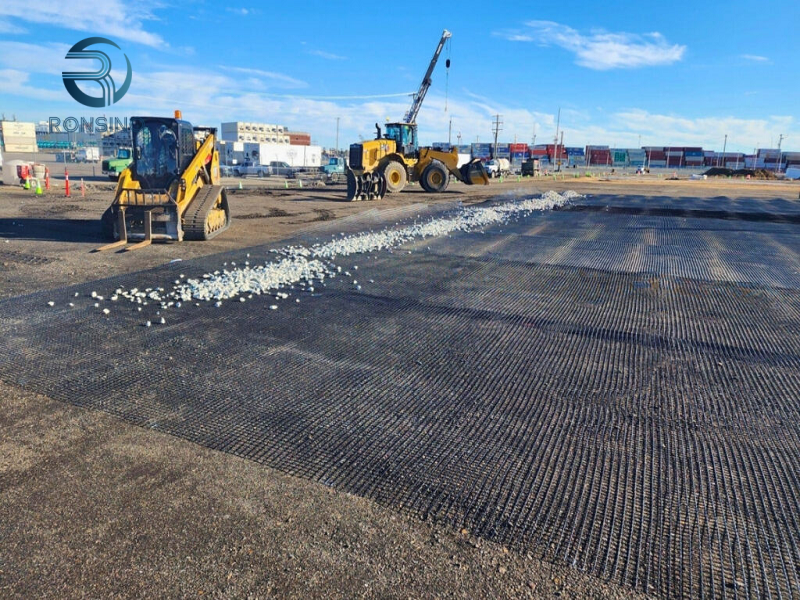
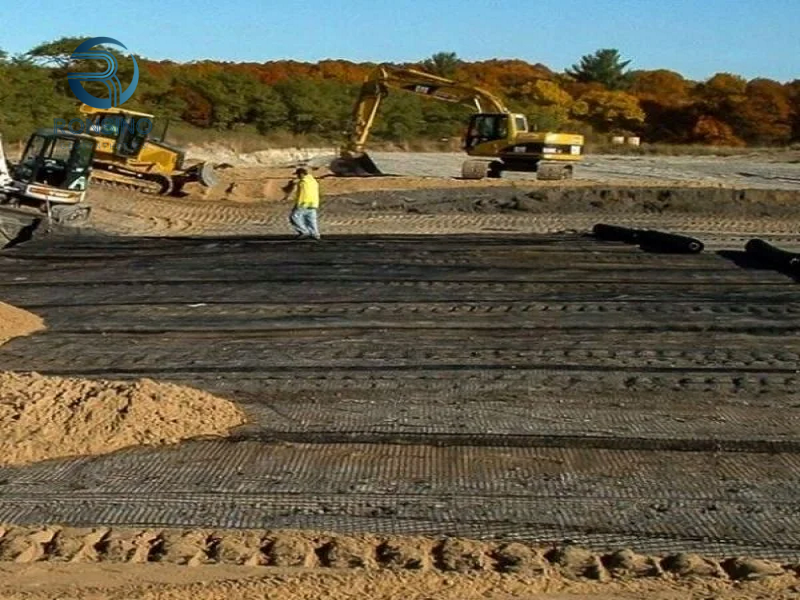
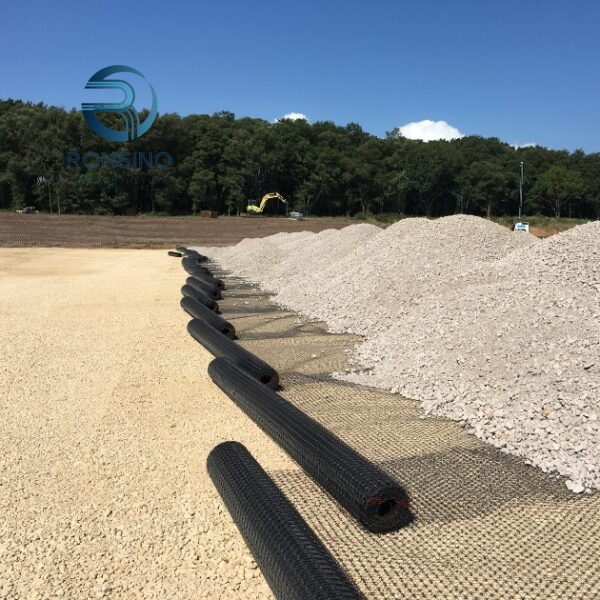
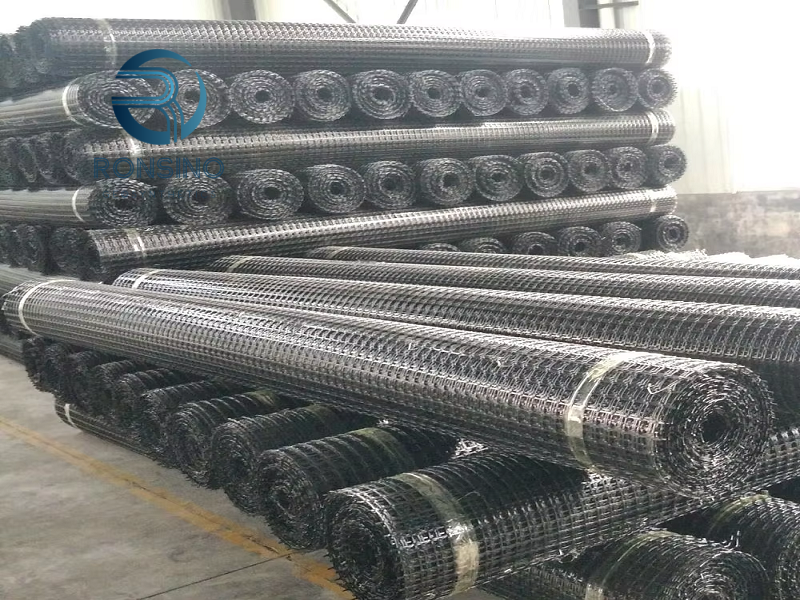
Geogrid Installation: Excavation is carried out to the required depth, ensuring proper subgrade preparation. The rolls of HDPE Biaxial Geogrids, each measuring 6m*50m, are laid out over the prepared subgrade. The geogrids are unrolled and secured in place using stakes or other appropriate methods.
Overlying Layers: Once the geogrids are in place, additional layers of granular fill or asphalt are added as per the road design specifications. Compaction is carried out to achieve the desired density and thickness.
Quality Control: Throughout the installation process, quality control measures are implemented to ensure proper geogrid placement, compaction, and overall construction quality.
5.6 Results and Benefits
Improved Stability: The HDPE Biaxial Geogrids effectively confine the soil and prevent lateral movement, reducing differential settlement and improving road stability.
Increased Bearing Capacity: The geogrids distribute traffic loads more uniformly, enhancing the road’s bearing capacity and reducing stress concentrations.
Cracking Prevention: The geogrids control crack formation and propagation, minimizing the occurrence of surface cracks and extending the pavement’s lifespan.
Cost Savings: The use of HDPE Biaxial Geogrids reduces the need for extensive soil excavation and replacement, resulting in cost savings compared to traditional soil improvement methods.
Long-Term Performance: The durability and resistance of the geogrids ensure their effectiveness over time, contributing to the long-term performance and sustainability of the road infrastructure.
In City X, New Zealand, the implementation of HDPE biaxial geogrids within this road reinforcement project has proven to be highly effective in enhancing the structural integrity, load-bearing performance, and long-term resilience of the roadway. By incorporating these advanced geogrids, the project achieves a financially prudent approach, significantly mitigating potential settlement problems, decreasing the frequency of upkeep interventions, and prolonging the operational longevity of the transportation network.
6.Summary
Since its establishment in 2007, RONSINO has been committed to providing one-stop geosynthetic materials products and professional solutions to customers around the world. With years of intensive development, the company has successfully supplied a variety of efficient and cutting-edge geomembranes, geotextiles, geocells, bentonite waterproof blankets (GCL), drainage slabs, geogrids and other diversified products to more than 81 countries and regions, meeting the stringent needs of various engineering projects.
RONSINO is not only manufacturing best quality geosynthetic products but also providing professional design and installation service. OEM, ODM, custom development and fabrication are also available. If you have any questions or inquiries, please contact us, we will reply as soon as possible.