Biaxial Geogrid Material for Roads Project in Nepal
Case · 2025-10-30 · 0 views
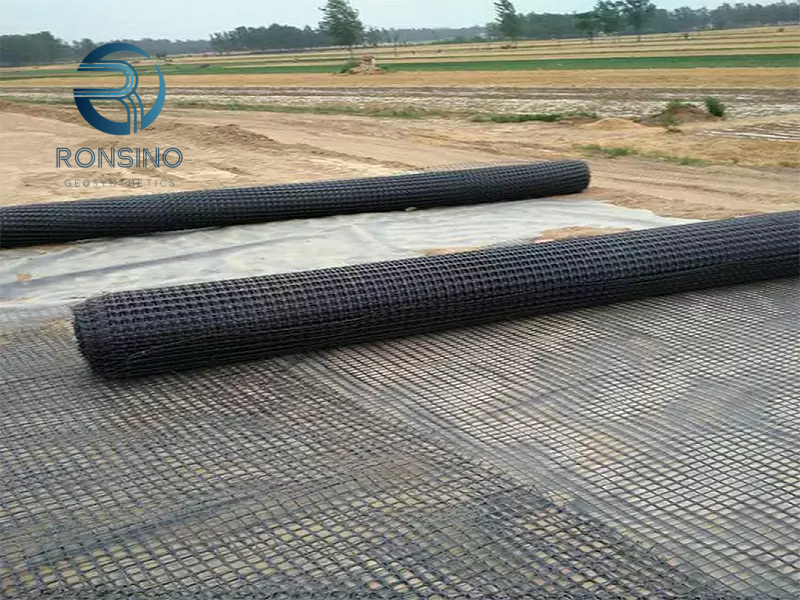
The two-way geogrid used in road construction is a geosynthetic material made of advanced polymers such as high-density polyethylene as raw materials and processed by two-way stretching. It has extremely high two-way tensile strength and fracture resistance, can effectively disperse and carry soil stress, and significantly improve soil stability. The material also offers excellent UV, aging and corrosion resistance and is highly water permeable to ensure long-term durability. Therefore, bidirectional geogrids are an efficient and ideal solution in highway projects.
Biaxial geogrid Applications
Biaxial Geogrid Material for roads project is suitable for roadbed reinforcement and road surface reinforcement of various roads, railways, and airports.
It is suitable for foundation reinforcement of permanent loads such as large parking lots and wharf yards.
Biaxial Geogrid Material for roads project is Suitable for slope protection of railways and highways.
Applicable culvert reinforcement to prevent cracks in culverts.
The false roof support project of the coal mine mining face can replace the metal mesh and be used for the false roof net of the coal mine.
Soil and rock anchoring for underground civil engineering and traffic road engineering.
Mine, tunnel reinforcement.
Increase the bearing capacity of the road (ground) foundation and prolong the service life of the road (ground) foundation.
Prevent the road (ground) surface from subsidence or cracks, and keep the ground beautiful and tidy.
The construction is convenient, saving time and effort, shortening the construction period and reducing maintenance costs.
Strengthen the soil slope to prevent soil erosion.
Reduce the thickness of the cushion and save the cost.
Support the stable greening environment of the slope grass net mat.
CASE STUDY
Location : Nepal
Product(s) : Biaxial Geogrid Material
Application : Road Construction Project
Issue
Owing to the substantial disparity in the load-bearing capacity between adjacent sections, the transition zones where embankments meet cuttings are highly susceptible to differential settlement. This phenomenon often leads to the formation of surface cracks, thereby compromising the longevity of the pavement and emerging as a critical factor in maintaining the overall structural integrity of the roadway. In addressing these vulnerable areas, a common approach involves implementing progressive, multi-layered compaction techniques. Nevertheless, for high-fill embankment transitions, conventional treatment methods frequently prove inadequate in effectively mitigating settlement issues.
Solution
Biaxial Geogrid Material for roads project is a two-dimensional grid or a three-dimensional grid screen with a certain height formed by extrusion, board forming, and punching processes of high molecular polymer, and then stretched longitudinally and horizontally. When used in engineering, it is called geogrid.
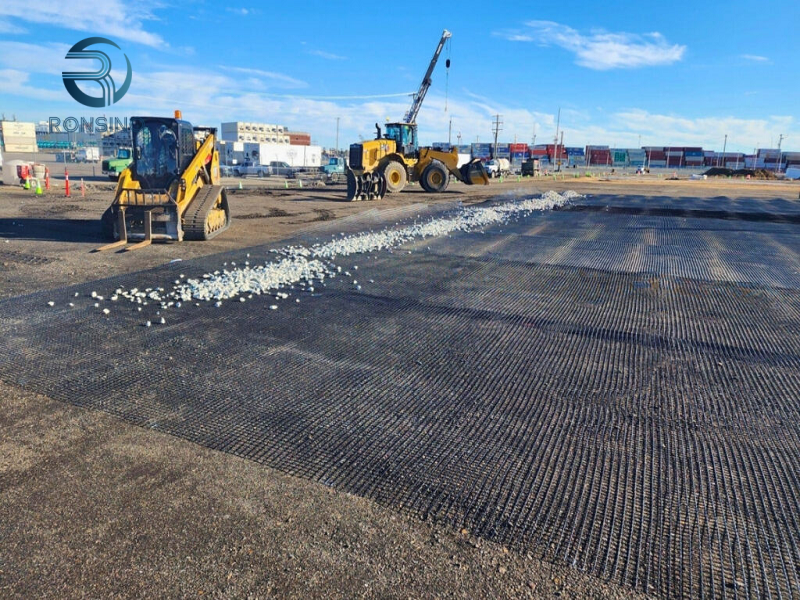
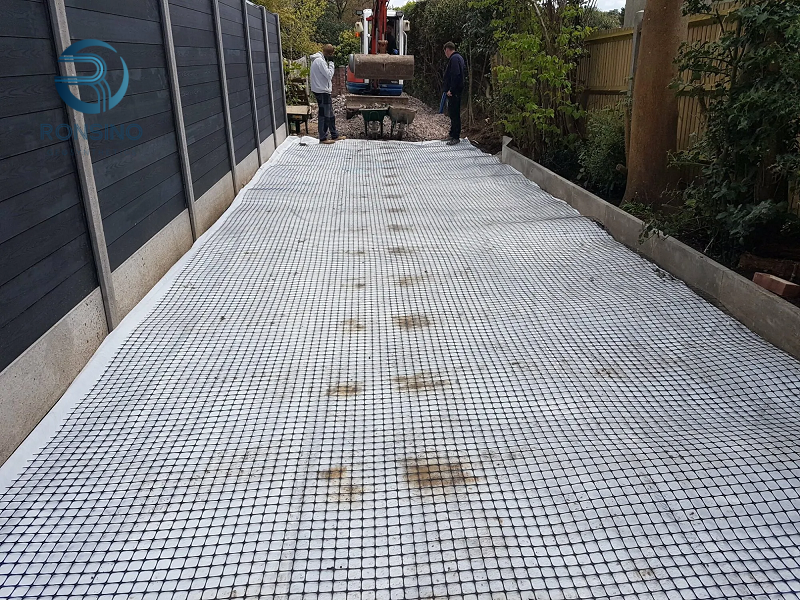
RONSINO Geogrid has great tensile strength in the longitudinal and transverse directions. This structure can also provide an ideal interlocking system for more effective force bearing and diffusion in the soil, and is suitable for large-area bearing Foundation reinforcement.
The incorporation of geogrids into highway subgrade construction has significantly enhanced the structural integrity and durability of the subbase, thereby extending its operational lifespan. Currently, these materials have gained widespread adoption, finding extensive applications across both road and railway infrastructure. The market now offers a diverse range of geogrid products, including steel-plastic and plastic geogrids designed for subgrade reinforcement, glass fiber geogrids specifically engineered for pavement layers, as well as specialized convex-node geogrids and plastic tensile geogrids tailored for railway projects.
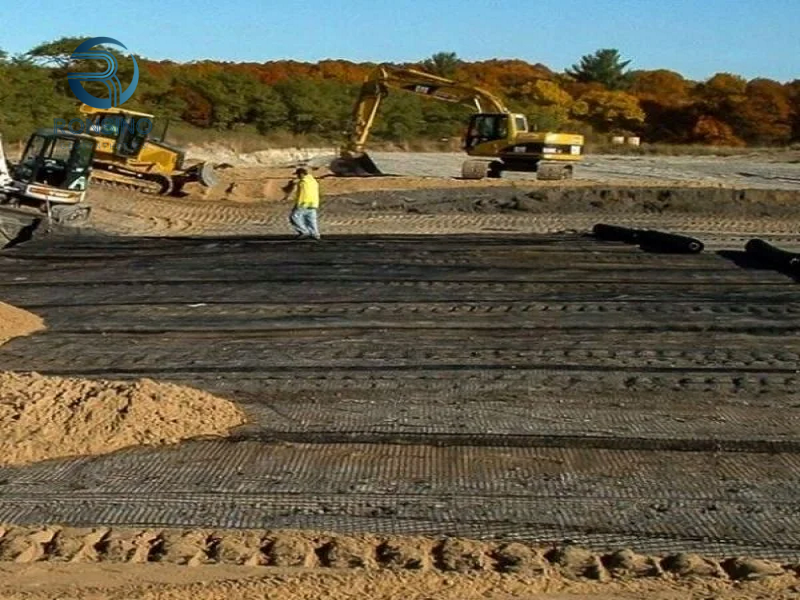
The unique surface embossed structure of the biaxial geogrid can be embedded in the soil and effectively inhibit the lateral displacement and uplift of the roadbed through the interlocking friction with the fill soil. The reinforced soil cushion formed by it significantly improves the load distribution capacity and evenly transfers the load of the upper structure to the underlying soft strata, thus greatly improving the bearing capacity of the foundation. The composite structure enhances the overall stiffness of the compressed soil layer, optimizes foundation settlement and deformation control, and relies on its inherent flexibility to effectively absorb seismic energy and demonstrate excellent seismic resistance.
Two-way geogrid for roads is a new geotechnical material made of plastics such as high-density polyethylene and has excellent tensile strength and fracture toughness. The material has been specially stretched during the production process, so that it exhibits strong mechanical properties in both the transverse and longitudinal directions, thereby significantly improving the overall structural strength. Bidirectional geogrids can efficiently disperse and transmit soil stress, enhance the stability and load-bearing capacity of roadbeds, and provide reliable reinforcement solutions for road projects. Made of high-quality raw materials and advanced technology, the material has excellent UV resistance, anti-aging and chemical corrosion resistance, and can adapt to long-term use needs in various complex environments. Its unique porous structure design ensures good water permeability, allows water in the soil to drain smoothly, and effectively improves soil drainage performance and infiltration efficiency. As an efficient and economically ideal road construction material, bidirectional geogrid has been widely used in various infrastructure projects.
CASE STUDY
Location : Nepal
Product(s) : Biaxial Geogrid
Application : Road Construction Project
Specifications of Biaxial Geogrid Material for Roads Project in Nepal
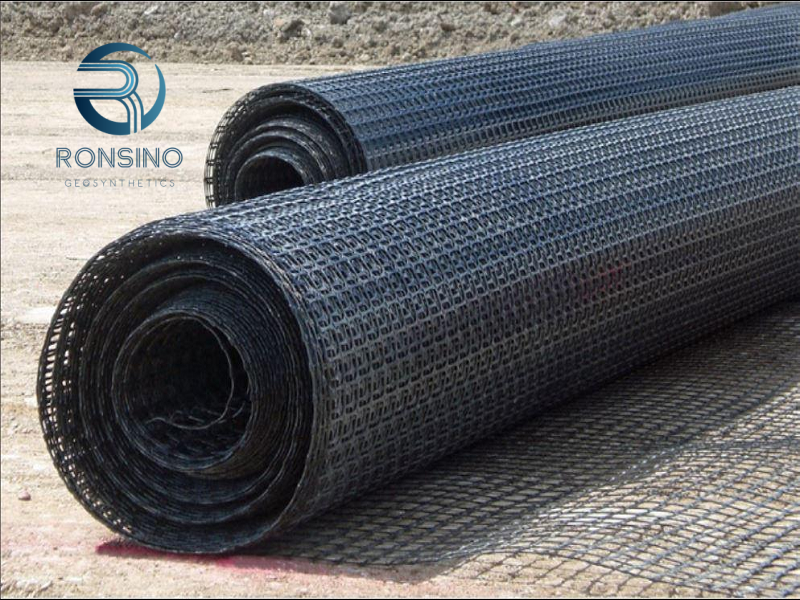
Total Biaxial Geogrid quantity–36,000 squares meters
Biaxial Geogrid Thickness–0.75mm
Each roll size is 6m*50m
About RONSINO Geosynthetics
RONSINO develops and manufactures a variety of cutting-edge geosynthetic materials (geogrids, geotextiles, etc.), which are exported to 36 countries. Core geogrid products (plastic/glass fiber/unidirectional/warp knitted/steel-plastic composite, etc.) have excellent performance. Brand products have passed ISO9001/14001/OHSAS18001 and international certifications (Soncap, SASO, BV, etc.).
If you have any questions or inquiries, please fill in and submit the form to contact us.