2mm HDPE Geomembrane Sheet for Tailings Disposal in Zimbabwe
case · 2025-08-22 · 0 views
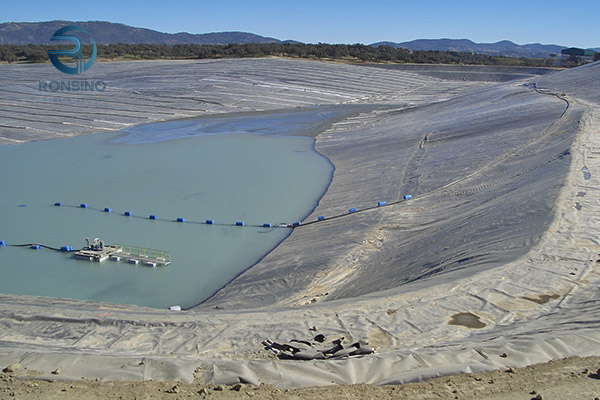
High-density polyethylene (HDPE) geomembrane is a synthetic anti-seepage material. With its corrosion resistance, high strength and anti-aging properties, it can effectively block liquid penetration and ensure the long-term stability and safety of the project. It is widely used for foundation slope protection of water body structures.
1.What Is HDPE Geomembrane Sheet?
High-density polyethylene (HDPE) geomembrane has become the first choice in aquaculture, water storage, wastewater treatment and other fields due to its excellent durability, chemical resistance and UV resistance. It is available in a variety of thicknesses and sizes and can be custom-cut to perfectly fit various engineering needs.
High-density polyethylene (HDPE) geomembrane liner is resistant to puncture, tearing, leakage, UV resistance, aging, good flexibility, can fit irregular contours, simplifies construction, chemical corrosion resistance, non-toxic and harmless, ensuring safe water quality.
HDPE anti-seepage membrane is a tough, flexible material with excellent chemical corrosion resistance. It is suitable for anti-seepage treatment of various ponds, reservoirs and other water conservancy facilities. It has become the industry's first choice due to its multiple advantages, such as long service life, convenient construction process and excellent puncture, tear and UV resistance. Whether it is aquaculture practitioners, water resources managers, or sewage treatment plant operators, HDPE anti-seepage membrane can provide them with stable and cost-effective anti-seepage solutions.
2.How To Use of HDPE Geomembrane Zimbabwe for Tailings Disposal Project
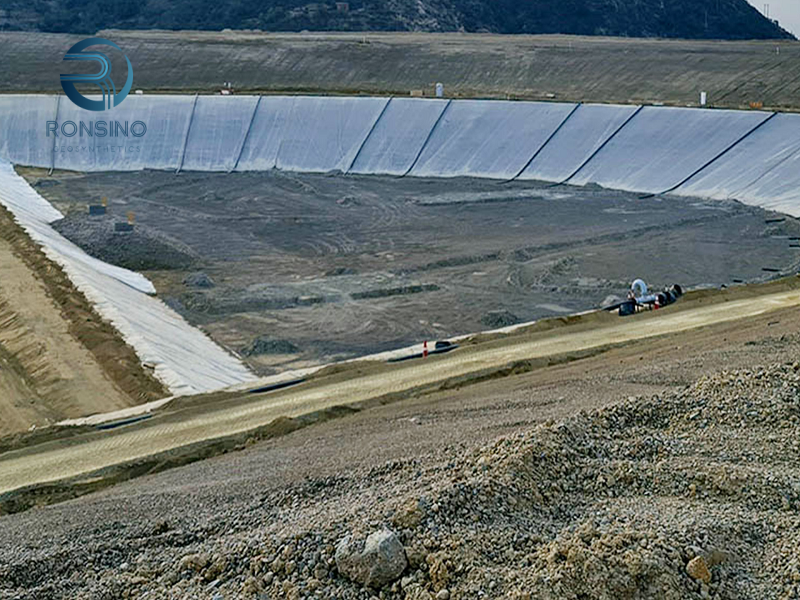
High-density polyethylene geomembrane lining is used to prevent seepage in tailings ponds or slag fields. When laying, the joints should be parallel to the main slope foot line, along the slope surface, and the number of joints should be reduced. Materials need to be optimized, quality should be strictly controlled, and joints in corners and deformation areas should be shortened. When the slope exceeds 1:6, try to avoid joints within 1.5 meters of the top of the slope and in the stress area. The laying must prevent wrinkles, and should be fully stretched and kept flat at low temperatures.
In the tailings pond geomembrane anti-seepage project, the connection between the geomembrane and the concrete structure faces unique challenges. Three main methods are used:1.Mechanical anchoring: It is suitable for flat concrete surfaces and uses the friction of anchor strips to fix the geomembrane through seals and fasteners.2.Thermal Welding: Suitable for connecting thermoplastic embedded parts in concrete.3.Adhesive bonding: Use special cement-based materials to firmly bond the geomembrane to the concrete matrix.
The choice of HDPE (High-Density Polyethylene) geomembrane sheets for tailings disposal projects in Zimbabwe offers several important benefits.
Tailings disposal is an ecological problem of great concern in mining projects because tailings are waste materials left over from ore processing. In order to ensure that these tailings are properly stored and regulated, engineers usually build special tailings dams or storage ponds on site. The sulfide compounds contained in tailings will decompose under certain circumstances and dissolve a variety of heavy metals under the action of acidic solutions. This potential environmental threat cannot be ignored.
High-density polyethylene anti-seepage geomembrane has been widely used in anti-seepage projects at the bottom of tailings ponds since the late 1980s. This type of geomembrane serves as a key protective layer, effectively blocking the penetration paths of harmful substances into the surrounding environment.
Due to its excellent anti-seepage performance, high-density polyethylene geomembrane can effectively block the penetration of harmful substances, protect the ecological environment, and reduce pollution risks. Its low permeability coefficient ensures reliable sealing of tailings, reduces groundwater pollution, and provides support for the safe operation of the project.
HDPE geomembrane sheets are durable and resistant to chemical degradation, ensuring their long-term performance in harsh mining environments. They exhibit excellent resistance to acids, alkalis, and other chemicals commonly found in tailings.
In Zimbabwe, the utilization of HDPE geomembrane liners within tailings storage facilities underscores a dedication to ecological preservation and the adoption of conscientious mining methodologies. These advanced synthetic barriers play a pivotal role in curtailing fluid infiltration and substantially reducing the dispersion of detrimental elements, thereby fostering an approach to tailings governance that aligns with both long-term ecological integrity and resource management principles.
HDPE geomembrane sheets in tailings disposal projects in Zimbabwe provides reliable anti-seepage measures, safeguards the environment, and promotes sustainable mining practices.
4.Specifications of HDPE geomembrane linerfor Tailings Disposal Project in Zimbabwe
Total HDPE geomembrane liner Quantity–120,000 squares meters
HDPE geomembrane liner Thickness– 2mm
HDPE geomembrane liner Each roll size is 7x10⁵m
In order to ensure the safety of the HDPE geomembrane structure, the following points must be followed during connection construction: Ensure that there is no damage to the surface of the membrane body and adjacent concrete to prevent stress concentration; when connecting strips, use rigid gaskets to disperse stress and fill the gaps under the membrane to avoid deformation and failure; large gaps at structural corners should be prefabricated to reliably connect and fill gaps; the concrete structure needs to control settlement, and when it cannot be avoided, use flexible connections to maintain system integrity.
The connection between HDPE geomembrane and concrete structure usually uses techniques such as anchor strips, hot melt bonding or adhesives. Tailings pond water management systems often rely on reinforced concrete structures for backwater control and flood protection. Geomembrane barrier systems for this type of facility include fabrication and installation customized to the project. HDPE geomembrane can flexibly adapt to different engineering needs and maintain stable performance under various working conditions.
5.What Are Benefits of HDPE Geomembrane Sheet Zimbabwefor Tailings Disposal Project
HDPE geomembrane sheet has the following advantages:
5.1 No pollution
The anti-seepage principle of HDPE geomembrane sheet is a general physical change and does not produce any harmful substances.
5.2 high tensile strength and mechanical properties
its elasticity and deformation ability make it very suitable for expanding or shrinking the base surface, and can effectively overcome the uneven geomembrane settlement of the base surface.
5.3 High anti-seepage coefficient
High-quality high-density polyethylene geomembrane is made of high-grade virgin resin and advanced co-extrusion technology, with excellent molecular density and extremely low liquid permeability. Its superior structure provides unparalleled impermeability, far exceeding that of traditional waterproofing materials. The product exhibits extremely high impermeability and is an ideal solution for demanding containment applications where reliability and durability are critical.
5.4 Chemical stability
HDPE geomembrane sheet has excellent chemical stability, high and low temperature resistance, asphalt, oil and tar resistance, acid, alkali, salt and other chemical solutions. It is widely used in sewage treatment, chemical reaction pool, waste landfill.
5.5 Anti-aging function
HDPE geomembrane sheet has anti-aging, anti-ultraviolet, anti-decomposition capabilities, tear resistance, puncture resistance, low brittleness, small thermal deformation, can be used exposed, and provides a good material for environmental anti-seepage make sure.
5.6 Cost-effectiveness
High-density polyethylene geomembrane significantly improves the anti-seepage performance through innovative processes and adopts a more scientific and efficient manufacturing process, which gives the product cost a significant advantage over traditional waterproof materials. Detailed engineering cost accounting shows that engineering projects using this geomembrane can usually achieve a comprehensive cost saving of about 50%.
6.About RONSINO
Since its establishment in 2007, RONSINO has always focused on providing high-quality geomembrane and geosynthetic materials products and comprehensive solutions to global customers. Our core innovative and high-quality products cover multiple categories such as geotextiles, geomembranes, geogrids, geocells, bentonite waterproof blankets and drainage boards.
RONSINO offers both high quality geosynthetic products but also professional design and installation service. OEM, ODM, custom development and fabrication are also available. If you have any questions or inquiries, please contact us, we will reply as soon as possible.


